
Your Read is on the Way
Every Story Matters
Every Story Matters
The Hydropower Boom in Africa: A Green Energy Revolution Africa is tapping into its immense hydropower potential, ushering in an era of renewable energy. With monumental projects like Ethiopia’s Grand Ethiopian Renaissance Dam (GERD) and the Inga Dams in the Democratic Republic of Congo, the continent is gearing up to address its energy demands sustainably while driving economic growth.
Northern Kenya is a region rich in resources, cultural diversity, and strategic trade potential, yet it remains underutilized in the national development agenda.

Can AI Help cure HIV AIDS in 2025

Why Ruiru is Almost Dominating Thika in 2025

Mathare Exposed! Discover Mathare-Nairobi through an immersive ground and aerial Tour- HD

Bullet Bras Evolution || Where did Bullet Bras go to?
Why Kenya’s Opposition Is Not Naming Ruto’s Challenger Yet
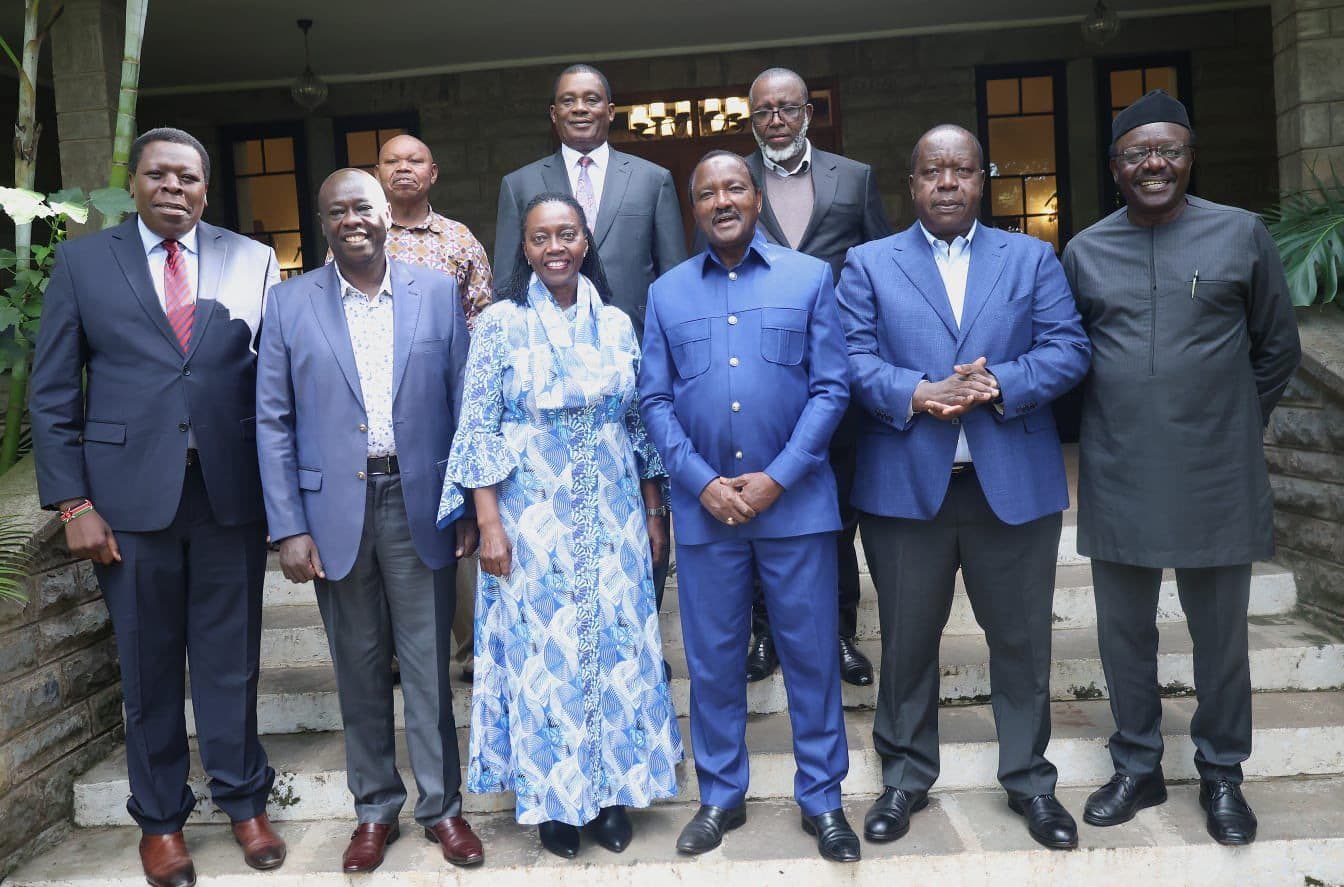
With less than two years to Kenya’s 2027 general election, political temperatures are rising — but one thing remains conspicuously absent: a declared opposition challenger to President William Ruto. In a political environment where early positioning is often mistaken for strength, the opposition’s refusal to name a flagbearer has sparked speculation, anxiety, and accusations of drift.
But behind the public quiet lies deliberate strategy. Opposition leaders are not stalling because they lack candidates. They are stalling because they understand the brutal economics of Kenyan power politics: whoever steps forward too early becomes vulnerable too soon. In a system where incumbency confers enormous political leverage, early exposure is not courage — it is risk.
This delay is therefore not procedural confusion. It is political insulation.
The Incumbency Trap: Why Early Nominees Rarely Survive Intact
Kenyan politics punishes early frontrunners. Once a candidate is named, the political battlefield shifts instantly. Every past decision is reopened. Every ally becomes a recruitment target. Every misstep is amplified. State-aligned messaging ecosystems begin shaping narratives long before campaigns formally begin.
The opposition understands that naming a challenger now would allow President William Ruto’s camp to define that individual long before voters hear their own message. A candidate who spends years defending themselves cannot spend those years selling ideas. Worse, prolonged exposure exhausts political capital before the decisive phase of the race even begins.
By delaying the announcement, the opposition is compressing the period of political vulnerability. It is denying the incumbent a fixed target and preserving strategic ambiguity — one of the most powerful tools in competitive politics.
Coalition Politics: Too Many Heavyweights, Too Little Room for Error
Kenya’s opposition is not a single party with a clear line of succession. It is a broad coalition of political heavyweights, each commanding distinct regional loyalty, historical capital, and presidential ambition.
None are weak enough to be ignored. None are strong enough to dominate without consequence.
Selecting a flagbearer in this environment is not merely a vote — it is a negotiation over power-sharing, succession, campaign structure, parliamentary leadership, cabinet balance, and long-term coalition survival.
A rushed choice would not produce unity; it would manufacture losers. And in Kenyan coalition politics, losers rarely stay quiet — they defect, undermine, or disengage.
This is why opposition leaders are prioritizing internal architecture before public declarations. They want consensus, not coronation. Stability, not symbolism. In their calculus, unity delayed is better than unity broken.
Ethnic Arithmetic and Regional Balancing Still Remain Unsettled
Kenyan elections remain deeply shaped by regional and ethnic voting blocs, whether acknowledged openly or negotiated quietly. Any viable presidential challenger must construct a coalition that cuts across communities, voting zones, and historical alliances — and this arithmetic is neither simple nor quick.
Naming a candidate too early risks alienating constituencies whose support is still being negotiated. Some regions seek political relevance. Others seek policy guarantees. Others demand symbolic inclusion in future leadership arrangements.
Premature declaration freezes these negotiations before they mature, locking the coalition into demographic formulas that may later prove electorally insufficient.
Silence, in this context, becomes a negotiating asset. It allows flexibility, recalibration, and alliance-building without public pressure or political ultimatums.
The Ghost of Past Failures Still Haunts Opposition Strategy
Kenya’s opposition carries institutional memory — and much of it is painful. Past coalitions collapsed not because they lacked popular support, but because they crowned leaders before resolving internal contradictions. Early flagbearers became lightning rods for controversy, factional warfare, and elite sabotage. Campaigns began fragmented long before voters entered the picture.
Today’s opposition leadership appears determined not to repeat that cycle. They are choosing sequencing over speed — coalition first, candidate second. The belief is simple: political machines win elections; individuals merely front them.
This lesson has reshaped how the opposition views leadership. The face of the ticket matters, but the structure beneath it matters more.
Why the Opposition Is Building Institutions Before Personalities
Instead of branding a presidential candidate early, opposition forces are focusing on strengthening party machinery, grassroots organization, voter mobilization networks, and messaging coherence. This shift reflects recognition that personality-driven campaigns collapse easily once elite rivalries surface.
The opposition wants a candidate who emerges atop a functioning system — not one burdened by managing internal chaos.
By delaying the nomination, leaders are buying time to professionalize operations, align messaging across regions, and construct a durable political vehicle capable of surviving electoral pressure.
In essence, the opposition is trying to win the election before naming the driver.
Why Timing, Not Speed, May Decide the 2027 Race
Politics is not just about who runs — it is about when. A late-stage nominee enters the race fresher, less bruised, and less politically defined by rivals. Momentum becomes sharper. Messaging becomes harder to dilute. Internal unity becomes easier to preserve when ambitions have already been bargained and settled.
From this perspective, delay is not weakness. It is momentum storage. It is strategic compression of vulnerability. It is defensive architecture against the advantages of incumbency.
For the opposition, speed offers visibility. Timing offers survival.
What Happens Next: When Silence Will End
The opposition is unlikely to remain silent indefinitely. But when a candidate finally emerges, it will not be accidental. It will reflect months of coalition engineering, elite negotiation, regional balancing, and institutional consolidation. The delay is designed to ensure that when the flagbearer appears, they are not merely announced — they are armored.
Until then, the absence of a name is itself the message.
Kenya’s opposition is not confused. It is cautious. It is not divided. It is negotiatin It is not passive. It is defensive — against incumbency power, coalition fragmentation, ethnic miscalculation, and historical failure.
By refusing to rush the naming of President William Ruto’s challenger for 2027, the opposition is choosing durability over drama, structure over spectacle, and timing over theatrics. In Kenya’s political landscape, where early moves often die early, silence may be the loudest strategy of all.




0 comments