
Your Read is on the Way
Every Story Matters
Every Story Matters
The Hydropower Boom in Africa: A Green Energy Revolution Africa is tapping into its immense hydropower potential, ushering in an era of renewable energy. With monumental projects like Ethiopia’s Grand Ethiopian Renaissance Dam (GERD) and the Inga Dams in the Democratic Republic of Congo, the continent is gearing up to address its energy demands sustainably while driving economic growth.
Northern Kenya is a region rich in resources, cultural diversity, and strategic trade potential, yet it remains underutilized in the national development agenda.

Can AI Help cure HIV AIDS in 2025

Why Ruiru is Almost Dominating Thika in 2025

Mathare Exposed! Discover Mathare-Nairobi through an immersive ground and aerial Tour- HD

Bullet Bras Evolution || Where did Bullet Bras go to?
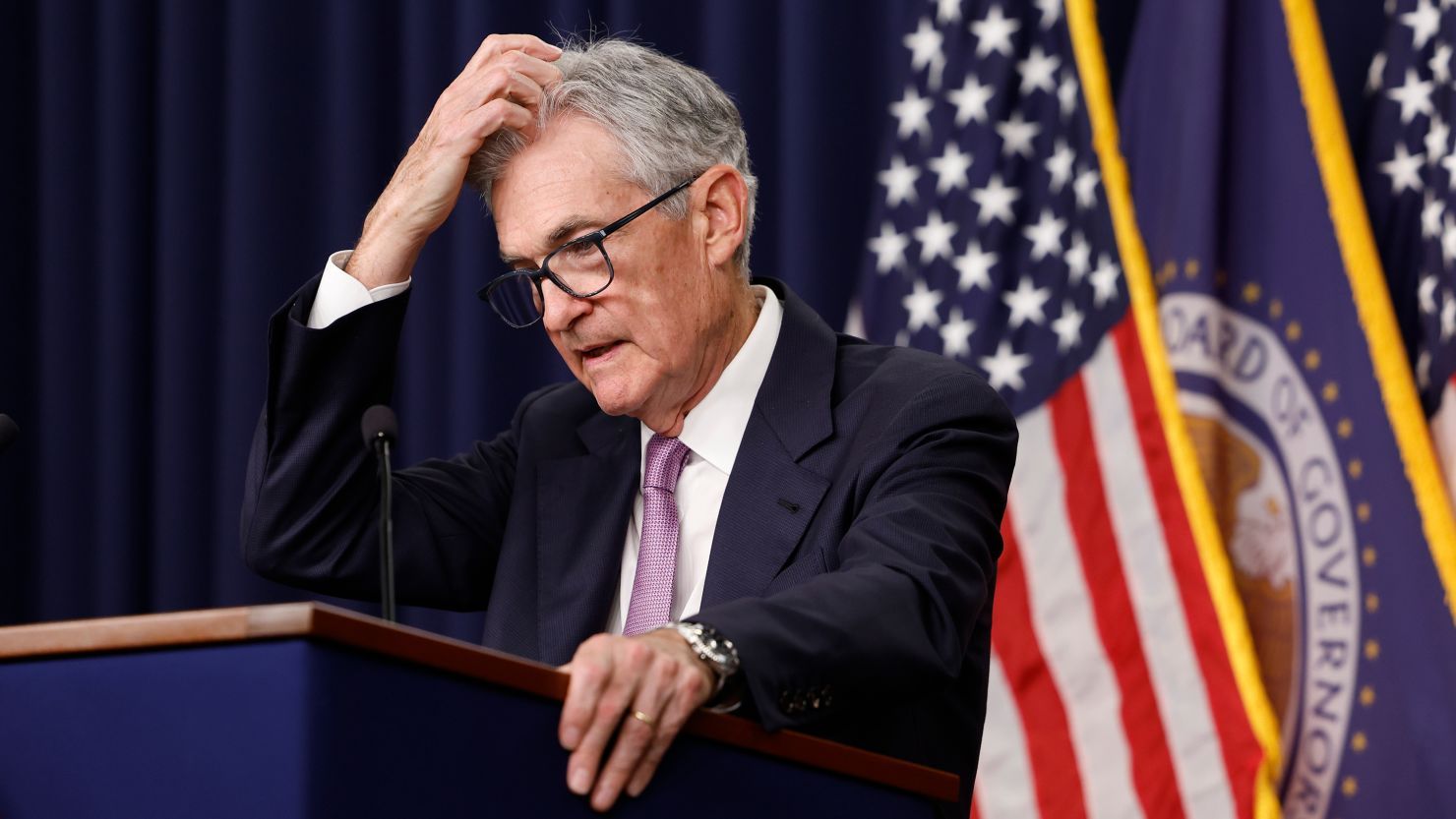
It all began with a tweet. In a move that shocked financial markets, President Donald Trump publicly referred to Federal Reserve Chairman Jerome Powell as a “major loser.” While Trump’s dissatisfaction with the Fed has been no secret, this public name-calling was an escalation. The president has long criticized Powell for his stance on interest rates, claiming that the Fed’s decisions have been detrimental to U.S. economic growth. Yet this personal attack crossed a line. The timing couldn’t have been worse. Markets were already feeling the strain from inflation concerns, global economic uncertainties, and weak corporate earnings reports. This public rift between the president and the central bank sent an unmistakable signal of growing instability within the very institutions that guide the world’s largest economy.
The markets didn’t take the president’s words lightly. Within hours of Trump’s comments, the U.S. stock market experienced a sharp sell-off. The Dow Jones Industrial Average fell by over 800 points, a dramatic drop that reflected investor unease. The S&P 500 and Nasdaq followed suit, each shedding more than 2% in value. Investors, many of whom had already been wary due to other global economic issues, now saw the potential for more disruption. The stock market, sensitive to anything that might destabilize U.S. economic policy, reacted violently. Tech stocks, which had been leading the market in growth, were particularly hard hit as their valuations began to correct. Investors fled to safer assets like bonds and gold, highlighting their increasing concern that political rhetoric might be influencing economic decisions.
At the core of this market disruption is the erosion of one of the most vital aspects of U.S. economic governance: the independence of the Federal Reserve. For decades, the Fed has operated outside of the political sphere, insulated from the short-term pressures of partisan politics. This structure has allowed the central bank to make decisions based on economic indicators, rather than political convenience. However, the public spat between Trump and Powell has raised a significant red flag. The market is now asking: Can Powell continue to make decisions independently, or will political pressure force the Fed to adjust its policies in response to external criticism?
The Federal Reserve’s role is critical — it regulates monetary policy by adjusting interest rates, controlling inflation, and guiding the overall economic trajectory. Any perception that the Fed is no longer able to perform these duties without political interference could have profound long-term consequences. The fear is that this political meddling could lead to erratic policy decisions, exacerbating inflation, or stifling growth by prematurely tightening monetary policy. Investors rely on the Fed’s decisions to be based on long-term economic health, not immediate political goals, and the current public feud has thrown that assumption into question.

What’s more concerning than the immediate market reaction is the broader psychological effect on investors. Financial markets are built on trust, stability, and predictability. When these pillars are shaken, even a slight tremor can cause a chain reaction. The uncertainty surrounding the Fed’s future decisions, coupled with political bickering, creates an environment of instability. Markets dislike uncertainty more than almost anything else, and this spat only amplifies the perception that the U.S. economic system may be unraveling under the weight of political squabbling.
The loss of confidence is not limited to Wall Street alone. Globally, investors are watching closely, knowing that the United States is the financial engine of the world. The president’s public attack has raised concerns in international markets, where faith in U.S. economic governance is essential for maintaining global financial stability. In emerging markets, which are particularly sensitive to changes in U.S. monetary policy, capital has already begun to flee in search of safer investments. The ripple effect has been swift, with global indices following the U.S. market’s descent into red.
As the U.S. stock market took a hit, it didn’t just affect American investors. International markets felt the tremors, with major Asian and European indices mirroring the downturn. The reaction was swift and profound. For many global investors, the attack on Powell signals deeper concerns about the direction of U.S. economic policy and its future leadership. If the Federal Reserve’s decisions become subject to political whims, then the global financial system might face the same uncertainty that U.S. markets are currently struggling with.
Emerging markets, in particular, are vulnerable to shifts in U.S. monetary policy. With the Federal Reserve’s monetary tightening making U.S. assets more attractive, capital has been flowing out of riskier investments. The possibility that the Fed may buckle under political pressure only accelerates this trend, creating an environment where global instability could spiral. Already, bond yields around the world have dropped as investors sought safety in government debt. Gold prices surged, a classic indicator of fear in times of economic uncertainty.
Beyond the immediate financial losses, one of the most dangerous consequences of this public spat is the toll it takes on investor sentiment. Confidence, especially in an economy as large and complex as the U.S., is a fragile thing. Investors rely on the Fed’s ability to maintain stability and steer the economy toward growth, even in turbulent times. When that stability is called into question, the markets become volatile. In a world where algorithms and high-frequency trading dominate the landscape, psychological shifts can trigger far-reaching consequences.
The question on many investors’ minds now is: If Powell can be publicly denigrated by the president, what will happen to the independence of the Fed going forward? Will future decisions be swayed by political pressure? The uncertainty around these questions has already caused some to scale back their investments in riskier assets. The fear is that this is not just a passing moment of market turbulence, but the beginning of a broader crisis of confidence in U.S. economic leadership.
The Federal Reserve, for its part, must now decide how to respond. Powell has already faced challenges during his tenure, particularly as inflation pressures mount and economic growth slows. Yet, the added stress of dealing with a president who publicly undermines the Fed only complicates matters further. Powell and the rest of the central bank leadership face a difficult balancing act. On one hand, they must maintain credibility and the perception of independence. On the other hand, they need to respond to an economy that is facing multiple pressures, from rising inflation to uncertain global conditions.
If Powell and his colleagues at the Federal Reserve continue to make decisions based on economic data and long-term considerations, there’s hope that the institution can weather this storm. However, the longer this political pressure continues, the more damage it may do to the credibility of the Fed, both domestically and abroad. And without credibility, the very stability that the Federal Reserve is meant to provide could be at risk.



0 comments