
Your Read is on the Way
Every Story Matters
Every Story Matters
The Hydropower Boom in Africa: A Green Energy Revolution Africa is tapping into its immense hydropower potential, ushering in an era of renewable energy. With monumental projects like Ethiopia’s Grand Ethiopian Renaissance Dam (GERD) and the Inga Dams in the Democratic Republic of Congo, the continent is gearing up to address its energy demands sustainably while driving economic growth.
Northern Kenya is a region rich in resources, cultural diversity, and strategic trade potential, yet it remains underutilized in the national development agenda.

Can AI Help cure HIV AIDS in 2025
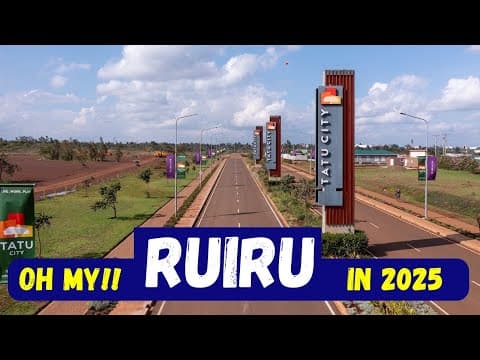
Why Ruiru is Almost Dominating Thika in 2025

Mathare Exposed! Discover Mathare-Nairobi through an immersive ground and aerial Tour- HD

Bullet Bras Evolution || Where did Bullet Bras go to?
Donald Trump opened his national address with calm yet unmistakable authority. Standing behind the presidential podium, flanked by top military officials, he wasted no time confirming what had already shaken the world — the U.S. had bombed Iranian nuclear facilities. His words were direct, his posture defiant: "Iran miscalculated. They threatened our allies, fueled terror, and today they paid the price."
He framed the military campaign not just as a counterstrike, but as a clear signal that the U.S. would no longer tolerate Tehran’s provocations.
Trump revealed key details about the operation, describing it as “flawless.” The U.S. deployed B-2 Spirit stealth bombers armed with 30,000-pound “bunker buster” bombs. These were used to penetrate Iran’s underground Fordo facility — a heavily fortified uranium enrichment site buried under mountains near Qom.
He confirmed the use of precision-guided cruise missiles as a secondary wave, describing the destruction as “complete and irreversible.” Trump added that intelligence had verified the site was being prepped for accelerated enrichment. “We had no choice,” he said, “but to act before the world faced another nuclear rogue state.”
In what has become typical Trump rhetoric, the threats were not subtle. “If Iran retaliates, more targets will be destroyed. And next time, we won’t stop at enrichment facilities,” he warned.
Yet, just moments later, he pivoted. “Peace is still possible. Iran can walk away from war and rejoin the civilized world.” This dual messaging — promise of peace laced with overt threats — is the foundation of what many now call the “Trump Doctrine”: maximum pressure, public humiliation, and the occasional dangling of diplomacy.
Trump praised Israel for its intelligence collaboration, specifically noting the role of Israeli cyber units and satellite surveillance in identifying bunker vulnerabilities. “This was not just an American operation,” he said, “it was a defense of global security alongside our most trusted ally.”
He also used the speech to pressure NATO and Gulf allies to take a firmer stance against Iran. “Silence encourages terror,” he stated, urging nations to support sanctions and condemn Tehran unequivocally.
At home, Trump aimed to reassure Americans that the U.S. would not enter another prolonged war. “We do not seek conflict, but we will never allow a radical regime to threaten American lives,” he said.
He positioned the strike as a defensive necessity, contrasting it with past administrations’ “failed appeasement.” Some analysts saw this as a veiled jab at Obama-era diplomacy, especially the nuclear deal Trump had famously torn up.
Toward the end of the address, Trump turned from global strategy to personal reassurance. He praised U.S. service members and said that the military was on “heightened alert” but ready for any scenario. “Sleep peacefully tonight,” he told Americans, “because your country is not afraid to defend you.”
Closing his speech, Trump delivered one last message — this time aimed squarely at Iran’s leadership. “This path ends one of two ways,” he warned. “With Iran’s surrender to peace, or with the end of the Iranian regime as we know it.”
He did not take questions. The cameras cut out, but the shockwaves reverberated globally.
Donald Trump’s address was more than just an update on military actions — it was a declaration of strategy, power, and intent. With Iran’s nuclear ambitions now under open assault and global tensions at boiling point, the speech marked the beginning of a dangerous new chapter in U.S.-Middle East relations.
Whether this bold move deters war or ignites it remains uncertain — but Trump made one thing unmistakably clear: the U.S. will no longer wait for threats to become realities.






0 comments