
Your Read is on the Way
Every Story Matters
Every Story Matters
The Hydropower Boom in Africa: A Green Energy Revolution Africa is tapping into its immense hydropower potential, ushering in an era of renewable energy. With monumental projects like Ethiopia’s Grand Ethiopian Renaissance Dam (GERD) and the Inga Dams in the Democratic Republic of Congo, the continent is gearing up to address its energy demands sustainably while driving economic growth.
Northern Kenya is a region rich in resources, cultural diversity, and strategic trade potential, yet it remains underutilized in the national development agenda.

Can AI Help cure HIV AIDS in 2025

Why Ruiru is Almost Dominating Thika in 2025

Mathare Exposed! Discover Mathare-Nairobi through an immersive ground and aerial Tour- HD

Bullet Bras Evolution || Where did Bullet Bras go to?
Germany’s air travel network was thrown into turmoil on Monday as thousands of airport workers launched a 24-hour strike, grounding flights and leaving passengers stranded across the country. The mass walkout, organized by the powerful Ver.di union, affected 13 major airports, including Frankfurt, Munich, and Berlin, disrupting both domestic and international travel. Airport terminals, normally bustling with travelers, became scenes of frustration and confusion as airlines struggled to accommodate passengers and reschedule flights.
Frankfurt Airport, Germany’s busiest hub, was hit hardest by the strike, with over 1,000 flights canceled out of its scheduled 1,116 take-offs and landings. The cancellations led to a near-total shutdown, forcing travelers to find alternative routes or face lengthy delays. Similar chaos unfolded in Berlin, Hamburg, and Cologne/Bonn, where all departures were scrapped, and only limited arrivals were allowed. Passengers arriving at these airports found deserted check-in counters, closed security lanes, and departure boards filled with red cancellations. Many travelers expressed frustration over the lack of clear communication, with some international passengers left scrambling to find accommodations or alternative travel options.
The strike also caused significant disruptions for cargo flights, affecting Germany’s vital logistics sector. With freight traffic stalled at key hubs, supply chain disruptions are expected in the coming days. As airlines struggled to mitigate the crisis, reports surfaced of travelers being rebooked on flights days later, further compounding the inconvenience.
The strike stems from an ongoing labor dispute between the Ver.di union and airport authorities over wages and working conditions. Employees, including security personnel, baggage handlers, and ground staff, are demanding better pay and improved job security, arguing that their workloads have increased dramatically while salaries have remained stagnant. Many workers claim that airports have failed to keep up with inflation, leaving them struggling to make ends meet despite the booming resurgence in air travel following the pandemic.
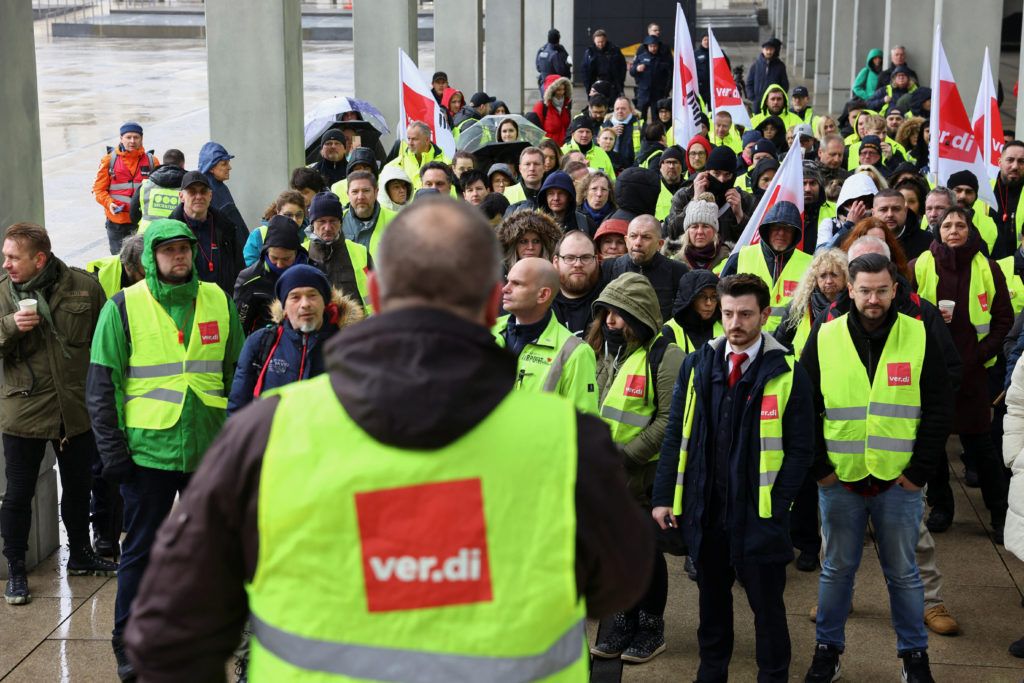
Negotiations between the union and employers have stalled, prompting the escalation of industrial action. While workers insist that fair wages are long overdue, airport management warns that excessive pay raises could place financial strain on the aviation industry, potentially leading to increased ticket prices and job cuts. The standoff has left both sides entrenched, with little indication of a resolution in sight.
Although Monday’s strike lasted only 24 hours, the wider labor conflict remains unresolved. If negotiations continue to stagnate, unions may escalate their protests with additional strikes, potentially extending into peak travel seasons. With Easter and summer holidays approaching, travelers and airlines alike are bracing for the possibility of further disruptions.
The Ver.di union has not ruled out further industrial action, warning that if their demands are not met, future strikes could be longer and more severe. The uncertainty has left passengers worried about making long-term travel plans, while airlines face mounting financial losses due to ongoing disruptions.
For now, passengers are urged to stay informed, check with airlines for updates, and prepare for delays. While negotiations continue, the situation remains volatile, with no clear resolution in sight. The coming weeks will determine whether Germany’s airports return to normal operations or whether further turbulence is on the horizon.






0 comments