
Your Read is on the Way
Every Story Matters
Every Story Matters
The Hydropower Boom in Africa: A Green Energy Revolution Africa is tapping into its immense hydropower potential, ushering in an era of renewable energy. With monumental projects like Ethiopia’s Grand Ethiopian Renaissance Dam (GERD) and the Inga Dams in the Democratic Republic of Congo, the continent is gearing up to address its energy demands sustainably while driving economic growth.
Northern Kenya is a region rich in resources, cultural diversity, and strategic trade potential, yet it remains underutilized in the national development agenda.

Can AI Help cure HIV AIDS in 2025

Why Ruiru is Almost Dominating Thika in 2025

Mathare Exposed! Discover Mathare-Nairobi through an immersive ground and aerial Tour- HD

Bullet Bras Evolution || Where did Bullet Bras go to?
On the surface, it looked like a standard corruption probe. But the EACC raid on Governor George Natembeya's Milimani home in Kitale sparked more questions than answers. Allegedly targeting procurement malpractices, the operation felt less like an investigation—and more like an intimidation script borrowed from strongman regimes.
Governor Natembeya, a vocal critic of President William Ruto, has openly challenged the administration’s taxation policies, exclusionary governance, and youth neglect. That voice, amplified in public rallies and media interviews, has made him a marked man in Kenya's evolving political chessboard.
And when EACC detectives stormed his residence, it wasn’t long before Kenya’s Gen Z smelled a setup.
No. And that’s where the story turns.
Despite multiple agencies involved in the raid, and the visible tension in the area, Natembeya was never taken into custody. Sources on the ground—and even DAP-K leader Eugene Wamalwa, who showed up during the raid—confirmed that no incriminating material was found.
So if not for evidence, why the show of force?
Online users are drawing a darker conclusion: the raid was not about crime—it was about control. A pretext to humiliate and neutralize a political figure rising in popularity among the youth and western Kenyan constituencies.
The raid spiraled into a full-blown confrontation after young people—many from Kitale’s colleges and neighborhoods—rushed to defend Natembeya.
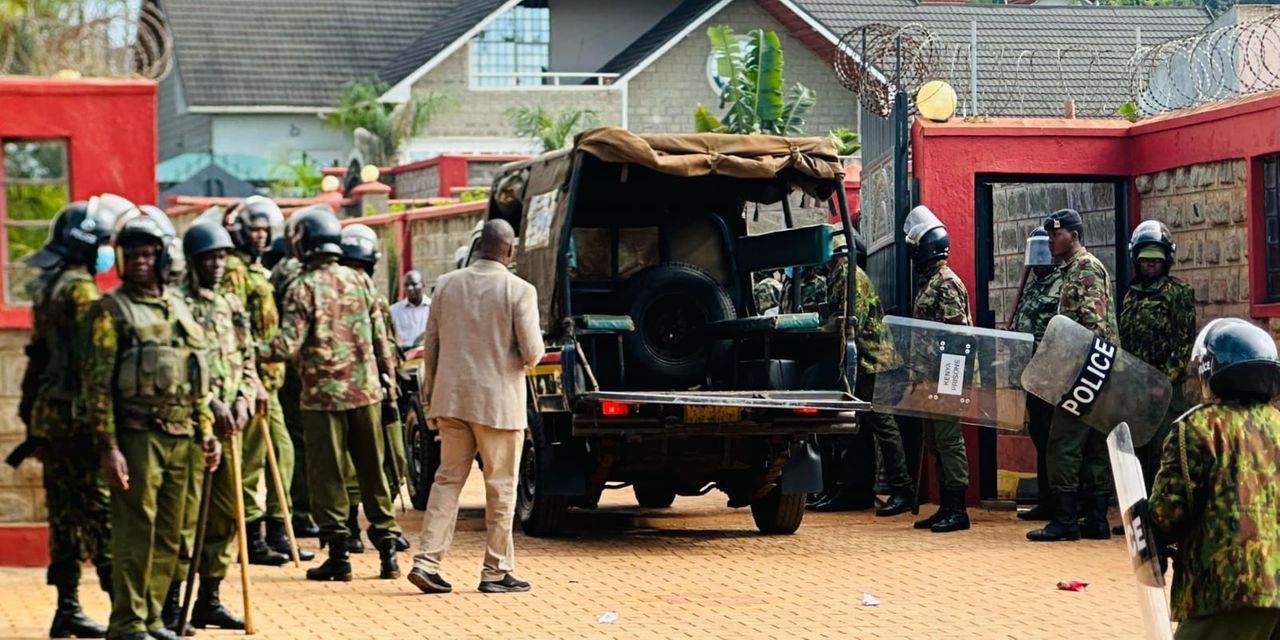
At Kitale National Polytechnic, the situation took an ugly turn. According to witnesses and social media users, police fired teargas into the institution, dispersing unarmed students. One viral post described a young lady whose only "crime" was being Kenyan, under a government “run by Yamune cartels.”
Worse, reports say that Eva Academy, a primary school, was also hit with teargas. What began as a political crackdown had now morphed into a brutal assault on children and students, a tactic more befitting autocracies than democracies.
One user, @KenyanSays, didn’t mince words:
“Ruto has now turned into a full-time dictator supported by the blood-based government!”
The government may have underestimated the reach, organization, and resolve of Gen Z. These protests were not spontaneous riots—they were synchronized resistance. Within hours of the raid, police vehicles had been deflated, roads blocked, and chants of Luhya circumcision songs filled the air—symbolizing a point of no return.
One user captured the mood:
“If you think you’re a real man, go to Kitale right now and shout ‘Ruto’ or ‘Wetangula’. See how far you get.”
This wasn’t just about Natembeya—it was about reclaiming dignity, territory, and a voice in governance.
Zoom out and the Kitale standoff begins to look eerily familiar. Raids, arrests, and targeted teargas have become common tools used on dissenters—especially those outside the president’s inner circle.
When Ruto’s critics rise, EACC often follows. When youth protest, teargas rains down on schools. When women and students gather, batons and armored vehicles roll in.
If this is a coincidence, it’s one too consistent to ignore.

State Tools Turned Political Weapons
Institutions like the EACC may no longer be seen as neutral. They risk becoming tools of political score-settling.
Youth No Longer Afraid
The post-2022 Gen Z voter isn’t watching from the sidelines—they’re on the frontlines. They’re loud, fast, and ideologically sharp.
Natembeya Gains Popularity
If this was a plan to clip his wings, it may have backfired. He now wears the mantle of victim-hero.
Ruto Faces a New Political Enemy
Not a person—but a generation. One that can block roads faster than helicopters can land.
Schools as War Zones Is a Red Line
The use of chemical crowd dispersal agents near children may galvanize broader civil resistance.
Kitale was not just another raid—it was a battle over Kenya’s political soul. One where the government flexed its muscle, but the youth showed it has backbone. As the dust settles, Natembeya stands taller, the youth roar louder, and the regime? It stands accused—not in court—but in the court of public opinion.
This isn't just politics. It's a power struggle. And for once, Gen Z might be holding the pen that writes the next chapter.






0 comments