
Your Read is on the Way
Every Story Matters
Every Story Matters
The Hydropower Boom in Africa: A Green Energy Revolution Africa is tapping into its immense hydropower potential, ushering in an era of renewable energy. With monumental projects like Ethiopia’s Grand Ethiopian Renaissance Dam (GERD) and the Inga Dams in the Democratic Republic of Congo, the continent is gearing up to address its energy demands sustainably while driving economic growth.
Northern Kenya is a region rich in resources, cultural diversity, and strategic trade potential, yet it remains underutilized in the national development agenda.

Can AI Help cure HIV AIDS in 2025

Why Ruiru is Almost Dominating Thika in 2025

Mathare Exposed! Discover Mathare-Nairobi through an immersive ground and aerial Tour- HD

Bullet Bras Evolution || Where did Bullet Bras go to?
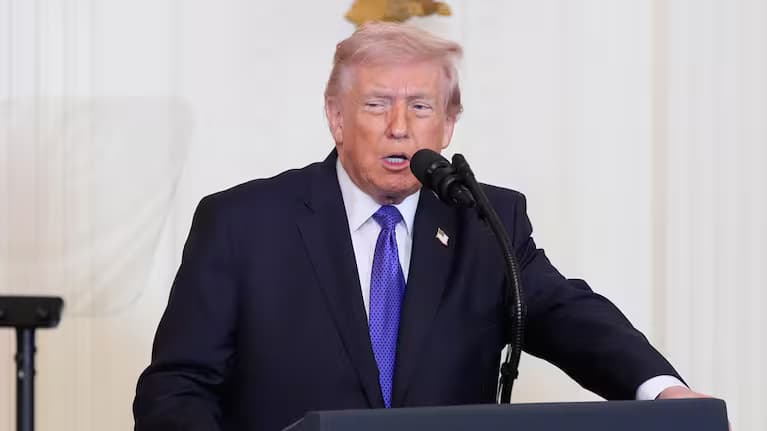
The latest crisis surrounding the Strait of Hormuz has triggered more than geopolitical tension—it has exposed a fundamental rift within the Western alliance. When President Donald Trump called for a coordinated military effort to “liberate” the vital shipping route, the response from key allies was not solidarity, but refusal.
This moment represents a striking departure from decades of transatlantic cooperation. It raises a critical question: is NATO experiencing a temporary disagreement, or entering a deeper phase of fragmentation?
The Strait of Hormuz is one of the most strategically significant waterways in the world. A large share of global oil shipments passes through this narrow corridor, making it indispensable to energy markets and economic stability.
Any sustained disruption threatens not only regional security but the functioning of the global economy. For this reason, ensuring open navigation has long been considered a shared international priority.
In response to rising tensions and disruptions, President Trump proposed a U.S.-led military coalition aimed at securing the strait by force if necessary. The initiative was framed as a defense of global trade and maritime freedom.
However, several NATO allies declined to participate. Their objections were not merely procedural but strategic. Many governments questioned the risks of escalation, the clarity of objectives, and the potential consequences of direct confrontation.
Rather than endorsing military action, these countries emphasized diplomatic engagement, de-escalation, and multilateral negotiation—approaches that stood in sharp contrast to Washington’s more assertive stance.
A central concern among allied nations is the possibility of a broader conflict. Direct military action could provoke retaliation and draw multiple actors into a destabilizing confrontation, particularly involving Iran.
Allies have shown increasing reluctance to engage in operations without clearly defined objectives. Questions about duration, scope, and exit strategies contributed to hesitation.
European nations, in particular, are placing greater emphasis on stability, economic security, and diplomatic solutions. Military intervention is no longer the default response.
Recent years have seen growing political and economic tensions within the alliance. These strains have reduced confidence in coordinated decision-making and weakened the foundation for unified action.
The crisis illustrates a shift in NATO’s functioning. Rather than acting as a uniformly aligned bloc, the alliance is evolving into a more flexible coalition where participation varies by issue.
Visible divisions risk undermining NATO’s image as a cohesive force. Perceived disunity can weaken deterrence and embolden adversaries.
Despite these tensions, NATO’s core framework remains intact. Its collective defense commitments and institutional structures continue to function, suggesting resilience rather than imminent collapse.
The rejection of Trump’s Hormuz initiative does not mark the end of North Atlantic Treaty Organization, but it does represent a turning point.
The alliance is no longer defined by automatic consensus or unquestioned U.S. leadership. Instead, it is entering a phase where national interests, strategic caution, and political independence play a larger role in shaping decisions.
What is unfolding is not the collapse of NATO, but its transformation. The Hormuz crisis has revealed an alliance under pressure—one that must adapt to changing global dynamics and internal differences.
Whether NATO emerges stronger or more fragmented will depend on its ability to reconcile these divisions and redefine cooperation in a more complex and multipolar world.




0 comments