
Your Read is on the Way
Every Story Matters
Every Story Matters
The Hydropower Boom in Africa: A Green Energy Revolution Africa is tapping into its immense hydropower potential, ushering in an era of renewable energy. With monumental projects like Ethiopia’s Grand Ethiopian Renaissance Dam (GERD) and the Inga Dams in the Democratic Republic of Congo, the continent is gearing up to address its energy demands sustainably while driving economic growth.
Northern Kenya is a region rich in resources, cultural diversity, and strategic trade potential, yet it remains underutilized in the national development agenda.

Can AI Help cure HIV AIDS in 2025

Why Ruiru is Almost Dominating Thika in 2025

Mathare Exposed! Discover Mathare-Nairobi through an immersive ground and aerial Tour- HD

Bullet Bras Evolution || Where did Bullet Bras go to?
It was a moment that defied expectations and ignited controversy. A group of Muslim women stood before Donald Trump, smiling, gracious, and without hijabs. In regions where veiling is not just a norm but often a legal or social requirement, this sight raised eyebrows and questions in equal measure.
Why would Muslim women, often at the center of debates over modesty and tradition, choose this moment to appear unveiled? Was it cultural accommodation, diplomatic strategy, or something deeper?
In many Muslim-majority societies, especially in the Gulf, wearing a hijab in public is more than a religious act. It signals belonging, modesty, and adherence to social norms. Choosing to go without it, particularly in a formal setting, is rarely casual.
The women’s decision to meet Trump without hijabs was not spontaneous. It was deliberate, possibly endorsed by state protocol. And that makes it a powerful visual statement. Whether it was designed to show openness to Western values or simply to offer a polished, modern image, the message was unmistakable.
This was not about abandoning faith. It was about projecting a version of Islam and womanhood that is more complex, flexible, and globally palatable.
Donald Trump’s presidency was marked by policies that many Muslims found offensive or exclusionary, including travel bans targeting several Muslim-majority countries. The image of unveiled Muslim women receiving him warmly created a contrast that was both jarring and politically significant.
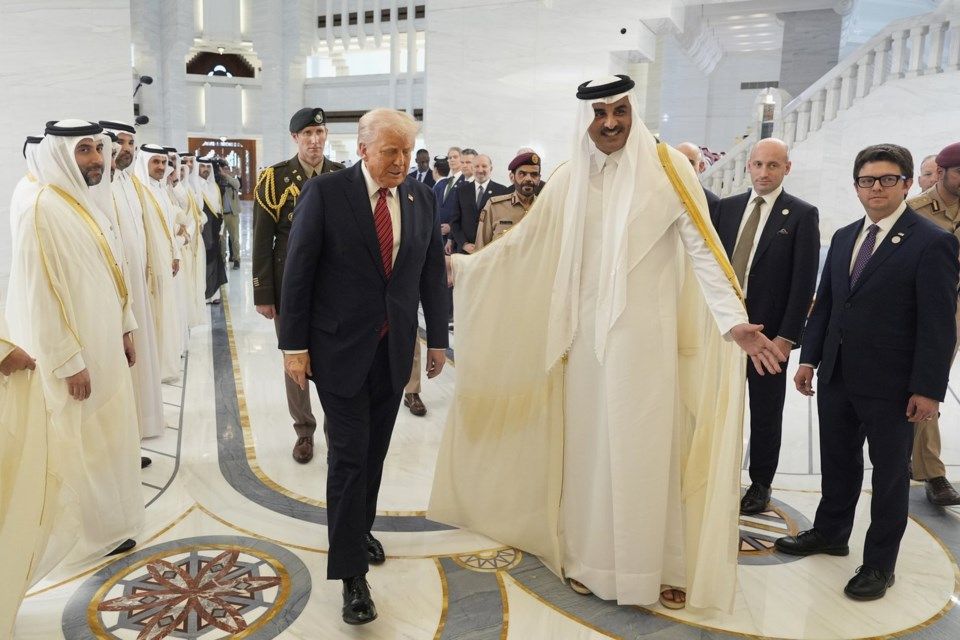
Some say it was a gesture of hospitality, a nod to Western customs. Others argue it was a form of subtle appeasement, designed to smooth over geopolitical tensions and reinforce alliances.
But one thing is clear. The decision to appear unveiled was not neutral. In a culture where every public appearance carries weight, the absence of the hijab spoke volumes. It may have been less about Trump and more about the women’s societies telling the world, “We decide how we present ourselves, not the expectations of others.”
Reactions to the incident were sharply divided. Critics accused the women of bending to foreign influence or betraying religious norms. Supporters saw the act as a sign of agency, a refusal to be boxed in by stereotypes.
In some interpretations, removing the hijab for this occasion was an assertion of control. A woman who chooses when and where to wear it exercises power over her image and her narrative. In spaces where the hijab is often expected, not wearing it is a louder statement than donning it.
It’s important to note that not all Muslim women choose the hijab for the same reasons. Faith, family, politics, and personal expression all play a role. In this case, the absence of the hijab might have been a way to say, “We are more than what we wear.”
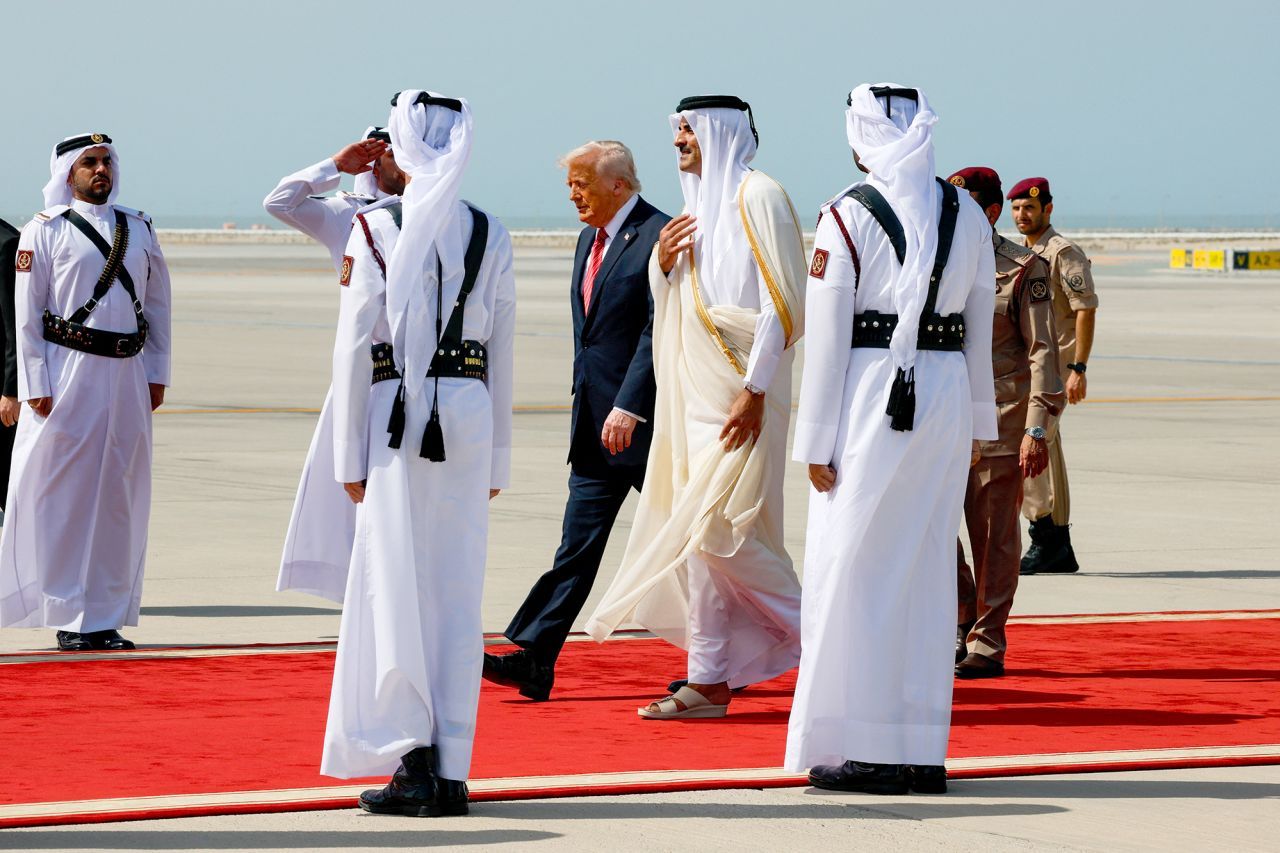
This event didn’t happen in isolation. In places like Saudi Arabia and the UAE, women's roles are evolving quickly. Women drive, run for office, manage businesses, and are increasingly featured in the media. What once seemed unimaginable is now part of a controlled but real shift toward modernity.
Trump’s visit was a high-profile occasion. The women’s appearance was likely choreographed to reflect this broader evolution. Every detail, from the attire to the setting, would have been planned for maximum impact.
The unveiling may have been part of a larger message. “We are strong, modern, and globally engaged. And we are willing to challenge old assumptions.”
In a world where clothing carries political, religious, and personal meanings, the decision of Muslim women to meet a world leader without hijabs is anything but trivial. It’s a commentary on power, perception, and choice.
Whether driven by diplomacy, strategy, or subtle resistance, this gesture challenged the world to rethink its assumptions about Muslim women. It reminded us that identity isn’t static. It’s a conversation — and sometimes a confrontation — between tradition, progress, and the gaze of global politics.
These women didn’t just welcome a president. They delivered a message, loud and clear, with nothing on their heads and everything on their minds.





0 comments