
Your Read is on the Way
Every Story Matters
Every Story Matters
The Hydropower Boom in Africa: A Green Energy Revolution Africa is tapping into its immense hydropower potential, ushering in an era of renewable energy. With monumental projects like Ethiopia’s Grand Ethiopian Renaissance Dam (GERD) and the Inga Dams in the Democratic Republic of Congo, the continent is gearing up to address its energy demands sustainably while driving economic growth.
Northern Kenya is a region rich in resources, cultural diversity, and strategic trade potential, yet it remains underutilized in the national development agenda.

Can AI Help cure HIV AIDS in 2025

Why Ruiru is Almost Dominating Thika in 2025

Mathare Exposed! Discover Mathare-Nairobi through an immersive ground and aerial Tour- HD

Bullet Bras Evolution || Where did Bullet Bras go to?
In a development that has heightened global concern over the worsening Israel–Iran conflict, former United States President Donald Trump made a provocative declaration against Iran’s Supreme Leader, Ayatollah Ali Khamenei. Trump described Khamenei as an "easy target" and suggested that while the U.S. has the capability to neutralize him, such action would not be taken immediately.
These remarks come as Israel continues its military campaign against Iranian interests, and Washington’s involvement becomes increasingly likely.
Trump’s comments, made via his political platform, implied that the U.S. possesses precise intelligence on Khamenei’s whereabouts. He emphasized that although Iran's top leader could be targeted, the U.S. would refrain from immediate lethal action—framing the message as both a threat and a warning.
Trump stated that American leadership, under his oversight, is closely monitoring Iran’s moves and stands ready to respond decisively. His use of the term “easy target” was interpreted by analysts as a deliberate show of force, intended to deter further escalation by Tehran.
In a bold policy pronouncement, Trump demanded that Iran offer an unconditional surrender. He described Iran’s government as destabilizing and dangerous, and warned that any further provocations would invite significant retaliation. This stance aligns with Trump’s historical approach to Iran, marked by the “maximum pressure” doctrine during his previous administration.
The language of “unconditional surrender” is particularly noteworthy—it signals not only a refusal to negotiate with Tehran, but a demand for complete capitulation, echoing wartime rhetoric more than diplomatic discourse.
Amid these strong statements, Trump convened his national security team in the White House Situation Room, suggesting that military options are actively being considered. Defense Secretary Pete Hegseth and Secretary of State Marco Rubio reportedly support more aggressive action, including possible airstrikes on Iranian nuclear assets.
However, others within Trump’s inner circle—including Vice President J.D. Vance and National Intelligence Director Tulsi Gabbard—have urged caution, warning of the long-term costs of a deeper military conflict in the Middle East.
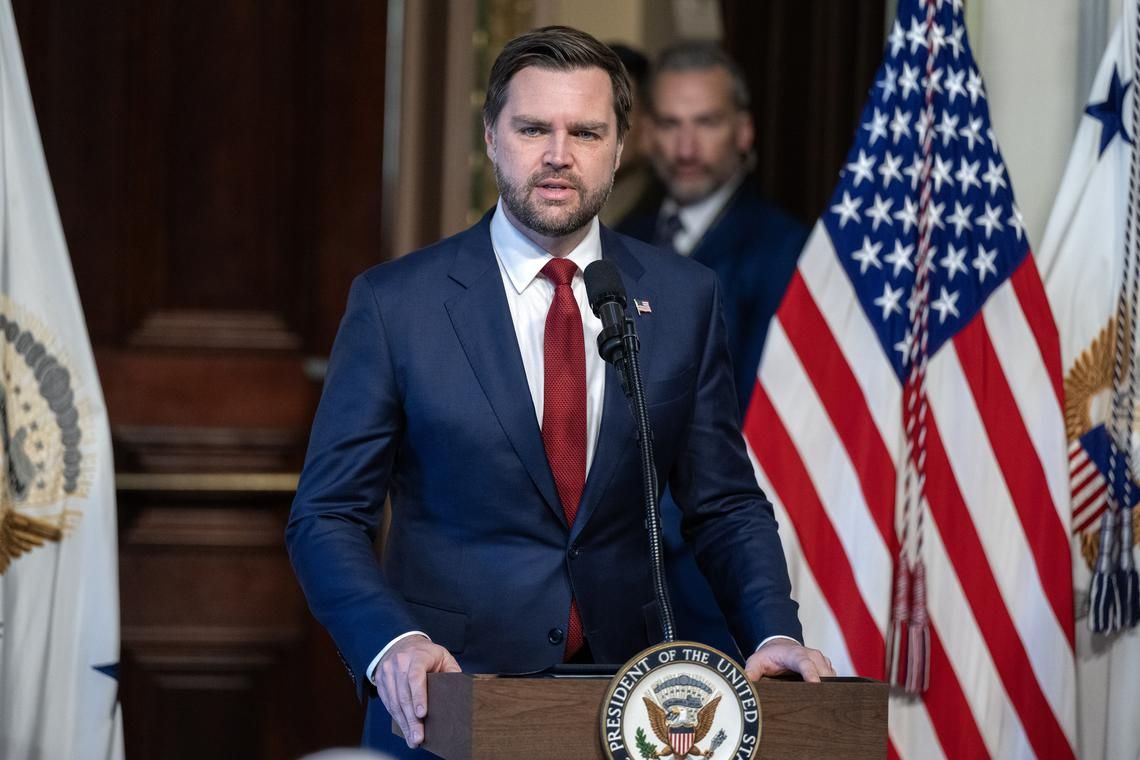
Though Trump has publicly signaled restraint, the buildup of American military forces in the region and high-level consultations indicate the administration is preparing for all scenarios.
This exchange takes place against the backdrop of a highly volatile conflict between Israel and Iran. Israel has conducted multiple airstrikes targeting Iranian military infrastructure, and Iran has retaliated with missile attacks aimed at Israeli cities. While the Biden administration remained cautious in its final months, Trump’s return to office has brought a sharp escalation in rhetoric and strategic signaling.
Trump’s claim that the U.S. and Israel effectively “control” Iranian airspace remains unverified but adds to the growing perception that Washington is preparing to deepen its engagement in the conflict.
Within the United States, Trump’s remarks have sparked debate. While many Republican lawmakers support a hardline approach, others have voiced concern about the risks of open warfare. In Congress, legislation is being drafted to curtail the president’s authority to engage Iran militarily without congressional approval.
The administration, however, appears to be leveraging ambiguity—offering just enough threat to provoke caution from Iran, while avoiding the immediate responsibilities of war.
Donald Trump’s recent remarks have added a new dimension to the already precarious Middle East crisis. By labeling Ayatollah Khamenei an “easy target,” demanding unconditional surrender, and convening military leaders, Trump has sent an unmistakable message to Tehran: the United States under his leadership will not tolerate further provocation.
Whether this signals a calculated diplomatic bluff or a prelude to military intervention remains to be seen. What is certain, however, is that the risk of broader regional conflict has significantly increased.






0 comments