
Your Read is on the Way
Every Story Matters
Every Story Matters
The Hydropower Boom in Africa: A Green Energy Revolution Africa is tapping into its immense hydropower potential, ushering in an era of renewable energy. With monumental projects like Ethiopia’s Grand Ethiopian Renaissance Dam (GERD) and the Inga Dams in the Democratic Republic of Congo, the continent is gearing up to address its energy demands sustainably while driving economic growth.
Northern Kenya is a region rich in resources, cultural diversity, and strategic trade potential, yet it remains underutilized in the national development agenda.

Can AI Help cure HIV AIDS in 2025

Why Ruiru is Almost Dominating Thika in 2025

Mathare Exposed! Discover Mathare-Nairobi through an immersive ground and aerial Tour- HD

Bullet Bras Evolution || Where did Bullet Bras go to?
U.S. President Donald Trump left the G7 summit in Canada ahead of schedule on June 16, 2025, cutting short his participation in high-level diplomatic talks. The reason: an urgent escalation in the Middle East involving Israel and Iran. His early departure was not a minor scheduling shift—it was a calculated geopolitical signal in response to rising military tensions.
Soon after departing, Trump issued a dramatic warning to the people of Tehran, calling for an immediate evacuation of the Iranian capital. His message was unambiguous, presenting the evacuation as a matter of urgency due to imminent danger from heightened regional conflict.
While en route back to Washington, President Trump published an urgent message advising all Tehran residents to evacuate immediately. The warning followed reports of intensified Israeli strikes against key Iranian infrastructure. Though the U.S. has not initiated any offensive actions, the tone of Trump's message clearly indicated serious concern over the escalating situation.
Just days prior, President Trump had hinted at a narrow diplomatic window for Iran to comply with international demands. But by the time he boarded Air Force One, that approach had shifted. In an aggressive turn, he declared that Iran must never be allowed to obtain a nuclear weapon, strongly rejecting any European calls for a ceasefire.
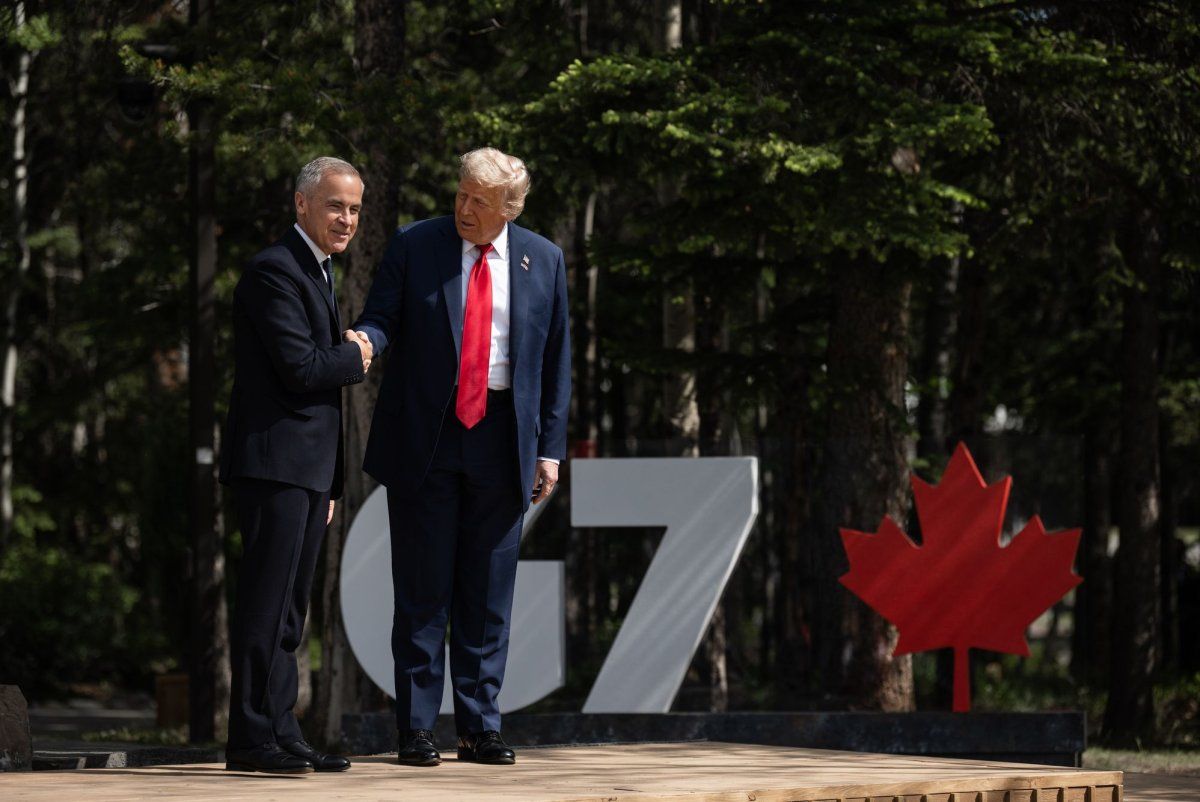
Trump criticized Western allies who were advocating restraint, arguing that de-escalation without enforcement only encourages Iran’s ambitions. His stance was firm—there would be no deals, no delays, and no tolerance for nuclear proliferation.
Although the United States has not formally joined Israel’s military operations, American defense systems have been repositioned across the region. Additional naval and aerial units have been deployed in a show of strength to safeguard American assets and allies.
Defense officials emphasized that the U.S. military posture remains defensive, though fully prepared for retaliation if provoked. Trump reiterated that any attack on U.S. forces or interests would result in immediate and overwhelming consequences.
President Trump's unexpected departure sent shockwaves through the G7 summit. Leaders were preparing to issue a unified response to the Middle East crisis, but the exit disrupted consensus-building efforts. Without Trump at the table, the summit concluded without a joint statement, reflecting growing rifts between the U.S. and its allies.
European diplomats expressed concern that the U.S.'s unilateral posture could inflame tensions, while Washington maintained that strong deterrence was the only viable course.
The evacuation order issued to Tehran is one of the most direct warnings the city has ever received from a sitting U.S. president. It signals a possible tipping point in the standoff. Whether this is a final push for deterrence or a prelude to direct action remains uncertain. What is clear, however, is that the region stands on the edge of a deeper conflict, with Trump at the center of international decision-making once again.






0 comments