
Your Read is on the Way
Every Story Matters
Every Story Matters
The Hydropower Boom in Africa: A Green Energy Revolution Africa is tapping into its immense hydropower potential, ushering in an era of renewable energy. With monumental projects like Ethiopia’s Grand Ethiopian Renaissance Dam (GERD) and the Inga Dams in the Democratic Republic of Congo, the continent is gearing up to address its energy demands sustainably while driving economic growth.
Northern Kenya is a region rich in resources, cultural diversity, and strategic trade potential, yet it remains underutilized in the national development agenda.

Can AI Help cure HIV AIDS in 2025

Why Ruiru is Almost Dominating Thika in 2025

Mathare Exposed! Discover Mathare-Nairobi through an immersive ground and aerial Tour- HD

Bullet Bras Evolution || Where did Bullet Bras go to?
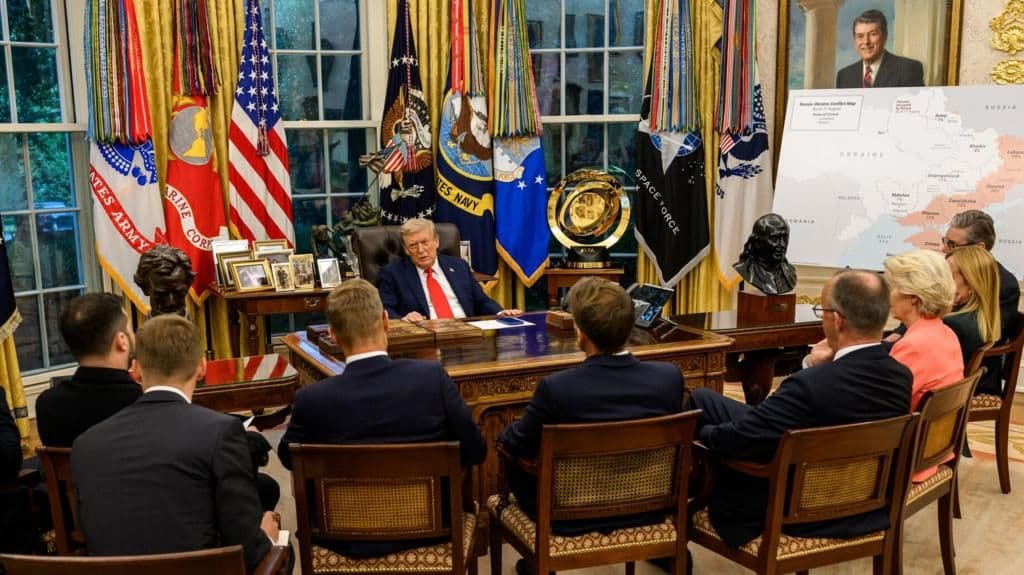
U.S. President Donald Trump has firmly stated that American soldiers will not be sent to Ukraine as part of Washington’s security guarantees. This position marks a clear boundary in U.S. involvement in the ongoing war with Russia, signaling that while America will support Kyiv, it will stop short of direct military engagement on the ground.
Trump’s remarks highlight a strategy focused on limiting U.S. exposure to the risks of escalation while still presenting America as a strong global player. His stance reflects his long-held view that Washington should avoid entangling itself in “endless wars” and instead pursue alternative avenues of support.
While troops are off the table, Trump suggested that Ukraine would not be left defenseless. Security guarantees could come in the form of advanced weapons shipments, expanded intelligence sharing, financial aid, and long-term defense agreements. This type of support aims to strengthen Ukraine’s military position without involving direct U.S. combat forces.
Such an approach mirrors Washington’s broader policy since the war began: arming Ukraine with cutting-edge equipment like HIMARS rocket systems and Patriot missile defenses while ensuring U.S. troops remain outside the battlefield.
Trump was keen to underline America’s commitment to NATO, especially its Article 5 collective defense clause, which guarantees that an attack on one member is considered an attack on all. By doing so, he reassured allies that the U.S. is not retreating from its global responsibilities, even if it refuses to deploy troops to Ukraine.
This strategy reflects a balancing act: supporting Ukraine indirectly while relying on NATO as the central framework for deterring Russian aggression in Europe. The emphasis on NATO also sends a signal to Moscow that Washington and its allies remain united, even without U.S. boots on Ukrainian soil.
One of the underlying reasons for ruling out troop deployment is the high risk of escalation. Direct U.S. military involvement could lead to a broader confrontation with Russia, a nuclear power. Trump’s cautious approach underscores the importance of managing tensions carefully while ensuring Ukraine does not fall under Russian domination.
This reflects a pragmatic calculation: America can play a decisive role without risking a full-scale war between superpowers. By limiting involvement to financial, logistical, and strategic support, the U.S. aims to keep the conflict contained.
Reactions to Trump’s remarks have been mixed. Some European allies view the assurance of ongoing U.S. support—without troops—as a realistic and responsible approach. Others, however, fear that it could embolden Russia by signaling limits to America’s commitment.
For Ukraine, the message is bittersweet. While Kyiv continues to receive critical military aid and political backing, the absence of direct U.S. military involvement highlights the limits of Western support. Still, the guarantees of advanced weapons and intelligence remain vital lifelines in the war effort.





0 comments