
Your Read is on the Way
Every Story Matters
Every Story Matters
The Hydropower Boom in Africa: A Green Energy Revolution Africa is tapping into its immense hydropower potential, ushering in an era of renewable energy. With monumental projects like Ethiopia’s Grand Ethiopian Renaissance Dam (GERD) and the Inga Dams in the Democratic Republic of Congo, the continent is gearing up to address its energy demands sustainably while driving economic growth.
Northern Kenya is a region rich in resources, cultural diversity, and strategic trade potential, yet it remains underutilized in the national development agenda.

Can AI Help cure HIV AIDS in 2025

Why Ruiru is Almost Dominating Thika in 2025

Mathare Exposed! Discover Mathare-Nairobi through an immersive ground and aerial Tour- HD

Bullet Bras Evolution || Where did Bullet Bras go to?
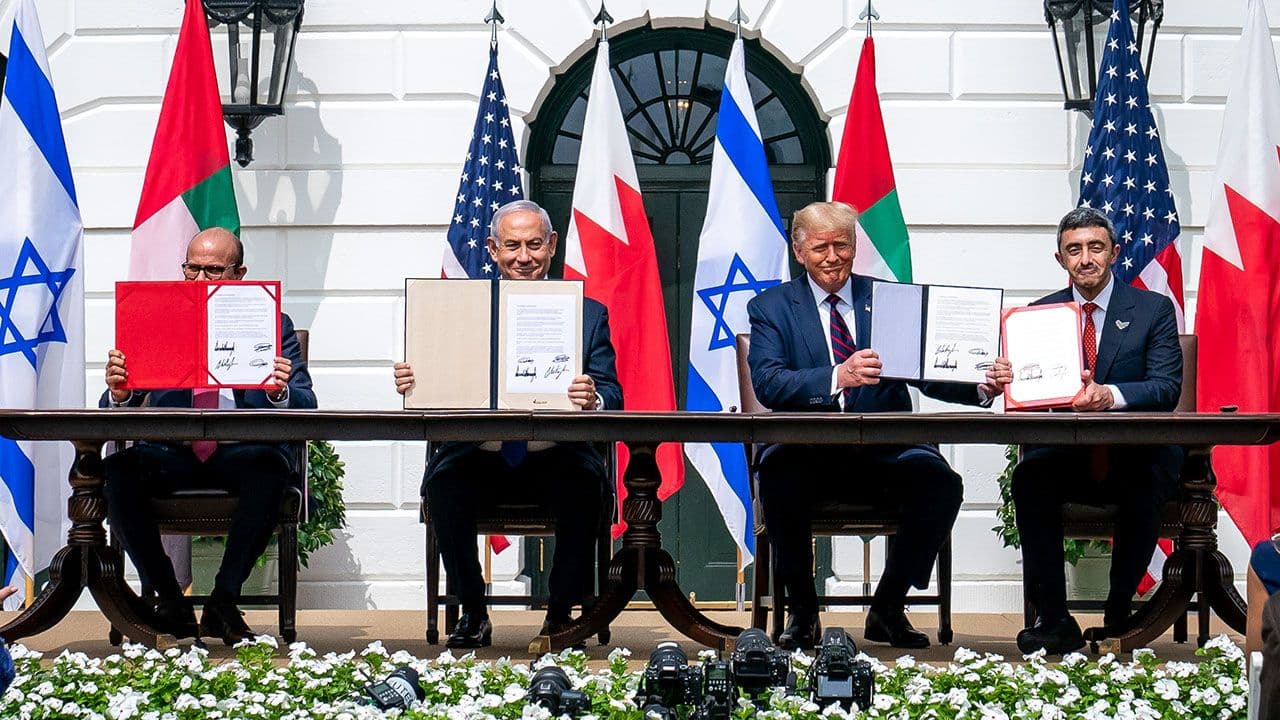
The Abraham Accords were meant to signal a new chapter in the Middle East—one built on normalization, trade, and cautious cooperation between Israel and several Arab states like the UAE, Bahrain, Morocco, and Sudan.
But the Iran war has changed the atmosphere completely. What was once a diplomatic project built in peacetime is now being tested in a region edging toward open conflict.
When the accords were signed, the region was tense but relatively stable in terms of direct warfare. Iran was a concern, but mostly through proxy conflicts and political pressure rather than full-scale confrontation.
Now that has shifted. With open strikes, retaliation, and widening military activity, the region feels less like a diplomatic success story and more like a pressure cooker. Agreements built for calm times are now being tested in chaos.
For countries like the UAE and Bahrain, the situation is delicate. The Abraham Accords brought economic opportunity and security cooperation, but war changes the calculation quickly.
They now have to balance three uncomfortable realities: staying close to Israel and the U.S., avoiding becoming a target in a wider conflict, and managing domestic sensitivity to a highly emotional war in the region.
It’s no longer just about diplomacy—it’s about survival and perception.
Even where governments continue quiet cooperation with Israel, public opinion becomes harder to ignore during wartime. Images of destruction and rising casualties shift the mood across the region.
You can also read this related article: Somaliland Enters the Abraham Accords Conversation — And Africa Has No Playbook for What Comes Next
This doesn’t necessarily break the accords, but it does make governments more cautious. Meetings become quieter, language becomes softer, and open alignment becomes politically risky.
The Abraham Accords were originally about building economic bridges. But in a wartime environment, security dominates everything.
Airspace safety, missile threats, maritime routes, and energy infrastructure suddenly matter more than trade deals or tourism agreements. Cooperation doesn’t disappear—it just becomes more sensitive and less visible.
On the strain is Iran’s role in the conflict. Whether through direct action or regional influence, Iran’s involvement raises the stakes for every country in the neighborhood.
For Abraham Accords members, the fear is simple: a wider war does not stay contained between Iran and Israel. It spreads into shipping lanes, energy networks, and neighboring states.
That fear makes neutrality difficult and alignment risky at the same time.
The Iran war is not ending the Abraham Accords, but it is changing what they mean in practice.
What once looked like a confident step toward regional cooperation is now being tested by fear, pressure, and uncertainty. The real question is not whether the accords still exist—but whether they can survive when the region is no longer at peace.




0 comments