
Your Read is on the Way
Every Story Matters
Every Story Matters
The Hydropower Boom in Africa: A Green Energy Revolution Africa is tapping into its immense hydropower potential, ushering in an era of renewable energy. With monumental projects like Ethiopia’s Grand Ethiopian Renaissance Dam (GERD) and the Inga Dams in the Democratic Republic of Congo, the continent is gearing up to address its energy demands sustainably while driving economic growth.
Northern Kenya is a region rich in resources, cultural diversity, and strategic trade potential, yet it remains underutilized in the national development agenda.

Can AI Help cure HIV AIDS in 2025

Why Ruiru is Almost Dominating Thika in 2025

Mathare Exposed! Discover Mathare-Nairobi through an immersive ground and aerial Tour- HD

Bullet Bras Evolution || Where did Bullet Bras go to?
As tensions escalate in Gaza, many residents of Gaza City are refusing to comply with Israeli evacuation orders, choosing instead to remain in their homes amid rising risks. This act of civil resistance underscores a deeply rooted connection to land, identity, and the collective trauma of displacement that has shaped generations of Palestinians.
In recent weeks, the Israeli government has signaled a strategic shift in its military operations, announcing plans to assume full control over Gaza City. This marks a significant escalation in an already protracted and devastating conflict. As part of the strategy, Israeli forces have issued repeated warnings and evacuation orders to the city’s residents, urging them to flee southward in anticipation of further military activity.
The planned incursion into Gaza City represents not only a tactical maneuver but also a potential turning point in the humanitarian crisis. The city, once the most populous and urbanized area of the Gaza Strip, is now at the center of renewed military focus, drawing global concern over the fate of its civilian population.
Despite mounting danger, many Palestinians in Gaza City have chosen not to evacuate. Their refusal is not born of ignorance or indifference, but of principle. Residents, many of whom have already experienced multiple displacements over the years, have expressed a deep unwillingness to abandon what remains of their homes and neighborhoods.
This widespread defiance is rooted in a collective experience of dispossession and historical trauma. For many, leaving Gaza City is not simply a matter of safety, but a threat to their identity and very existence. Displacement, even if temporary, evokes painful memories of previous conflicts, during which many fled and were never allowed to return.
The repeated loss of homes, communities, and infrastructure has left deep scars. As a result, many view remaining in place—even under bombardment—as the only means of asserting control over their lives and preserving their dignity.
The Palestinian relationship with the land is profoundly cultural, emotional, and historical. Homes in Gaza City are often multigenerational, passed down from parents to children. Neighborhoods are not just physical spaces but social and familial networks that provide a sense of security and identity, even in times of conflict.
For many residents, the decision to stay is inseparable from the belief that to leave is to surrender one’s right to return. There is a widespread fear that evacuation orders could become permanent displacements, echoing the mass dislocations of 1948 and 1967, when hundreds of thousands of Palestinians became refugees with no path to return. As a result, remaining in place has become a form of resistance as well as survival.
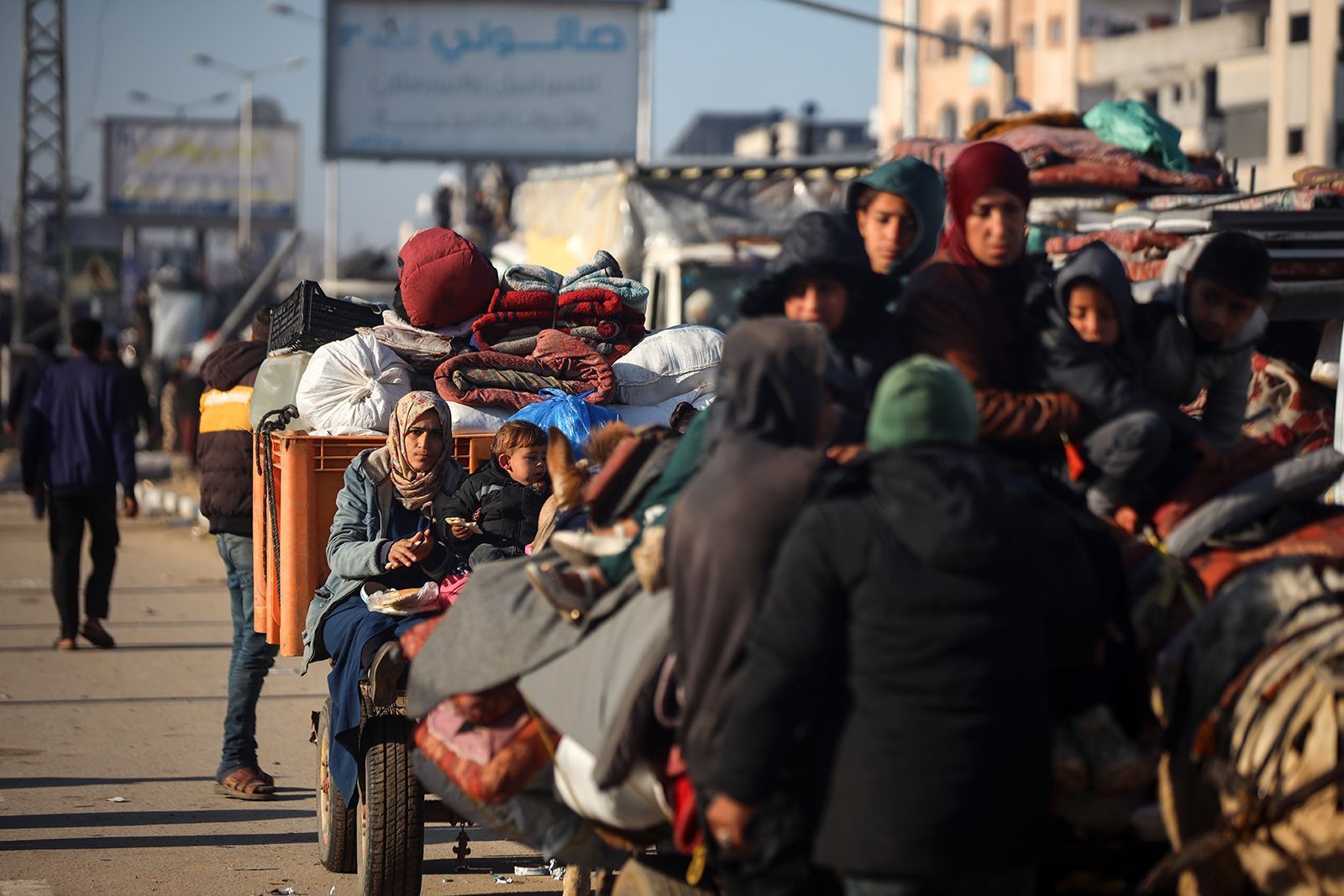
Families speak of choosing to stay together, even in ruins, rather than scatter once again. Some have moved back into damaged or destroyed homes, living amid rubble to reestablish a presence and claim continuity. Others have built makeshift shelters or taken refuge in partially standing buildings, refusing to sever ties with the spaces they consider sacred.
The humanitarian situation in Gaza City continues to deteriorate rapidly. With large parts of the city already destroyed or rendered uninhabitable, access to clean water, food, medical care, and electricity is extremely limited. Aid agencies face significant obstacles in delivering assistance due to ongoing hostilities and blockades.
Residents who remain are doing so under the constant threat of violence, without reliable access to shelter or safety. Medical facilities, where they exist, are overwhelmed or damaged. Schools and community centers that once served as temporary shelters are now either full or closed. Entire neighborhoods lie in ruins, yet many continue to return daily to check on their homes, retrieve belongings, or rebuild whatever they can.
Despite these conditions, the will to remain persists. Many see no alternative. In the minds of countless residents, to evacuate is to give up—not just territory, but history, memory, and meaning.
The refusal to evacuate Gaza City has become symbolic of Palestinian endurance and resistance. In the face of overwhelming force, residents are determined to assert their presence. Their stance reflects a broader sentiment found across Palestinian communities: that staying on the land, even under siege, is the only way to protect their identity and future.
This form of resistance is not rooted in violence but in refusal—refusal to be erased, displaced, or silenced. It sends a powerful message that the connection to home, no matter how damaged or imperiled, is stronger than fear or coercion.
For many Palestinians, this is not just about Gaza City—it is about the right to exist, to remain, and to determine their future on their own land.






0 comments