
Your Read is on the Way
Every Story Matters
Every Story Matters
The Hydropower Boom in Africa: A Green Energy Revolution Africa is tapping into its immense hydropower potential, ushering in an era of renewable energy. With monumental projects like Ethiopia’s Grand Ethiopian Renaissance Dam (GERD) and the Inga Dams in the Democratic Republic of Congo, the continent is gearing up to address its energy demands sustainably while driving economic growth.
Northern Kenya is a region rich in resources, cultural diversity, and strategic trade potential, yet it remains underutilized in the national development agenda.

Can AI Help cure HIV AIDS in 2025

Why Ruiru is Almost Dominating Thika in 2025

Mathare Exposed! Discover Mathare-Nairobi through an immersive ground and aerial Tour- HD

Bullet Bras Evolution || Where did Bullet Bras go to?
In an era when the world demands urgent climate action, the giants of the fossil fuel industry are being forced to rethink their legacy. The likes of Shell and BP, once symbols of relentless oil extraction, now try to wear the cloak of sustainability.
But with BP recently retreating from its ambitious renewable energy goals and redoubling its focus on oil and gas to appease shareholders, the spotlight has shifted sharply onto Shell. Can it genuinely become the face of green transformation, or is it merely staging an elaborate performance?
Who Exactly Is Shell?
To understand Shell’s role in the climate narrative, we must first understand who they are. Shell, officially known as Shell plc, stands among the world's largest energy corporations.
Headquartered in London and active across over 70 countries, Shell has historically been synonymous with the global oil and gas trade, providing fuels, lubricants, petrochemicals, and natural gas to millions. But in recent years, as the tide of public opinion has turned against carbon-heavy industries, Shell has attempted to reposition itself as a key player in the transition toward cleaner energy.
However, for a company with such deep roots in fossil fuels, the question remains: is Shell truly evolving, or just learning how to repackage the same old business in a greener wrapper?
How Is Shell Trying to Go Green?
Shell has made sure the world knows it has a plan—a strategy it calls “Powering Progress”—designed to guide its shift from being a traditional oil company to a business model that includes cleaner energy solutions. But whether this plan is a bold leap forward or just clever branding is up for debate.
Shell’s green efforts can be broken down into several key areas:
Renewable Energy Investments: Shell has committed billions of dollars to grow its portfolio in wind power, solar farms, and renewable electricity trading. These projects are spread across Europe, the Americas, and parts of Asia, intended to offset their carbon-heavy operations.
Electric Vehicle Infrastructure: Recognizing the boom in electric vehicles (EVs), Shell is rapidly expanding its EV charging networks. With the ambition of managing over 500,000 charging points globally by 2025, Shell is positioning itself as an essential part of the electric mobility revolution.
Hydrogen and Biofuels: Shell is banking on low-carbon fuels like hydrogen and biofuels to power industries that are difficult to electrify, such as aviation and heavy transport.
Carbon Capture and Storage (CCS): Understanding that simply cutting emissions won’t be enough while still producing oil and gas, Shell is investing heavily in CCS technology to trap carbon dioxide emissions and store them underground—a solution that many critics argue is unproven at the scale required.
Despite these initiatives, a closer look reveals a concerning reality: the vast majority of Shell’s spending remains committed to its core oil and gas business. For every dollar Shell invests in renewables, several more go toward extracting and selling fossil fuels.
So while Shell is making visible moves toward greener energy, the pace and scale of its shift have left environmental advocates deeply skeptical.
What Is Shell’s Goal for Climate Change?
On paper, Shell’s climate goal is clear: to become a net-zero emissions energy company by 2050. This is meant to include both the emissions from its own operations and the emissions generated by the use of its products, which make up the vast majority of its carbon footprint.
Shell has laid out some interim steps along this path:
Cut carbon intensity of its products by 20% by 2030, 45% by 2035, and 100% by 2050.
Transform its energy offerings to lean more heavily on renewables, low-carbon fuels, and electrification.
Push customers and industries toward adopting cleaner solutions through partnerships and innovation.
However, Shell’s net-zero vision hinges on some controversial tactics. Rather than completely phasing out fossil fuels, Shell plans to balance them with carbon offsets, reforestation projects, and carbon capture technologies. Critics argue that these mechanisms are unreliable at scale and allow Shell to continue business as usual under the guise of carbon neutrality.
As global deadlines for meaningful climate action loom, the feasibility of Shell's long-term goals—and its willingness to accelerate them—remain in question.
Is Shell Going to Buy BP?
The rivalry between Shell and BP has spanned decades, with both companies dominating the global energy landscape from their shared British heritage. But despite persistent speculation about whether Shell might swoop in and acquire BP—especially after BP’s recent stumble back into fossil fuels—there is no credible indication of such a deal.
Such a merger would face overwhelming obstacles, from international regulatory barriers to antitrust concerns and public backlash, particularly as both companies are under increasing pressure to address climate change.
Furthermore, BP’s retreat from renewable energy could be seen as a strategic liability rather than an asset to Shell, which is working hard (at least publicly) to present itself as a responsible, future-focused company.
In reality, Shell appears far more interested in outperforming BP than owning it. As BP takes heat for backpedaling on its climate commitments, Shell has an opportunity to strengthen its position by staying the course on its greener branding—whether or not that branding matches reality.
Is Shell Greenwashing?
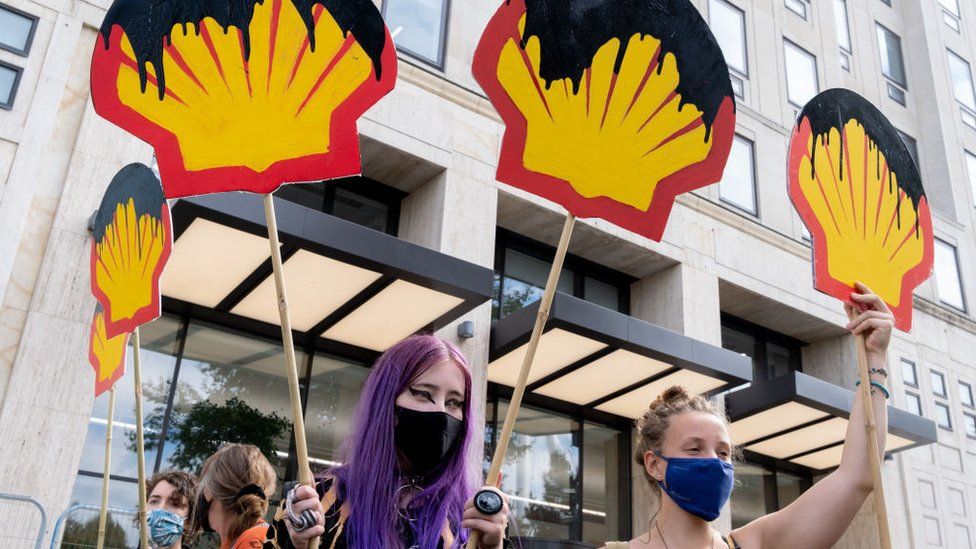
For all its public commitments to a cleaner future, Shell continues to face heavy accusations of greenwashing—the practice of misleading the public into believing a company is environmentally responsible through marketing and PR.
Shell's critics point to several red flags:
Disproportionate Spending: While Shell promotes its green ventures, the overwhelming majority of its capital expenditure still flows into oil and gas exploration and production.
Selective Storytelling: Shell's advertisements highlight wind farms and EV chargers, but fail to mention that fossil fuels remain the backbone of its profits.
Legal Battles: Shell has already been taken to court for misleading claims about its environmental performance and was ordered by a Dutch court in 2021 to drastically cut its carbon emissions, a ruling Shell is currently appealing.
Reliance on Offsets: Shell’s climate strategy depends heavily on carbon offsets and technologies that are either still in development or have limited real-world success.
Ultimately, many experts argue that Shell’s green rhetoric is designed more to protect its reputation and shareholder confidence than to dramatically overhaul its operations.
The Bottom Line: Shell's Tightrope Act
With BP choosing profits over the planet by scaling back its renewable plans, Shell now finds itself positioned as the slightly greener of the two oil giants.
But that’s not exactly a high bar. While Shell continues to broadcast its commitment to climate action, its deep entanglement with fossil fuels, cautious transition pace, and dependence on questionable offset strategies leave plenty of reason for doubt.
In the race toward a sustainable future, Shell isn’t leading the charge so much as carefully managing appearances. Whether that will be enough to satisfy a world demanding real change remains to be seen.
For more information, you can also read:
Shell's "Powering Progress" Strategy:
You can also visit our YouTube Channel for related content.
We would also love to hear what you think about this topic. Please leave a comment down below and we shall get in touch.






0 comments