
Your Read is on the Way
Every Story Matters
Every Story Matters
The Hydropower Boom in Africa: A Green Energy Revolution Africa is tapping into its immense hydropower potential, ushering in an era of renewable energy. With monumental projects like Ethiopia’s Grand Ethiopian Renaissance Dam (GERD) and the Inga Dams in the Democratic Republic of Congo, the continent is gearing up to address its energy demands sustainably while driving economic growth.
Northern Kenya is a region rich in resources, cultural diversity, and strategic trade potential, yet it remains underutilized in the national development agenda.

Can AI Help cure HIV AIDS in 2025

Why Ruiru is Almost Dominating Thika in 2025

Mathare Exposed! Discover Mathare-Nairobi through an immersive ground and aerial Tour- HD

Bullet Bras Evolution || Where did Bullet Bras go to?
In early July 2025, Central Texas was struck by an unprecedented natural calamity — a flash flood of such ferocity that it left entire communities drowning in sorrow. The deluge, triggered by relentless rain that fell without pause, overwhelmed riverbanks and carved a trail of devastation across counties. Today, the state mourns the loss of at least 129 souls.
No region bore the brunt more than Kerr County, where lives were lost in staggering numbers. Among the 103 confirmed fatalities there, heartbreakingly, dozens were children caught in the rising waters at a local camp retreat. Families were torn apart in moments, as cabins were swept away and emergency lines jammed with cries for help.
The speed of the floods gave little room for reaction. What began as a summer getaway turned overnight into a disaster scene. First responders fought treacherous currents and chaotic terrain to reach those stranded, yet many could not be saved.
While Kerr County was the hardest hit, neighboring areas were not spared. Travis, Kendall, Burnet, Williamson, and Tom Green counties each reported multiple fatalities. The water didn’t discriminate — it swept through homes, schools, and businesses with equal cruelty.
Hundreds remain displaced, and as search teams work tirelessly, over 160 people are still missing. Their families wait in agony, clinging to hope with each day that passes. Morgues are overwhelmed, and makeshift shelters are now housing thousands.
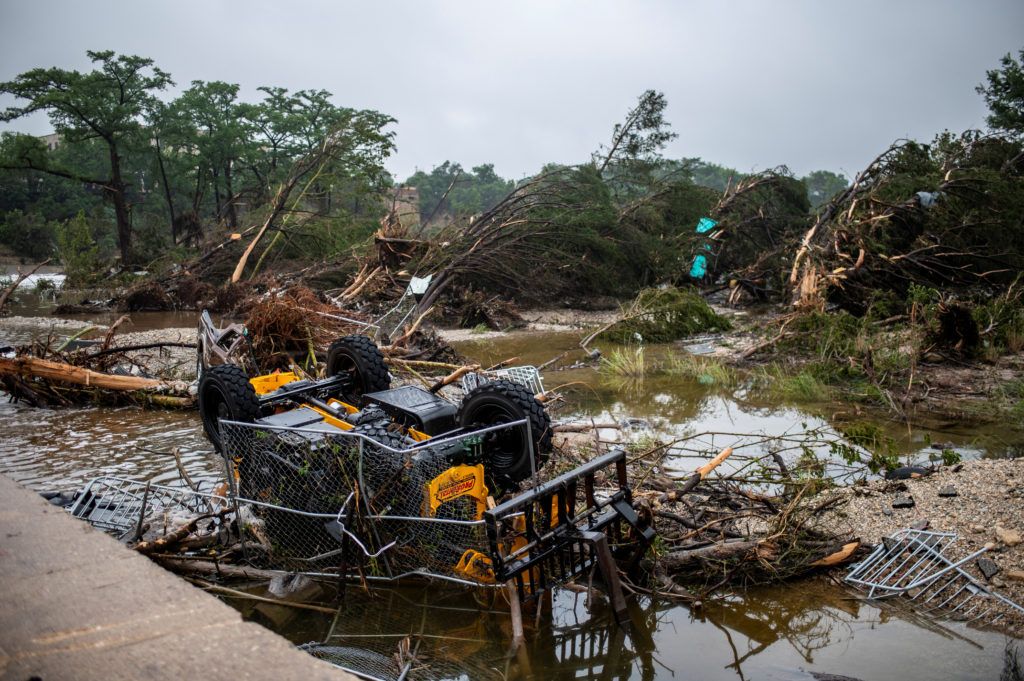
Meteorological patterns in early July created the perfect storm. More than 20 inches of rainfall in under 36 hours saturated the soil and overwhelmed the Guadalupe River. With the ground unable to absorb the water, it rushed into every crevice of the Hill Country, swallowing roads, trails, and towns whole.
The surge occurred late at night, eliminating any chance of preparation or escape for many. Sirens blared too late for those asleep or isolated. Flash floods, unlike slow-moving hurricanes, offer no luxury of time — only the raw panic of survival.
The federal government has deployed resources to support local emergency services. Rescue divers, drones, and search dogs are scouring riverbanks, forests, and destroyed neighborhoods. Emotional trauma, especially among children and survivors, is becoming a parallel crisis. Grief counselors and medical volunteers are offering aid around the clock.
The question now is one of resilience. Texas, known for its strength and grit, is rising in unity. Donations are pouring in, blood drives have been organized, and community kitchens are feeding those who’ve lost everything. Yet the path to recovery is long and steep.
As waters recede, the true scale of the catastrophe becomes clear. This is not merely a natural disaster, but a national tragedy that exposes vulnerabilities in infrastructure, emergency preparedness, and climate resilience. Many are now calling for deeper investment in flood mitigation systems, better early warning mechanisms, and mental health support for victims.
But for now, all eyes remain on those still missing — and those who have suffered irreparable loss. Texas stands at a somber crossroads: one foot in mourning, the other in determination to rebuild, recover, and remember.






0 comments