
Your Read is on the Way
Every Story Matters
Every Story Matters
The Hydropower Boom in Africa: A Green Energy Revolution Africa is tapping into its immense hydropower potential, ushering in an era of renewable energy. With monumental projects like Ethiopia’s Grand Ethiopian Renaissance Dam (GERD) and the Inga Dams in the Democratic Republic of Congo, the continent is gearing up to address its energy demands sustainably while driving economic growth.
Northern Kenya is a region rich in resources, cultural diversity, and strategic trade potential, yet it remains underutilized in the national development agenda.

Can AI Help cure HIV AIDS in 2025

Why Ruiru is Almost Dominating Thika in 2025

Mathare Exposed! Discover Mathare-Nairobi through an immersive ground and aerial Tour- HD

Bullet Bras Evolution || Where did Bullet Bras go to?
This year’s London Marathon is not just another event on the athletics calendar—it’s a seismic shift wrapped in a quiet storm. For decades, this race has been the stronghold of elite endurance, a battlefield where legends were forged and records rewritten. But 2025 brings something different. There’s a growing sense that this edition of the race could mark the beginning of the end for an era, and the birth of something entirely new. The air is thick with anticipation, not because of who is racing, but because of what they represent: a changing of the guard. Veterans arrive carrying the weight of legacy, while newcomers are powered by a hunger to define their era. The narrative is no longer just about personal bests—it’s about who gets to control the future of the sport.
Gone are the cheering crowds that line every mile of the London streets, the families waving banners in Greenwich, the deafening roar at Tower Bridge, and the emotional final sprint down The Mall. Instead, this year’s marathon is taking place in a controlled, eerily quiet environment—a “secure biosphere” within the looped confines of St. James’s Park. This decision, a lingering ripple effect of pandemic protocols, has restructured the energy of the event. The familiar chaos of the city is replaced by a sterile, strategic silence. This stripped-back format removes all distractions, leaving only the runners, their breath, and their will. Ironically, in this quieter setting, the stakes have never felt louder. The intimacy of the course could serve to magnify both triumph and failure. And that’s exactly why this year feels different. In the absence of noise, we might finally hear the sound of an empire falling—or a new one rising.
Eliud Kipchoge, once the undisputed sovereign of the marathon, returns not with the confidence of a reigning monarch, but with the vulnerability of a man who knows his kingdom may be slipping. After a brutal 2024 in which he failed to finish a race for the first time in his career and endured a humiliating season-low finish elsewhere, Kipchoge’s mystique was dented—perhaps even shattered. For years, he symbolized consistency, control, and calm under pressure. But this version of Kipchoge is different.
He’s quieter, more introspective, less certain of the outcome. Yet within that uncertainty lies a different kind of danger. There is nothing more lethal than a wounded legend with something to prove. He has restructured his training, focused more on mental recovery than ever before, and enters this race with the full realization that the next 26.2 miles could define his legacy more than any victory ever has. Will we witness the coronation of a fifth London title, or the solemn farewell of a titan who once ruled the sport?
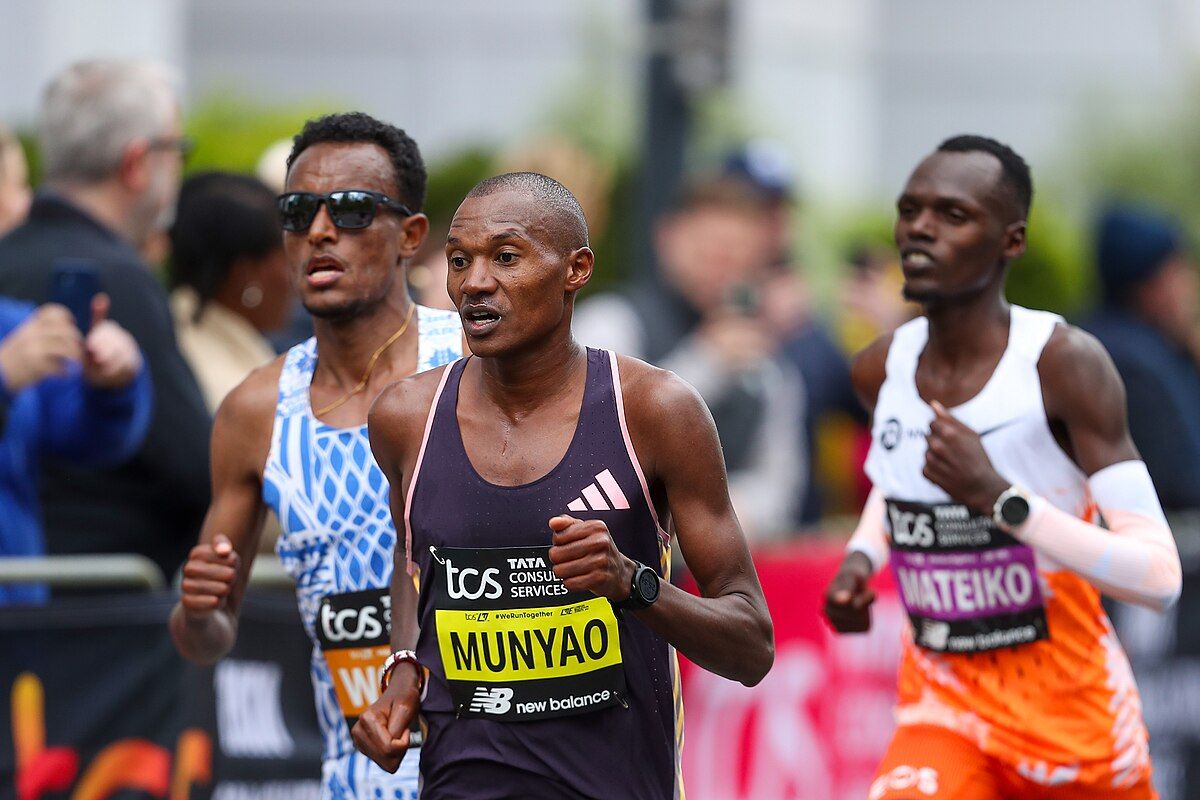
Alexander Mutiso arrives at the start line carrying the dual burden of expectation and redemption. Once celebrated for his breakout win in London and his gritty performance against Kenenisa Bekele, Mutiso’s luster dimmed rapidly after a catastrophic finish at the Paris Olympics, where he plummeted to a shocking 21st place. The fall from grace was as dramatic as it was disheartening. Yet instead of retreating, Mutiso doubled down.
He has approached 2025 with an almost obsessive focus—rebuilding his strategy, correcting his pacing, and eliminating the distractions that led to his Olympic collapse.
For him, London is no longer about proving he belongs; it’s about proving he still matters. And when that starting gun fires, he won’t just be chasing a title—he’ll be chasing absolution. His sharp racing intelligence and ability to outmaneuver seasoned legends suggest that he may not just bounce back—he may soar.
Sebastian Sawe is perhaps the most dangerous man in the field—not because of his accolades, but because of his hunger. Sawe burst onto the marathon scene in Valencia with a staggering 2:02:05, a time that would shake even the most confident competitors. What makes Sawe unique isn’t just his speed—it’s his silence. He doesn’t seek headlines or hype. He prepares in the highlands of Kapsabet, running punishing long miles in solitude, methodically sculpting himself into a force few are ready to handle.
Sawe’s daily routine is a masterclass in disciplined suffering—30km long runs, back-to-back double sessions, strategic hill work, and recovery protocols that leave nothing to chance. While others analyze splits and strategize their way to the top, Sawe listens only to his legs and his coach. He has made it clear that he’ll be running his own race—no mind games, no pressure. And that, ironically, is what makes him the most unpredictable weapon in this war of endurance.
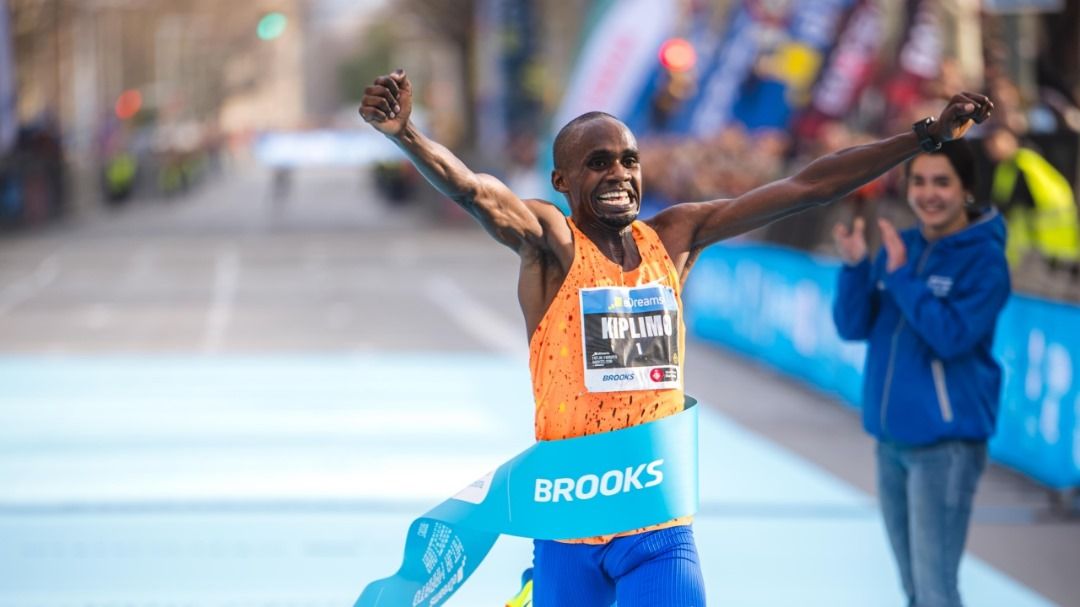
In a race that’s already packed with star power and intrigue, the presence of Jacob Kiplimo and Tamirat Tola adds a layer of wild, unquantifiable chaos. Kiplimo, the Ugandan cross-country machine, is stepping up for his marathon debut. Known for his unshakable rhythm and ruthless climbs, Kiplimo’s endurance engine is built for war, not show.
If he can adapt his power to the marathon’s unique demands, he could shake the race loose from the hands of the more experienced elites. On the other side is Tamirat Tola—an Olympic gold medalist who thrives on chaos. Tola doesn’t need the perfect race scenario; in fact, he often excels when others falter. If the leaders gamble too hard too soon, Tola’s consistency and experience could turn the tide. These two men aren’t here to support the drama—they’re here to disrupt it.
There’s more to this race than medals and glory. The London Marathon has always been about stories—stories of resilience, reinvention, and resolve. But this year, it’s also about transition. About what happens when the old guard meets the new and both refuse to back down. About how sport doesn’t wait for fairytale endings, and how greatness must be earned, not inherited. The silent biosphere track at St. James’s Park becomes the perfect metaphor: isolated, introspective, and charged with history. And as runners push through each loop, the real question becomes clear—who will emerge not just victorious, but transformed?






0 comments