
Your Read is on the Way
Every Story Matters
Every Story Matters
The Hydropower Boom in Africa: A Green Energy Revolution Africa is tapping into its immense hydropower potential, ushering in an era of renewable energy. With monumental projects like Ethiopia’s Grand Ethiopian Renaissance Dam (GERD) and the Inga Dams in the Democratic Republic of Congo, the continent is gearing up to address its energy demands sustainably while driving economic growth.
Northern Kenya is a region rich in resources, cultural diversity, and strategic trade potential, yet it remains underutilized in the national development agenda.

Can AI Help cure HIV AIDS in 2025

Why Ruiru is Almost Dominating Thika in 2025

Mathare Exposed! Discover Mathare-Nairobi through an immersive ground and aerial Tour- HD

Bullet Bras Evolution || Where did Bullet Bras go to?
Kenya’s volatile standoff between educators and their employer just ended—not with whistles and protests in the streets, but with signatures and smiles. After months of posturing, threats of industrial action, and growing unrest in classrooms, the Teachers Service Commission (TSC) and major teachers' unions have inked a new four-year Collective Bargaining Agreement (CBA) valued at KSh 33.7 billion, effectively buying the government peace—at least until 2029.
While previous CBAs often skirted around real numbers, this one dives deep into teachers’ pockets. With a minimum 29% salary increment for lower job groups and a solid KSh 1 billion reserved for pension and statutory contributions, the deal isn’t just symbolic—it’s financial. It’s also strategic.
The CBA will be rolled out in phases, with the first round costing taxpayers KSh 2.4 billion by July 2026. But the real price tag isn’t the money—it’s the political capital and public trust the government had to spend to get here.
For weeks, teachers flirted with nationwide strikes, threatening to abandon blackboards and syllabi for placards and picket lines. The pressure mounted as negotiations dragged. But on Friday, July 18, that pressure snapped into an agreement.
Representatives from KNUT, KUPPET, and KUSNET joined TSC at the negotiation table, signed off on the deal, and walked away with major wins—especially for lower cadre teachers, who for once, aren’t playing second fiddle to their senior counterparts. “We have something to smile about,” KNUT Secretary General Collins Oyuu declared, applauding the weighted raise given to frontline educators.
This CBA doesn’t just talk money. It talks welfare. Female teachers now have a formal right to take lactation breaks during school hours—finally giving dignity to motherhood within the education sector. Teachers dismissed from service will also be entitled to pensions, a rare form of post-dismissal security in public service.
These new clauses signal a shift from purely transactional labor relations to more people-centered employment frameworks, a move unions have pushed for in vain until now.
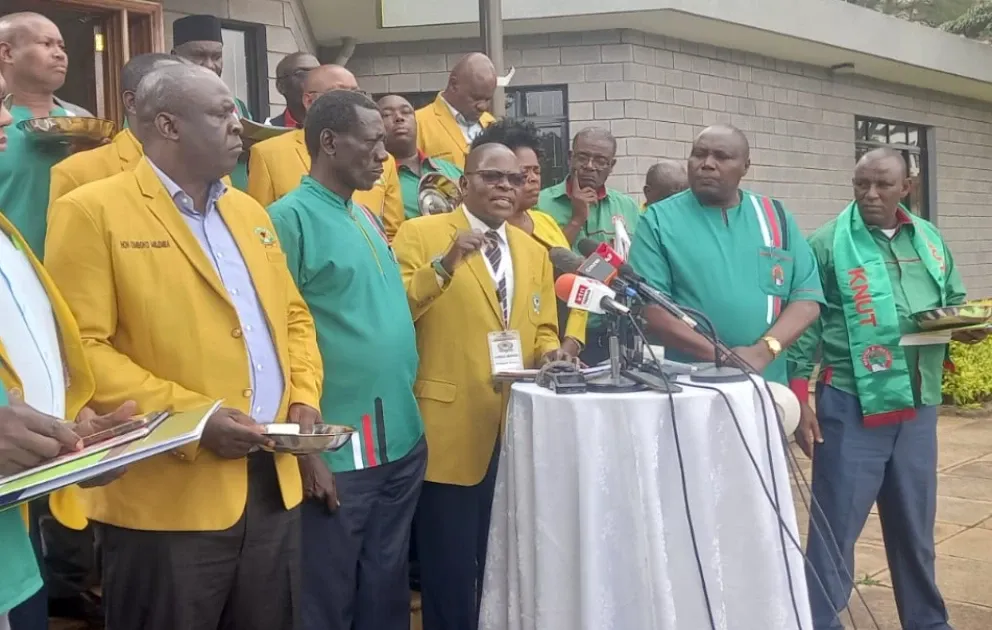
The timing of this deal isn’t accidental. President William Ruto has consistently positioned himself as an education reformist, pledging to fill underfunded classrooms and understocked teacher rosters. His goal? Recruit 24,000 more teachers by January 2026, topping up the 76,000 already brought in under his administration.
If his plan holds, Ruto’s presidency will have hired at least 100,000 teachers by 2026. This CBA plays directly into that narrative. It stabilizes the teaching workforce ahead of a major recruitment drive and helps neutralize public criticism about low morale and dismal working conditions.
Now that the paperwork is signed, the question is whether the government can actually pay up. The CBA is heading to the Employment and Labour Relations Court (ELRC) for compliance oversight. That adds legal teeth to what was previously just good-faith negotiation.
Failure to implement this CBA on time could reignite strikes even more forceful than before—only next time, they’ll be court-backed. The ball now sits squarely in the Treasury’s court.
The new CBA is more than a pay raise. It’s a quiet revolution for Kenya’s education workforce. With improved benefits, policy shifts, and a clear pay structure that favors the overlooked lower ranks, the unions got more than they bargained for—and the government, cornered by potential strikes and political optics, gave in without a fight.
Whether this peace holds depends not on the paperwork but on the paydays. The teachers have paused their rebellion. Now it's up to the state to prove it's not just another promise on paper.






0 comments