
Your Read is on the Way
Every Story Matters
Every Story Matters
The Hydropower Boom in Africa: A Green Energy Revolution Africa is tapping into its immense hydropower potential, ushering in an era of renewable energy. With monumental projects like Ethiopia’s Grand Ethiopian Renaissance Dam (GERD) and the Inga Dams in the Democratic Republic of Congo, the continent is gearing up to address its energy demands sustainably while driving economic growth.
Northern Kenya is a region rich in resources, cultural diversity, and strategic trade potential, yet it remains underutilized in the national development agenda.

Can AI Help cure HIV AIDS in 2025

Why Ruiru is Almost Dominating Thika in 2025

Mathare Exposed! Discover Mathare-Nairobi through an immersive ground and aerial Tour- HD

Bullet Bras Evolution || Where did Bullet Bras go to?
As the dust settles around the explosive revelation that free education in Kenya may soon be history, teachers have thrown down the gauntlet. The Kenya National Union of Teachers (KNUT), led by Collins Oyuu, has issued a stern warning: unless the government fulfils its end of the deal and honors the signed Collective Bargaining Agreement (CBA), Kenya should brace for a full-scale teachers' strike.
This latest tension arises barely a week after Treasury Cabinet Secretary John Mbadi admitted to lawmakers that the government could no longer sustain free basic education. The admission triggered outrage from education stakeholders, but now, with KNUT, KUPPET, and KUSNET threatening action, the education sector seems to be heading straight for a cliff.
In July, the Teachers Service Commission (TSC) agreed on a new Ksh33 billion CBA with the unions. Under this agreement:
-Teachers in the top D5 job group were to receive salaries of up to Ksh167,415.
-The lowest-paid teachers were to move from around Ksh23,000 to approximately Ksh29,000.
-A projected 29.6% increase in pay was promised to the lowest tier of educators.
-An annual Ksh8.4 billion was earmarked for salary adjustments up to 2029.
The raise was not just symbolic—it was long overdue and meant to address years of stagnant wages. Teachers had finally secured a win, or so they thought. According to the unions, implementation was to begin immediately, with the new pay reflecting in this month’s salaries.
Now, Oyuu and his team are accusing the government of pulling a bait-and-switch.
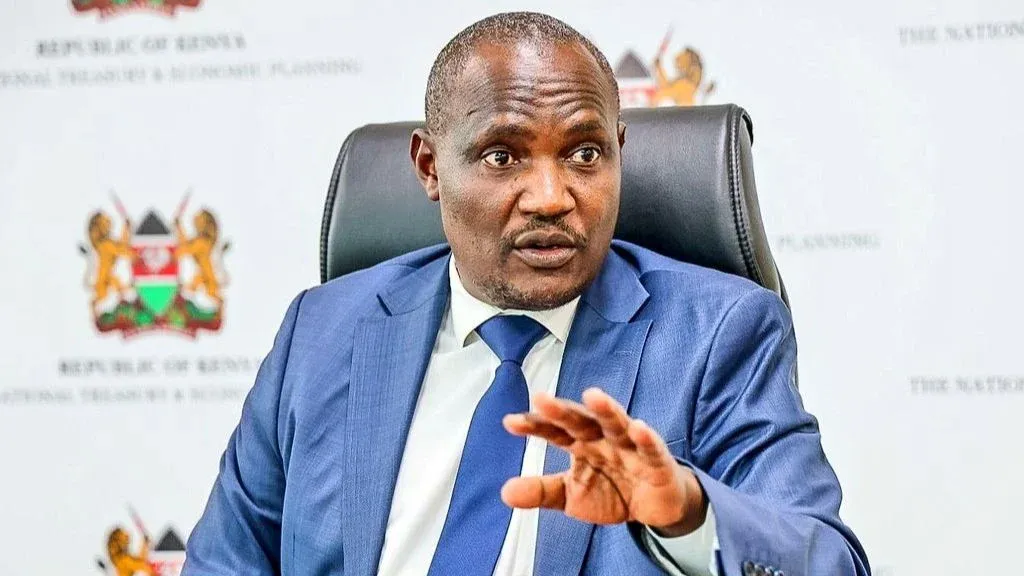
On the same day the salary demands boiled over, Treasury CS John Mbadi confirmed a bombshell: the state could no longer fund free education. He told a stunned National Assembly committee that free primary and secondary schooling, once considered a constitutional right, had become fiscally unsustainable.
Here’s how the government is scaling back:
-Primary School: Ksh1,420 per pupil remains—but with no room for expansion.
-Junior School: Reduced to Ksh15,042 per learner.
-Secondary School: Slashed from Ksh22,244 to Ksh16,900 per student.
Mbadi cited poor revenue performance and new “emerging priorities” as reasons for the cutbacks. But the unions aren’t buying it. According to KNUT, the government's failure lies in mismanaging capitation funds and shortchanging the education sector year after year.
Collins Oyuu directly challenged Members of Parliament to step in and reverse the capitation slash. He accused the state of abandoning its constitutional mandate, noting that free education wasn’t a privilege—it was a right Kenyan children had been promised.
The unions are demanding immediate salary implementation and a commitment to maintain the free education model. Failing this, they have vowed to mobilize teachers nationwide for mass industrial action.
What was once the hallmark of Kenya’s education reform now appears unsustainable. The burden has quietly shifted to parents, who are expected to shoulder costs that were previously covered under the free education policy.
And as the government scales back its financial commitment, schools are left to grapple with overcrowding, underfunding, and demoralized teachers.
In short: Kenya’s education system is staring at collapse.






0 comments