
Your Read is on the Way
Every Story Matters
Every Story Matters
The Hydropower Boom in Africa: A Green Energy Revolution Africa is tapping into its immense hydropower potential, ushering in an era of renewable energy. With monumental projects like Ethiopia’s Grand Ethiopian Renaissance Dam (GERD) and the Inga Dams in the Democratic Republic of Congo, the continent is gearing up to address its energy demands sustainably while driving economic growth.
Northern Kenya is a region rich in resources, cultural diversity, and strategic trade potential, yet it remains underutilized in the national development agenda.

Can AI Help cure HIV AIDS in 2025
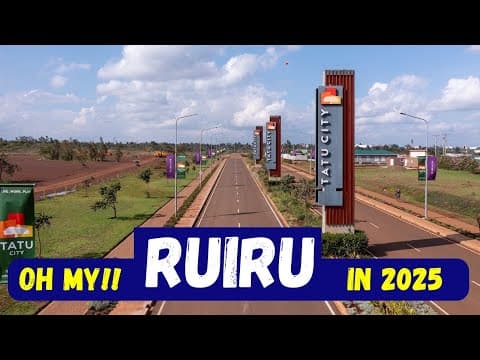
Why Ruiru is Almost Dominating Thika in 2025
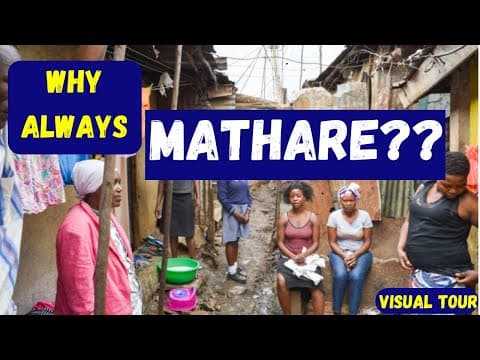
Mathare Exposed! Discover Mathare-Nairobi through an immersive ground and aerial Tour- HD

Bullet Bras Evolution || Where did Bullet Bras go to?
On July 24, a bombshell dropped inside Parliament chambers—quietly but with seismic consequences. Treasury Cabinet Secretary John Mbadi declared what many education officials have whispered for months: the era of free primary and secondary education in Kenya is over.
Appearing before the National Assembly’s budget oversight team, Mbadi delivered a message that stripped bare one of the government’s most prized social promises. “Free” education, once a cornerstone of Kenya’s social policy and political campaigns, is no longer fiscally tenable. A swelling student population, flatlined revenues, and growing sector demands have finally forced the government to confess its limits.
The numbers prove the case. Capitation for secondary school students, which once stood at Ksh22,244 per year, has been cut to Ksh16,900. For primary schools, the allocation remains a meagre Ksh1,420 per child. Junior secondary now gets Ksh15,042. These figures are hardly enough to sustain operational costs, let alone expand learning infrastructure or maintain quality standards.
If slashing school funding wasn’t enough, Mbadi hinted at another blow to parents—national exam fees may soon return. For over a decade, students have sat KCPE and KCSE exams without paying registration costs. That relief is now under review.
Education CS Julius Ogamba, standing firmly beside the Treasury boss, reinforced the same bleak reality. He admitted the ministry has been running on outdated budgets, despite the number of enrolled students growing steadily every year. The result? Strained resources, overstretched schools, and a financial model buckling under its own promises.
Ogamba outlined how the ministry is now disbursing funds in staggered ratios—50% in the first term, 30% in the second, and 20% in the third. A move designed to manage scarcity, not abundance.
Ironically, all this is unfolding against the backdrop of a budget that still prioritizes education—at least on paper. In the 2025/26 fiscal year, education will receive Ksh702.7 billion out of the total Ksh4.29 trillion budget. That’s nearly 28%, the highest allocation among all sectors.
Out of that:
-Ksh7 billion is marked for free primary education,
-Ksh51.9 billion for free day secondary schooling,
-Ksh28.9 billion for junior secondary schools,
-Ksh4 billion for TVETs,
-Ksh5.9 billion to run national exams,
-and Ksh3 billion for school feeding.
But the gap between allocations and real-world needs continues to widen. These figures can no longer absorb the inflationary costs of running schools or meet the rising demands of new learners pouring into an underfunded system.
What emerges now is a hard pivot toward cost-sharing. The state, once committed to footing the entire bill, is stepping back. The next chapter is one where parents must pick up the tab—whether it’s paying for textbooks, operations, uniforms, meals, or now even exam fees.
Mbadi’s statement, laced with bureaucratic caution, didn’t mask the intent. The government will “review rates” only if revenue improves. Translation: unless the economy surges or tax collection skyrockets, these austerity measures are here to stay.
The notion of free education has always been more aspirational than factual. Parents have continued to pay for uniforms, activity fees, remedial lessons, transport, and meals—even during the “free education” years. What’s happening now is the state removing its mask of benevolence and acknowledging the truth: it can no longer carry the full weight.
Kenya’s education model is undergoing a slow but deliberate transformation. The state will still fund education—but only partially. The dream of a fully state-sponsored education system, from classrooms to certification, is over. And with inflation eating into household incomes, the burden now being placed on parents could fracture access for many.






0 comments