
Your Read is on the Way
Every Story Matters
Every Story Matters
The Hydropower Boom in Africa: A Green Energy Revolution Africa is tapping into its immense hydropower potential, ushering in an era of renewable energy. With monumental projects like Ethiopia’s Grand Ethiopian Renaissance Dam (GERD) and the Inga Dams in the Democratic Republic of Congo, the continent is gearing up to address its energy demands sustainably while driving economic growth.
Northern Kenya is a region rich in resources, cultural diversity, and strategic trade potential, yet it remains underutilized in the national development agenda.

Can AI Help cure HIV AIDS in 2025

Why Ruiru is Almost Dominating Thika in 2025

Mathare Exposed! Discover Mathare-Nairobi through an immersive ground and aerial Tour- HD

Bullet Bras Evolution || Where did Bullet Bras go to?
Sudan is now gripped by a medical catastrophe unfolding quietly under the shadow of its brutal war. As the Rapid Support Forces (RSF) intensify their attacks on state infrastructure, cholera has erupted across the nation—an outbreak that is now killing more civilians than bullets or bombs.
In Khartoum alone, more than 2,700 infections and 172 deaths have been recorded in just seven days. It’s a number health officials fear is only the beginning. Nearly all reported cases are concentrated in the capital, where weeks of blackout and water service collapse have made safe hygiene virtually impossible.
The RSF’s drone campaign has methodically targeted Sudan’s fragile infrastructure. Power stations have been reduced to ruins, and with them, the country’s water treatment facilities have ground to a halt.
In the city of Kosti and beyond, explosions have lit the sky as fuel depots and military sites are turned into infernos. The ripple effect? With no electricity, water cannot be purified or pumped. The population, desperate and left to fend for itself, has resorted to the Nile.
But the Nile, once a symbol of life, now delivers death.
With water treatment plants offline, Sudanese civilians are drinking untreated river water. In Omdurman, donkey carts haul barrels of Nile water to desperate households. People are fetching water by hand, with no assurance of cleanliness, and no means of purification.
Doctors Without Borders (MSF) warns that without power, water drawn from the Nile remains untreated and unsafe. Hospitals—those still functional—are overwhelmed with patients showing symptoms of acute diarrhoea and dehydration.
At Al-Nao Hospital in Omdurman, the situation is apocalyptic. Patients line the corridors and rest on the floor, as doctors struggle to keep up with the flood of incoming cholera cases. The local Emergency Response Room has called for volunteers, but medical staff are scarce, and supplies are running dry.
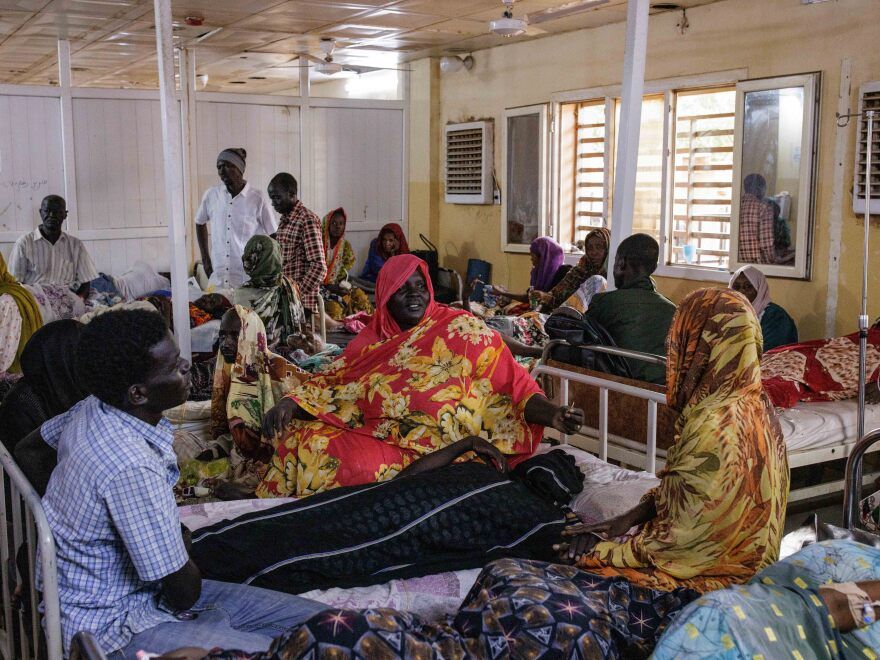
The doctor-patient ratio has collapsed. There are too few hands to manage the surge. Medications are limited. Sanitation within the facilities is deteriorating. Cholera, which can kill within hours if untreated, is doing just that—because there’s no capacity left to stop it.
Cholera isn’t new to Sudan. It’s endemic, but preventable—if water, sanitation, and medical care are accessible. In the past, small outbreaks were managed swiftly. But with the health system now shattered by war, the disease has found fertile ground to flourish.
According to health officials, 90% of Sudan’s hospitals have, at some point during the conflict, ceased operations. Some were bombed. Others were looted. Many just ran out of fuel or staff and quietly shut their doors.
Today, the result is a country where basic care has become a luxury—and where thousands die not from wounds of war, but from poisoned water and bureaucratic collapse.
This cholera crisis is no accident—it is the direct consequence of war tactics that treat civilian infrastructure as military targets. As drone strikes continue, as power grids fall, and as clean water dries up, the humanitarian cost is compounding by the hour.
Tens of thousands are already dead from the war. But the disease could surpass even those numbers if current conditions persist. What we’re witnessing is a man-made epidemic—engineered not by neglect, but by systematic destruction.
Sudan’s war has many fronts. The cholera outbreak is now one of the deadliest.






0 comments