
Your Read is on the Way
Every Story Matters
Every Story Matters
The Hydropower Boom in Africa: A Green Energy Revolution Africa is tapping into its immense hydropower potential, ushering in an era of renewable energy. With monumental projects like Ethiopia’s Grand Ethiopian Renaissance Dam (GERD) and the Inga Dams in the Democratic Republic of Congo, the continent is gearing up to address its energy demands sustainably while driving economic growth.
Northern Kenya is a region rich in resources, cultural diversity, and strategic trade potential, yet it remains underutilized in the national development agenda.

Can AI Help cure HIV AIDS in 2025

Why Ruiru is Almost Dominating Thika in 2025

Mathare Exposed! Discover Mathare-Nairobi through an immersive ground and aerial Tour- HD

Bullet Bras Evolution || Where did Bullet Bras go to?
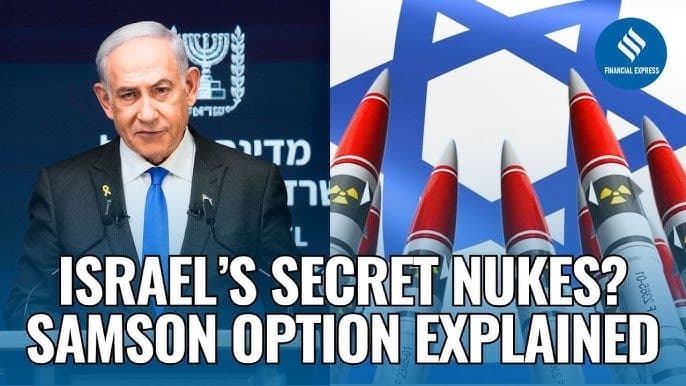
The Samson Option is not a publicly codified policy but rather a widely recognized term describing Israel’s nuclear posture in response to existential threats. The doctrine assumes that if the state’s survival is directly endangered, Israel could respond with overwhelming nuclear force, ensuring that any aggressor faces catastrophic consequences.
The term itself draws from the biblical figure Samson, who destroyed a temple along with himself and his enemies in a final act of retribution. In strategic terms, it conveys a doctrine of last-resort retaliation: nuclear weapons are not intended for tactical battlefield use but serve as the ultimate safeguard for national survival.
The essence of the Samson Option is deterrence by threat. By maintaining the possibility of decisive retaliation, Israel seeks to dissuade potential adversaries from contemplating attacks capable of jeopardizing its existence.
Central to the Samson Option is Israel’s policy of nuclear ambiguity. The state neither confirms nor denies the existence of nuclear weapons or publicly outlines potential use scenarios. This opacity serves several purposes:
While it is widely assumed that Israel possesses a sophisticated nuclear arsenal, the exact size, composition, and deployment strategy remain deliberately undisclosed. Submarine-based delivery systems, land-based missiles, and aircraft-launched weapons are all thought to be part of the arsenal, ensuring multiple options for retaliation in a crisis.
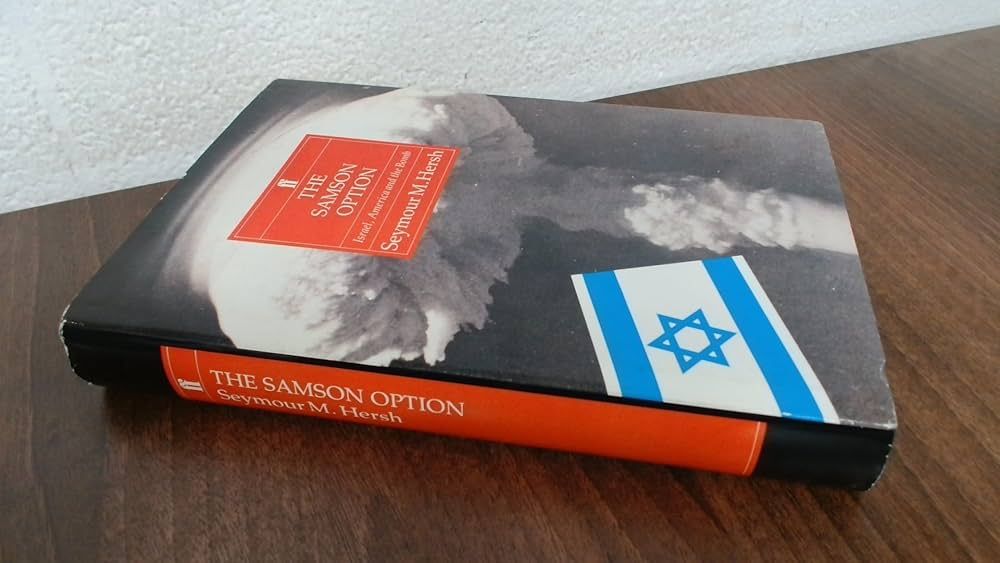
The Samson Option is fundamentally a doctrine of deterrence, not an operational war plan. Israel’s conventional military superiority allows it to manage routine conflicts without nuclear engagement. Nuclear weapons, in this context, are reserved for scenarios in which the state faces an existential threat that conventional forces cannot repel.
By signaling that extreme aggression would provoke an overwhelming response, Israel aims to make the very idea of attacking the country strategically unthinkable. The doctrine is therefore a cornerstone of national security, operating more through perception and threat than actual deployment.
In today’s Middle East, regional tensions and evolving military capabilities heighten the perceived relevance of the Samson Option. Ongoing conflicts, missile threats, and the development of precision strike technologies create scenarios where Israel’s leadership and military planners must consider existential risk.
Even without active use, the doctrine influences strategic behavior on all sides. Adversaries must account for the potential of massive nuclear retaliation, which can constrain escalation and shape negotiation positions. This effect demonstrates how nuclear posture functions as both a deterrent and a stabilizing factor in an otherwise volatile region.
Furthermore, the Samson Option plays a symbolic role domestically, reinforcing public confidence in national security. Citizens and policymakers alike recognize that the country has a mechanism—albeit extreme—designed to ensure survival under worst-case scenarios.
The very existence of a doctrine like the Samson Option affects the strategic calculations of neighboring states. It introduces a layer of uncertainty into military planning, compels adversaries to consider indirect consequences, and elevates the stakes of any conflict escalation.
At the same time, Israel’s deliberate ambiguity ensures that the doctrine serves as a deterrent without actively provoking opponents. It is a calculated balance: the threat must be credible enough to discourage existential attacks but vague enough to avoid creating preemptive tensions that might accelerate conflict.
The Samson Option remains one of the most striking examples of nuclear deterrence doctrine in modern geopolitics. While its use is hypothetical and reserved for extreme scenarios, its strategic role cannot be underestimated. Through ambiguity, credible threat, and a focus on existential security, Israel leverages the doctrine to maintain stability and deter potential aggressors in a region characterized by complex security challenges.



0 comments