
Your Read is on the Way
Every Story Matters
Every Story Matters
The Hydropower Boom in Africa: A Green Energy Revolution Africa is tapping into its immense hydropower potential, ushering in an era of renewable energy. With monumental projects like Ethiopia’s Grand Ethiopian Renaissance Dam (GERD) and the Inga Dams in the Democratic Republic of Congo, the continent is gearing up to address its energy demands sustainably while driving economic growth.
Northern Kenya is a region rich in resources, cultural diversity, and strategic trade potential, yet it remains underutilized in the national development agenda.

Can AI Help cure HIV AIDS in 2025

Why Ruiru is Almost Dominating Thika in 2025

Mathare Exposed! Discover Mathare-Nairobi through an immersive ground and aerial Tour- HD

Bullet Bras Evolution || Where did Bullet Bras go to?
In a world fractured by trade wars, shifting allegiances, and geopolitical uncertainty, Kenya is taking a calculated risk—one that may define the next chapter of East Africa’s rise. President William Ruto’s recent state visit to China was not a courtesy call or a token diplomatic gesture. It was a bold pivot—a reimagining of Kenya’s future in which Beijing plays the starring role.
This is not the old donor-recipient model. It’s a joint venture of ambition and leverage. While Western aid continues to come with strings and scrutiny, China’s offering comes with cranes, capital, and quiet confidence. Ruto has chosen, and the world is watching.
The publicized outcomes—direct flights, railway extensions, and expanded trade—are the surface. Beneath lies a far more ambitious and calculated blueprint.
China has agreed to fund the long-stalled extension of the Mombasa-Nairobi Standard Gauge Railway, but with a twist: it’s no longer just about transporting cargo. Plans are in place to create industrial growth nodes along the route, modeled on Chinese smart city prototypes. Chinese firms will be granted exclusive development zones—where they’ll manufacture, process, and export under Kenya’s banner but with China’s infrastructure and capital.
In return, Nairobi becomes a launchpad for Chinese influence in East Africa—a middleman in Beijing’s broader Belt and Road footprint. Kenya is betting it can balance sovereignty with strategic dependency, a high-stakes gamble as global power dynamics shift.
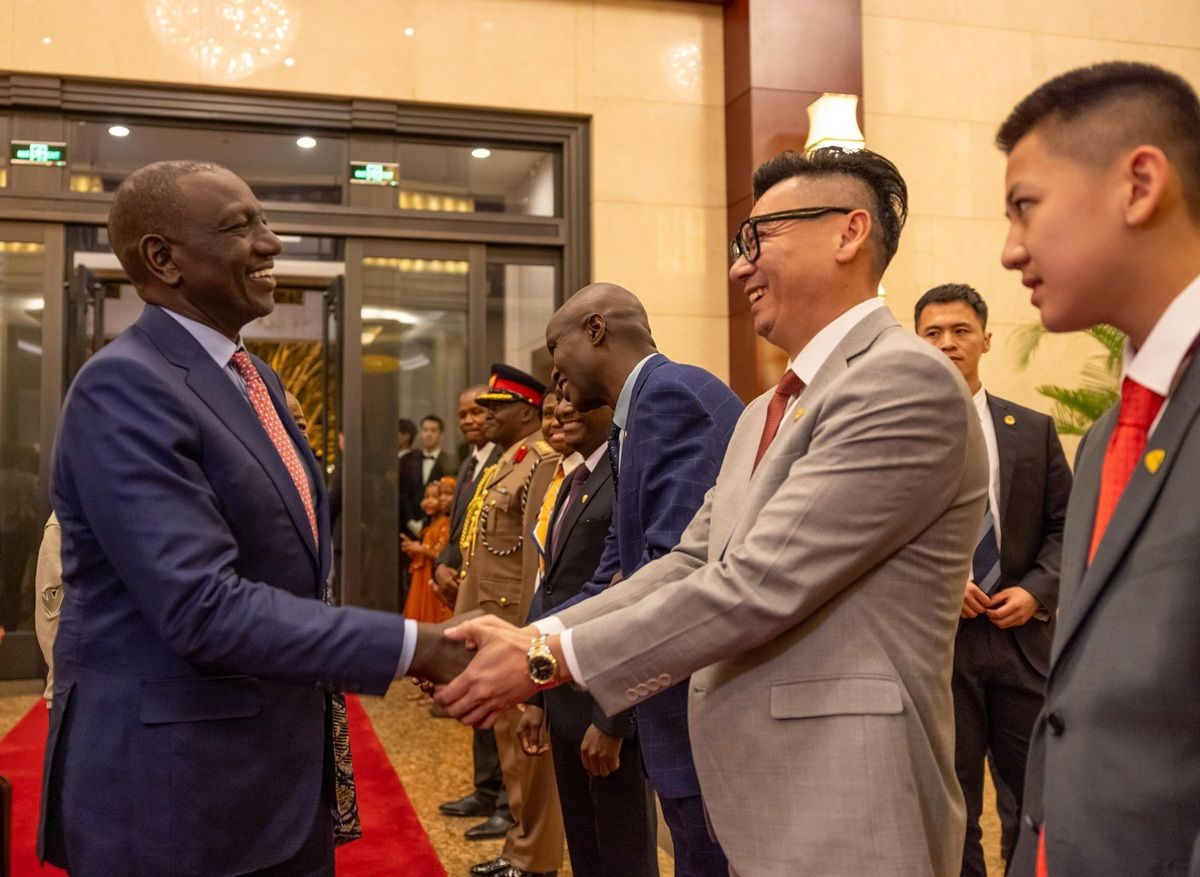
A new air corridor between Nairobi and Beijing isn’t just about direct flights—it’s about influence flying in both directions. Kenyan exporters will now have easier access to Chinese markets, particularly for agricultural products and artisanal goods that rarely reach beyond Guangzhou. In return, Chinese tourists, executives, and consultants will be able to move freely, accelerating business, education, and tech partnerships.
The proposed infrastructure upgrades—including new roads connecting port cities to industrial parks—are part of a broader strategy to turn Kenya into an African Singapore: a logistical and innovation hub where East meets West, but on terms increasingly written in Mandarin.
China’s soft power strategy is making inroads through medicine and public health. Kenya has opened its borders to Chinese pharmaceuticals—initially as a response to chronic shortages, but more strategically, as a way to modernize its healthcare supply chain.
China, for its part, will fund and staff specialized clinics in Kenya’s underserved counties. These aren't just hospitals—they're outposts of diplomacy. Training programs for Kenyan doctors in Chinese universities and joint vaccine manufacturing initiatives are on the table. This isn't just about health; it’s about trust, reach, and quiet influence.
Security agreements signed during the visit were low-key but consequential. China will assist Kenya in building a next-generation surveillance and cyber-defense infrastructure, including data centers and AI-driven crime tracking platforms.
Joint police training and equipment transfer programs were also discussed, alongside a controversial proposal for Chinese-built smart city surveillance grids in Nairobi and Mombasa. Critics warn of privacy concerns, but officials argue it's the cost of staying ahead in an era of transnational crime and cyber threats.
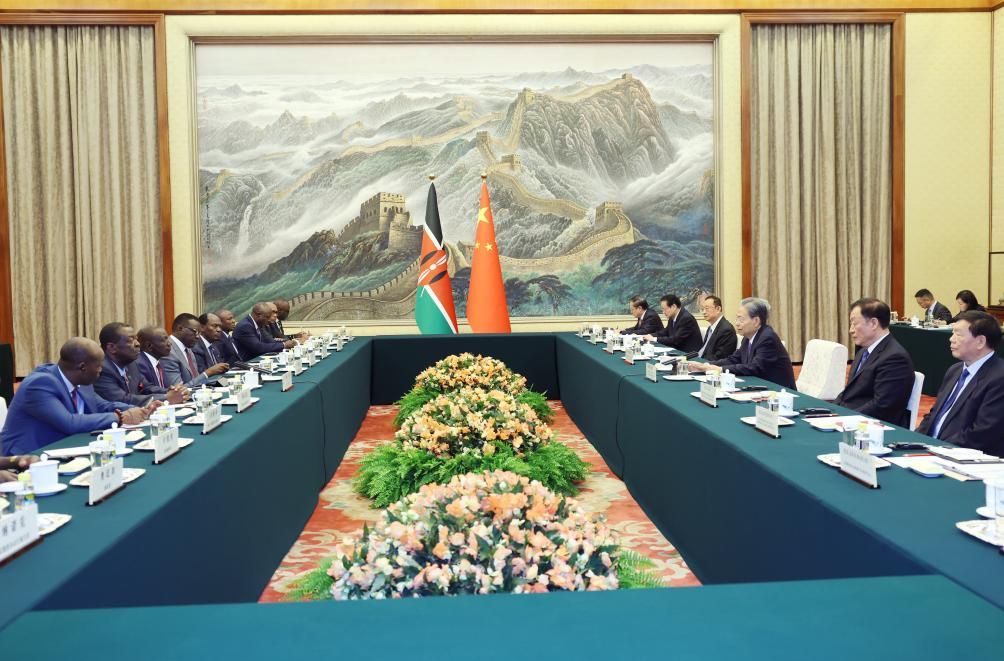
In a significant twist, Kenya is exploring a financial alliance that bypasses traditional Western lenders. Beijing has proposed supporting Chinese financial institutions to establish a foothold in Nairobi’s commercial district. Talks of a yuan clearinghouse and digital currency pilot programs are gaining momentum.
Panda bonds, previously floated as a possibility, now look imminent. If successful, Kenya may become the first African nation to anchor its sovereign debt offerings in Chinese currency—a symbolic and practical break from dependency on Western capital markets.
This is not just a partnership. It’s a recalibration. Kenya is not simply accepting Chinese investment—it’s redesigning itself around it. The implications are vast. China gains a politically stable, economically dynamic ally in East Africa. Kenya gains infrastructure, investment, and influence—but at the price of shifting global loyalties.
As Washington tightens its economic policies and Brussels watches from the sidelines, Beijing is building the future—quietly, strategically, and with countries like Kenya as its partners.






0 comments