
Your Read is on the Way
Every Story Matters
Every Story Matters
The Hydropower Boom in Africa: A Green Energy Revolution Africa is tapping into its immense hydropower potential, ushering in an era of renewable energy. With monumental projects like Ethiopia’s Grand Ethiopian Renaissance Dam (GERD) and the Inga Dams in the Democratic Republic of Congo, the continent is gearing up to address its energy demands sustainably while driving economic growth.
Northern Kenya is a region rich in resources, cultural diversity, and strategic trade potential, yet it remains underutilized in the national development agenda.

Can AI Help cure HIV AIDS in 2025

Why Ruiru is Almost Dominating Thika in 2025
Mathare Exposed! Discover Mathare-Nairobi through an immersive ground and aerial Tour- HD

Bullet Bras Evolution || Where did Bullet Bras go to?
For nearly two decades, Joseph Kabila was the unmovable centerpiece of Congolese power. Rising to the presidency after his father's assassination, he maneuvered through war, diplomacy, and international scrutiny to cement his rule. But power, in a nation like the Democratic Republic of Congo (DRC), has a short memory. Now, with his parliamentary immunity officially stripped, Kabila finds himself in a position few expected: vulnerable and facing serious allegations.
The DRC Senate, in a landmark decision, voted overwhelmingly to lift his immunity. For a man who once held the reins of a continent-sized nation, the vote symbolized a striking reversal of fortune — the once-protected lion now must answer to the laws of the jungle he once ruled.
At the core of this political thunderstorm are allegations that Kabila offered material and strategic support to the M23 rebel group — a militia long associated with violence, displacement, and instability in eastern Congo. Intelligence and investigative sources accuse the former president of clandestine ties, suggesting that he may have played a more active role in fueling the chaos that continues to plague the mineral-rich Kivu region.
This revelation, if proven true, would not only implicate Kabila in a major breach of national integrity but also place him at odds with years of regional peacebuilding efforts. The implications stretch far beyond courtroom drama — it threatens to upend DRC’s political trajectory.
The political consequences have been swift and brutal. Kabila’s party — the People’s Party for Reconstruction and Democracy (PPRD) — has been suspended. Senior members have had their assets frozen, and the government has announced sweeping investigations into the financial dealings of key PPRD officials.
This maneuver has been read by some as a necessary cleansing of the nation’s political machinery — by others, as a thinly veiled purge designed to eliminate opposition forces ahead of a high-stakes electoral season.
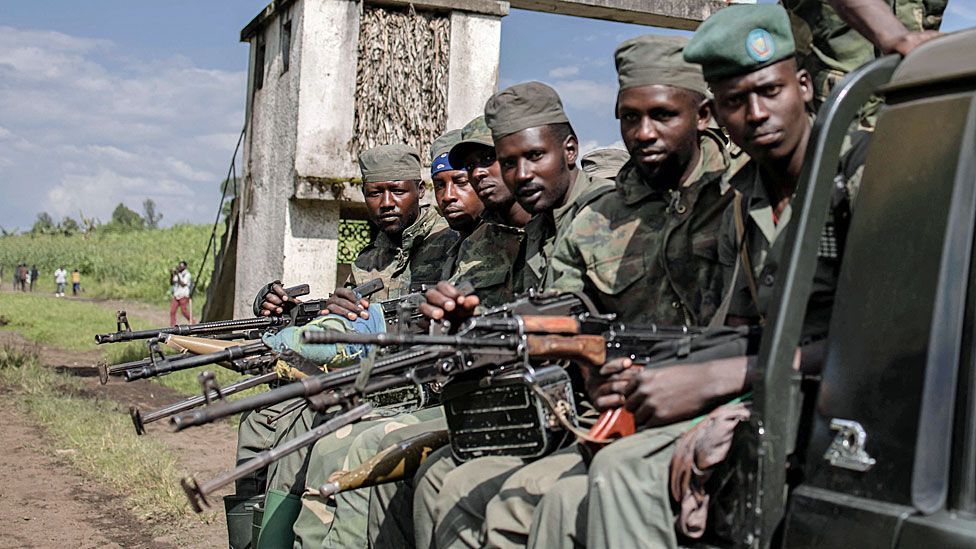
Whatever the intention, the effect is clear: Kabila’s once formidable political network is in disarray, and his inner circle is bleeding influence by the day.
Kabila has not remained silent. In a rare public address, the former head of state categorically denied the charges, calling them “fabricated distractions.” He accused the current government of weaponizing justice to crush dissent and argued that such actions would only inflame an already volatile national atmosphere.
He framed himself as a scapegoat, stating his commitment to Congo’s sovereignty and offering to assist with resolving the crisis in the east. Whether this is a genuine olive branch or a political chess move remains to be seen.
The stakes are high — not just for Kabila, but for the entire country. Eastern Congo remains a flashpoint, rich in resources yet riddled with conflict. Any move that destabilizes the fragile balance risks reigniting full-scale conflict, potentially pulling in neighboring nations and international forces.
With the eyes of regional powers and humanitarian organizations locked on Kinshasa, this chapter in Congolese history is being written under an intense spotlight. The world is watching to see whether this is a legitimate reckoning or a dangerous descent into selective justice.
The fall of Joseph Kabila from immunity to indictment is more than a personal downfall — it's a reflection of the shifting sands in Congolese politics. It signals a bold, risky move by the current leadership to define a new era, but also opens up dangerous undercurrents that could destabilize the nation if not navigated carefully.
From palace to courtroom, Kabila's journey may just be beginning — and how it ends will shape the Democratic Republic of Congo for years to come






0 comments