
Your Read is on the Way
Every Story Matters
Every Story Matters
The Hydropower Boom in Africa: A Green Energy Revolution Africa is tapping into its immense hydropower potential, ushering in an era of renewable energy. With monumental projects like Ethiopia’s Grand Ethiopian Renaissance Dam (GERD) and the Inga Dams in the Democratic Republic of Congo, the continent is gearing up to address its energy demands sustainably while driving economic growth.
Northern Kenya is a region rich in resources, cultural diversity, and strategic trade potential, yet it remains underutilized in the national development agenda.

Can AI Help cure HIV AIDS in 2025

Why Ruiru is Almost Dominating Thika in 2025

Mathare Exposed! Discover Mathare-Nairobi through an immersive ground and aerial Tour- HD

Bullet Bras Evolution || Where did Bullet Bras go to?
In a bold departure from routine administrative formalities, President Samia Suluhu issued a forceful address at State House, Dar es Salaam, calling on Tanzanians to close ranks as her government faces mounting external scrutiny. Speaking during a swearing-in ceremony for newly appointed government officials, the President reframed the narrative around national responsibility and external threats—not by name, but with implications clear enough to draw the line between domestic priorities and foreign influences.
This wasn’t a speech about specific arrests or deportations, nor about regional diplomacy; it was a recalibration of Tanzania’s political tone. With her government accused by some of cracking down on regional activists, President Samia redirected the spotlight, emphasizing that safeguarding national interests is not the job of one institution—or one leader—but a collective mandate entrusted to every public servant.
While some may interpret her remarks as a reaction to recent international criticism, President Samia’s message was more layered. She described Tanzania as a country admired for its stability, strength, and ambition—qualities that, in her view, attract not only admiration but also envy and subversion. Instead of focusing on the controversial arrests of foreign activists, she spoke of invisible forces—"outsiders," as she put it—who allegedly aim to exploit Tanzania’s openness and democratic trajectory.
The subtext was clear: the President views this moment not as a security crisis, but as a sovereignty test. In her narrative, the real danger isn’t political protest or foreign commentary—it’s the gradual erosion of Tanzania’s decision-making autonomy, masked as external concern or cooperation. By rallying her officials to act as guardians of national integrity, she positioned patriotism as resistance, and governance as an act of defense.
In a notable shift from earlier approaches, President Samia emphasized that the task of shielding Tanzania from interference does not rest solely with the military or intelligence agencies. Ministries, government departments, regulatory bodies, and public institutions were all called upon to act as frontline defenders. “If they can’t break through one wall,” she warned, “they’ll try another—through ministries, through agencies, through our institutions.”
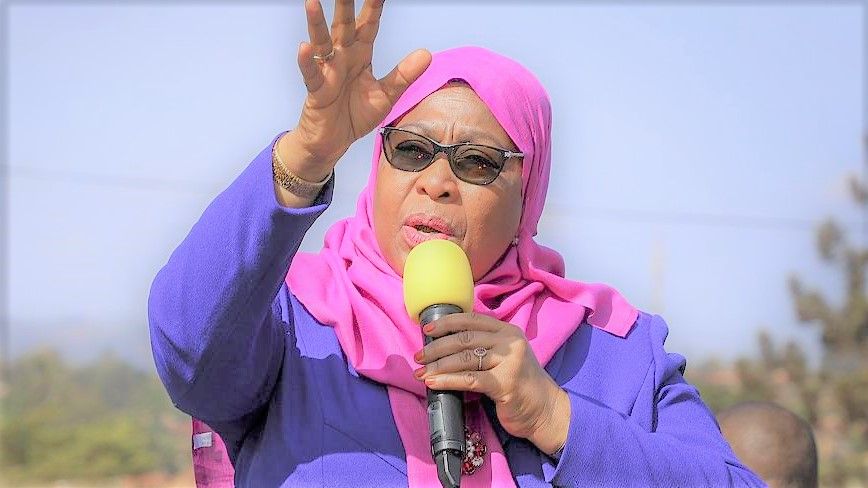
This broader call to action reframes governance as national security. Civil servants are no longer merely administrators; in the President’s framing, they are sentinels. The implication is that every department, from environment to finance, could become a conduit for destabilization if not guarded vigilantly. It’s a powerful message that blends nationalism with bureaucratic accountability—demanding loyalty not just to policy, but to the very fabric of the state.
President Samia’s remarks also subtly referenced East Africa’s increasingly interconnected but tense political landscape. As Tanzania grows its economic partnerships and opens to foreign investors, it's also navigating a terrain where ideological and civil society movements do not respect borders. Her insistence on “us alone being here” could be interpreted as a signal that Tanzania will not be swayed by regional activism or international pressure when it comes to its internal affairs.
This message comes at a time when cross-border activism is rising, and when some governments feel global non-governmental organizations—and even neighboring civil societies—are overstepping. For President Samia, maintaining the independence of Tanzania’s governance model is not just about resisting foreign governments, but also about managing influence from non-state actors that operate transnationally.
By calling on her officials to become defenders of Tanzania’s sovereignty, President Samia Suluhu is laying the groundwork for a more assertive, introspective doctrine of governance. It's a strategy that fuses political control with national pride, bureaucratic structure with emotional loyalty. Whether this vision will reassure citizens or alarm critics remains to be seen—but one thing is clear: Tanzania’s leadership is shifting gears, not with threats, but with a quiet call to unity framed as self-defense.






0 comments