
Your Read is on the Way
Every Story Matters
Every Story Matters
The Hydropower Boom in Africa: A Green Energy Revolution Africa is tapping into its immense hydropower potential, ushering in an era of renewable energy. With monumental projects like Ethiopia’s Grand Ethiopian Renaissance Dam (GERD) and the Inga Dams in the Democratic Republic of Congo, the continent is gearing up to address its energy demands sustainably while driving economic growth.
Northern Kenya is a region rich in resources, cultural diversity, and strategic trade potential, yet it remains underutilized in the national development agenda.

Can AI Help cure HIV AIDS in 2025

Why Ruiru is Almost Dominating Thika in 2025

Mathare Exposed! Discover Mathare-Nairobi through an immersive ground and aerial Tour- HD

Bullet Bras Evolution || Where did Bullet Bras go to?
In a shocking escalation of violence, Somalia’s President Hassan Sheikh Mohamud narrowly escaped an assassination attempt after a powerful roadside bomb targeted his convoy in Mogadishu. The attack, which took place near Villa Somalia, the official presidential residence, was swiftly claimed by the extremist group al-Shabaab. Although the president was unharmed, the explosion caused multiple casualties among his security personnel and civilians, sending shockwaves through the city.
The attack comes at a time when Somalia is engaged in an intense military campaign against al-Shabaab, making it clear that the militant group is still capable of striking at the heart of the government. Witnesses in Mogadishu described a deafening blast, followed by chaos, as people ran for safety, and smoke filled the air. This attempt on the president’s life has reinforced fears that despite recent military gains, Somalia remains vulnerable to high-profile terrorist attacks.
The assassination attempt unfolded as President Mohamud was traveling towards Aden Adde International Airport, reportedly en route to the Middle Shabelle region, where Somali government troops and allied clan militias have been fighting to reclaim territories from al-Shabaab. His convoy, a heavily guarded motorcade escorted by security forces, became the target of an improvised explosive device (IED) planted along the roadside. As the bomb detonated, the explosion sent a shockwave through the convoy, damaging several vehicles and causing casualties.
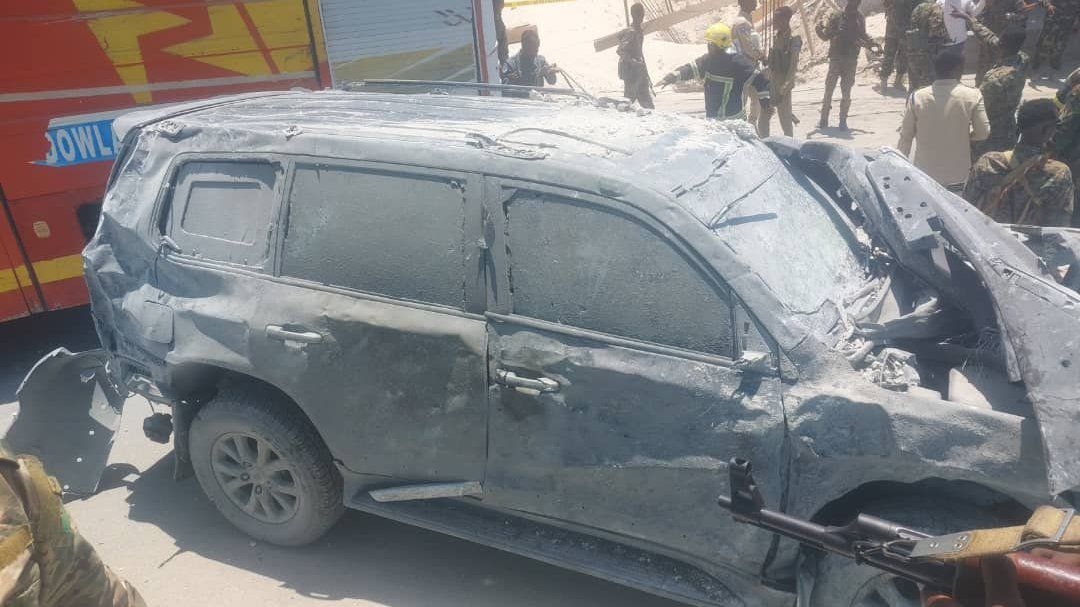
Security personnel quickly reacted, securing the area and escorting the president to safety, but the attack disrupted movement in the capital, raising concerns about how militants were able to breach security measures in such a highly fortified area. The explosion sent civilians fleeing in panic, while emergency responders arrived to evacuate the injured and assess the damage. In the aftermath, security forces increased their presence across Mogadishu, fearing that additional attacks could follow.
Shortly after the attack, al-Shabaab issued a statement claiming responsibility, boasting that they had targeted the president and vowing to continue their fight against the Somali government. The group, which has been battling Somalia’s federal government for over a decade, has long sought to destabilize the country and prevent its leadership from gaining full control. This assassination attempt is not only a direct strike at President Mohamud but also a symbolic attack on the government’s authority.
Al-Shabaab has suffered significant territorial losses in recent years due to military operations backed by African Union forces and international allies, yet they have proven their ability to conduct deadly attacks, even in the heart of Mogadishu. The group has historically relied on guerrilla-style warfare, suicide bombings, and targeted assassinations to undermine stability, and this latest attack signals their intent to maintain pressure on the government. Despite repeated claims that al-Shabaab is weakening, the bombing underscores the group’s continued influence and capability to strike at the highest levels of power.
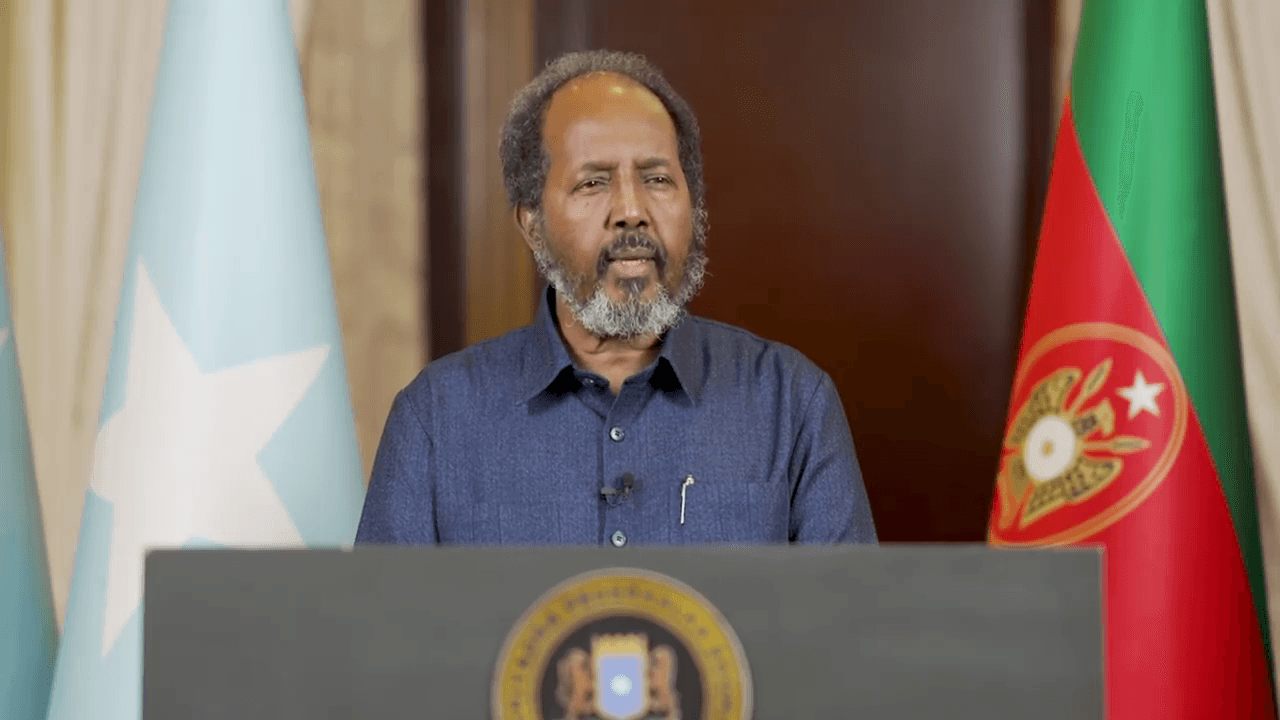
Despite the attempt on his life, President Mohamud remained unwavering in his mission. Rather than retreating to a secure location, he continued his planned journey to the front lines, where he met with military commanders and regional leaders overseeing operations against al-Shabaab. His decision to proceed with the trip, despite the attack, was seen as a bold statement of defiance against the militants. State media later released images of the president interacting with troops and local officials, reinforcing his commitment to the ongoing counterterrorism campaign. President Mohamud, who has previously vowed to eradicate al-Shabaab and restore full control to the federal government, used the attack as further justification for intensifying military efforts against the insurgents.
His administration has been working to mobilize both national and international support for the offensive, and this assassination attempt is likely to strengthen his resolve to push forward. Many observers believe that while the attack highlights the persistent danger posed by al-Shabaab, it also serves as a rallying point for the Somali government and its allies to redouble their counterterrorism efforts.
The international community swiftly condemned the attack, expressing solidarity with the Somali government and its people. The United Nations, which has been closely monitoring Somalia’s security situation, released a statement denouncing the bombing and reiterating its support for the country’s efforts to combat terrorism. Several diplomatic missions in Somalia, including those of the United States and the United Kingdom, issued similar condemnations, calling for increased cooperation in addressing security threats. The African Union Transition Mission in Somalia (ATMIS), which has been providing military support to Somali forces, emphasized the need for continued vigilance and counterterrorism measures to prevent such attacks from occurring in the future.
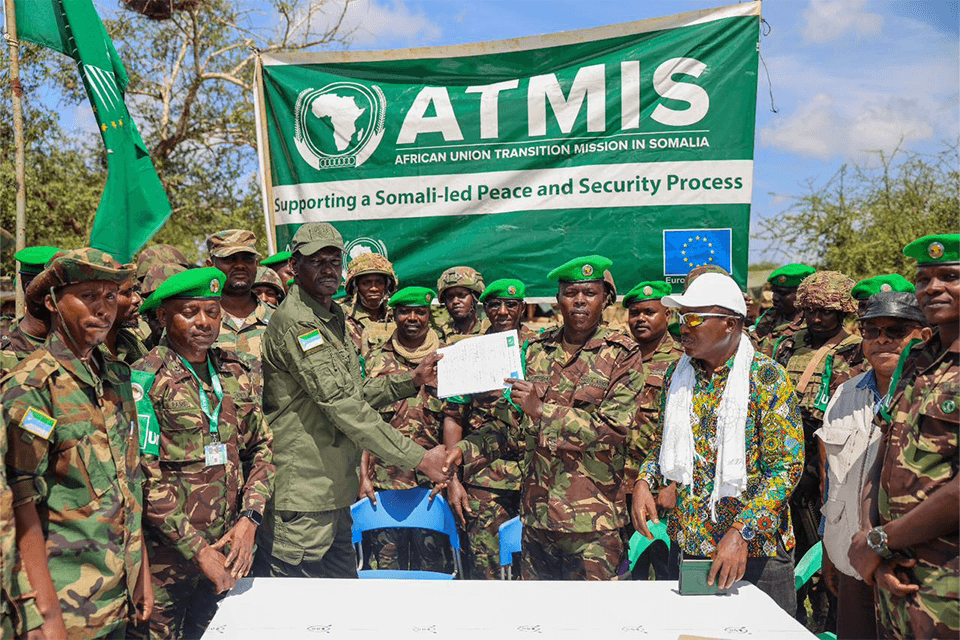
Analysts point out that while Somalia has made significant progress in its fight against al-Shabaab, international partners will need to remain engaged, both in terms of military assistance and humanitarian support, to ensure long-term stability. The assassination attempt has also raised concerns about security measures in Mogadishu, prompting discussions on whether additional safeguards should be implemented to prevent similar incidents.
The attempt on President Mohamud’s life serves as a grim reminder that Somalia’s path to stability remains fraught with challenges. While the federal government, with support from international partners, has been making progress in its campaign against al-Shabaab, the group continues to pose a formidable threat. The attack highlights the complex nature of Somalia’s security crisis—despite military advances, the insurgents retain the ability to strike in high-profile locations. The situation is further complicated by the fact that al-Shabaab does not operate in isolation; they benefit from financial networks, recruitment pipelines, and safe havens that allow them to sustain their insurgency.
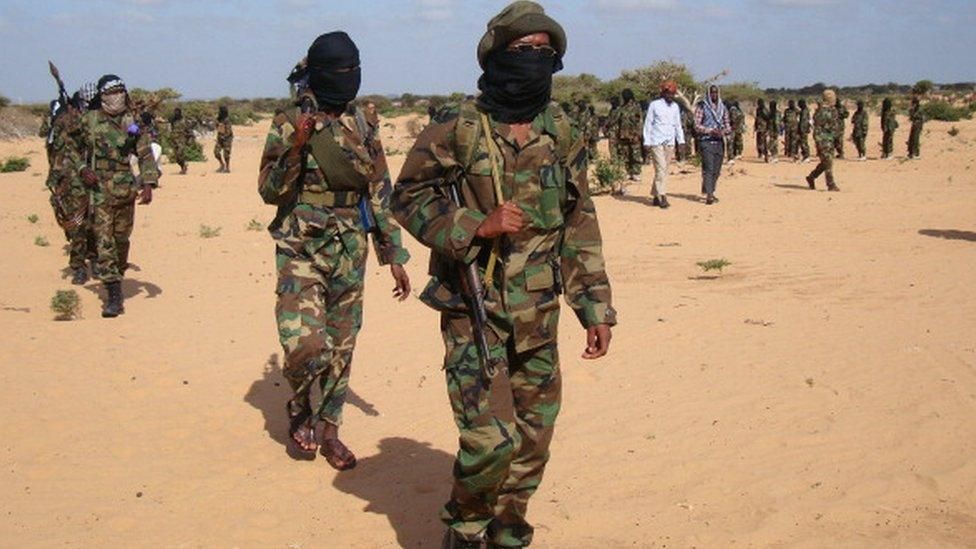
While government forces have successfully reclaimed key territories, the battle against extremism is far from over, and as this latest attack proves, al-Shabaab remains determined to undermine progress. Moving forward, Somalia’s leaders will have to strike a delicate balance between military operations and efforts to address the root causes of extremism, including poverty, political instability, and lack of economic opportunities.
With security forces on high alert and the Somali government vowing to retaliate, the coming weeks are likely to see intensified military operations aimed at dismantling al-Shabaab strongholds. However, security experts warn that defeating the militant group will require more than just military force—it will necessitate a comprehensive strategy that includes intelligence gathering, cutting off financial support to extremist networks, and addressing the social and political conditions that fuel recruitment.
Additionally, Somalia’s government will need to bolster its counterterrorism alliances with international partners to ensure that resources and support continue to flow. The assassination attempt on President Mohamud has reaffirmed the stakes of the ongoing battle—Somalia’s leadership and its people are fighting not only for security but for the very future of the nation. The coming months will be critical in determining whether the government can maintain its momentum against al-Shabaab or whether the insurgents will continue to pose a disruptive force. Despite the challenges ahead, the resilience of the Somali people and their determination to build a stable, peaceful future remains unwavering.






0 comments