
Your Read is on the Way
Every Story Matters
Every Story Matters
The Hydropower Boom in Africa: A Green Energy Revolution Africa is tapping into its immense hydropower potential, ushering in an era of renewable energy. With monumental projects like Ethiopia’s Grand Ethiopian Renaissance Dam (GERD) and the Inga Dams in the Democratic Republic of Congo, the continent is gearing up to address its energy demands sustainably while driving economic growth.
Northern Kenya is a region rich in resources, cultural diversity, and strategic trade potential, yet it remains underutilized in the national development agenda.

Can AI Help cure HIV AIDS in 2025

Why Ruiru is Almost Dominating Thika in 2025

Mathare Exposed! Discover Mathare-Nairobi through an immersive ground and aerial Tour- HD

Bullet Bras Evolution || Where did Bullet Bras go to?
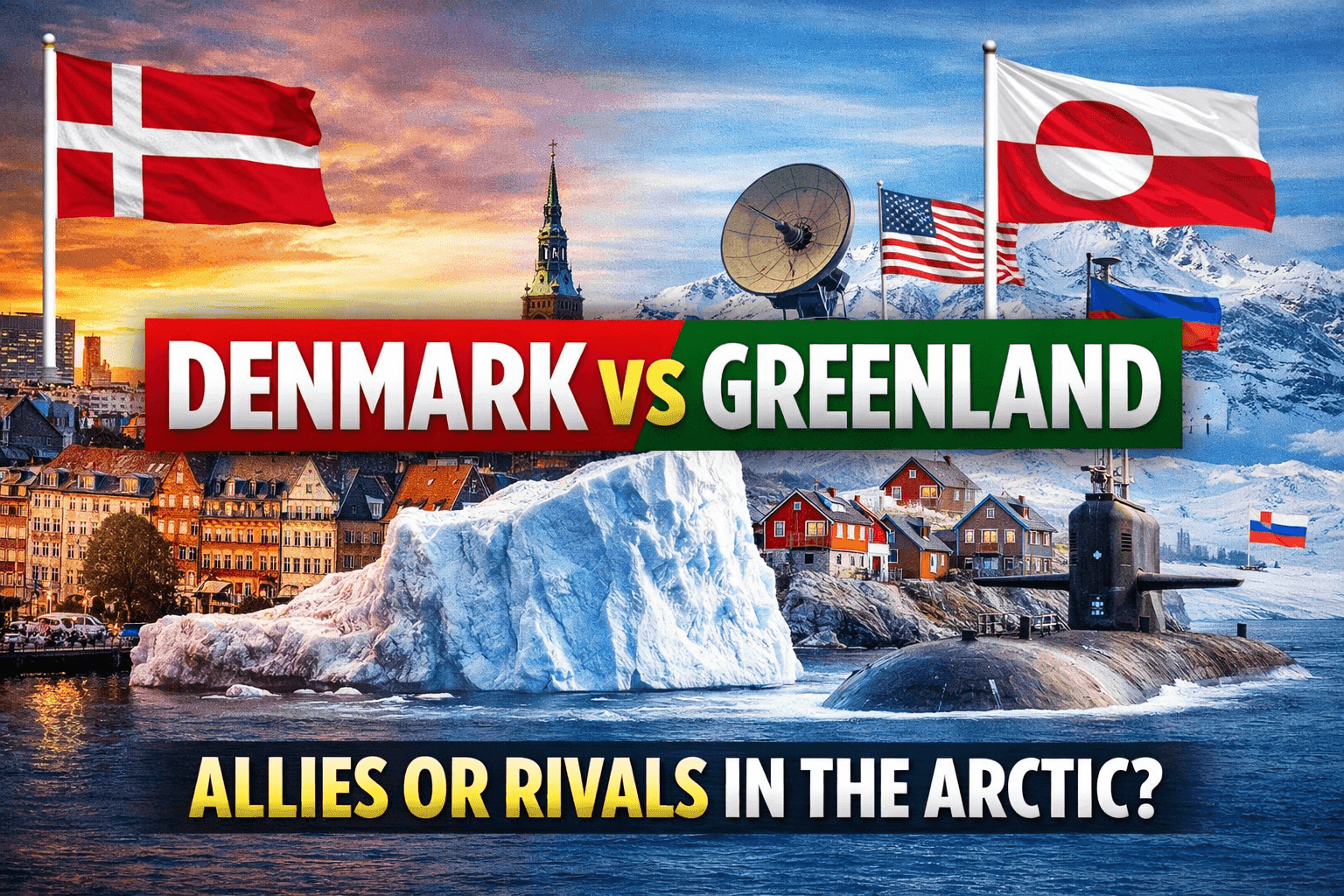
Greenland and Denmark are bound together constitutionally yet live vastly different realities. One is a compact Northern European state with dense cities, an advanced economy, and deep historical roots on the continent.
The other is a sprawling Arctic island, sparsely populated, culturally Inuit, and increasingly central to global competition in the far north. Their relationship, and the attention it attracts from powers such as the United States, Russia, and Canada, helps explain why the Arctic matters more today than at any point in recent history.
Geography and neighbors in different worlds
Denmark lies in northern Europe, positioned on the Jutland Peninsula and a chain of islands between the North Sea and the Baltic Sea. Germany borders it to the south, while Sweden and Norway sit just across maritime straits.
Denmark’s waterways, ports, and proximity to continental Europe have made it a trading nation from medieval times to the present.
Greenland sits thousands of kilometers to the west, between the Arctic and North Atlantic Oceans. Geographically part of North America, it lies closest to Canada’s Arctic archipelago and to Iceland across the Denmark Strait. Most of Greenland’s terrain is dominated by an immense ice sheet, with its population clustered on narrow strips of ice-free coast. Its vastness, remoteness, and polar climate distinguish it sharply from Denmark’s temperate environment.
Governance: one kingdom, two systems
Denmark is a constitutional monarchy with a parliamentary democracy. It manages its own foreign affairs, defense, taxation, and international engagement, operating as a fully sovereign state.
Greenland is a self-governing territory within the Kingdom of Denmark.
It has its own parliament and government that oversee most domestic sectors including education, fisheries, health, and natural resources. Denmark remains responsible for defense, security, and much of foreign policy, though Greenland is increasingly active in international Arctic forums. Home rule in 1979 and expanded self-government in 2009 created a clearer pathway for greater autonomy, including the recognized right to pursue independence if Greenlanders decide so.
Thus, Denmark and Greenland are connected constitutionally but not identical politically. One governs itself entirely; the other governs most internal affairs while negotiating the pace and limits of further self-determination.
Culture: European heritage and Inuit identity
Denmark’s culture reflects centuries of Nordic and European development. Danish is the primary language, social institutions are highly developed, and the country emphasizes welfare, education, and civic participation. Literature, architecture, design, and the arts form central pillars of national identity.
Greenland’s culture is primarily Inuit. Kalaallisut, an Inuit language, is widely spoken and institutionally supported.
Traditional hunting, fishing, dogsledding, and seasonal rhythms continue to shape social life. Danish influence remains visible in administration, education, and infrastructure, but Greenland’s cultural policy increasingly foregrounds indigenous heritage, language, and identity.
The two societies therefore share political ties but remain culturally distinct.
Economies shaped by different environments
Denmark’s economy is diverse, technologically advanced, and service-oriented. It benefits from strong manufacturing, renewable energy leadership, maritime trade, and integration into European and global markets.
Greenland’s economy is smaller and more specialized. Fisheries dominate exports, especially shrimp and halibut. Public spending still relies significantly on annual block grants from Denmark.
However, the island holds valuable mineral resources including rare earth elements, uranium in some areas, zinc, copper, gold, and potential hydrocarbons. These resources are central to debates about future development, environmental protection, and the implications of growing autonomy.
Climate change is accelerating ice melt, opening sea routes and resource access, which in turn increases international interest in Greenland.
Natural resources and strategic geography
Greenland’s ice sheet conceals minerals essential for modern technology, renewable energy systems, and military electronics. Melting ice and improved access to Arctic waters increase interest in mining, energy exploration, and shipping. Its position along the North Atlantic and Arctic corridors gives it an important role in air defense, satellite tracking, and maritime surveillance.
Denmark’s resources are more conventional: agricultural production, offshore wind energy, and modest North Sea hydrocarbons. Strategic interest around Denmark relates largely to its European role; around Greenland, it is its Arctic location that attracts attention.
Relations with the United States
The United States has had a sustained presence in Greenland since World War II. The Pituffik (Thule) base in northwest Greenland remains critical for missile warning systems, space monitoring, and Arctic operations. Recent U.S. diplomatic and economic engagement includes interest in infrastructure, minerals, and scientific research.
Washington views Greenland through three lenses:
Greenlandic leaders, meanwhile, balance welcoming investment with protecting autonomy, environment, and indigenous rights. Denmark coordinates security policy, but local decision-making increasingly shapes how external powers engage.
Russia’s Arctic posture and Greenland’s significance
Russia maintains the largest Arctic coastline in the world and has expanded its northern military infrastructure, ports, and icebreaker fleet. This activity heightens the strategic value of Greenland and the broader North Atlantic, especially within NATO planning and surveillance.
Greenland itself is not contested by Russia, but its location near the GIUK Gap—between Greenland, Iceland, and the UK—makes it important for monitoring naval and air movement between the Arctic and the North Atlantic. Denmark, as a NATO member, plays a central role in coordinating Arctic security policy while including Greenlandic authorities in discussions that directly affect the region.
Canada’s interests and shared Arctic neighborhood
Canada and Greenland face each other across the Davis Strait and Baffin Bay. Their ties focus on Arctic science, indigenous cooperation, environmental protection, fisheries management, and maritime boundaries. Both share concerns about melting ice, northern sovereignty, and the future of Arctic shipping lanes.
Border agreements and cooperative frameworks illustrate how Arctic states increasingly resolve disputes diplomatically. Canada also sees Greenland as part of the broader North American Arctic ecosystem that links Inuit communities from Alaska to Nunavut and Greenland’s west coast.
The road ahead: autonomy, identity, and global attention
Greenland’s expanding political confidence, young demographic profile, and resource potential suggest that debates over independence will continue.
Economic diversification, sustainable development, and environmental protection remain central questions. Denmark will continue to play roles in security, diplomacy, and financial support, while adjusting to Greenland’s changing aspirations.
Denmark, for its part, remains a European state grounded in continental institutions and Nordic cooperation, even as its Arctic territory anchors it permanently in northern geopolitics.
Together, they show how one kingdom spans two worlds: a European democracy and a vast Arctic land, linked by history yet moving along distinct cultural and political trajectories—while the United States, Russia, Canada, and others watch the Arctic more closely with every passing year.




0 comments