
Your Read is on the Way
Every Story Matters
Every Story Matters
The Hydropower Boom in Africa: A Green Energy Revolution Africa is tapping into its immense hydropower potential, ushering in an era of renewable energy. With monumental projects like Ethiopia’s Grand Ethiopian Renaissance Dam (GERD) and the Inga Dams in the Democratic Republic of Congo, the continent is gearing up to address its energy demands sustainably while driving economic growth.
Northern Kenya is a region rich in resources, cultural diversity, and strategic trade potential, yet it remains underutilized in the national development agenda.

Can AI Help cure HIV AIDS in 2025
Why Ruiru is Almost Dominating Thika in 2025
Mathare Exposed! Discover Mathare-Nairobi through an immersive ground and aerial Tour- HD

Bullet Bras Evolution || Where did Bullet Bras go to?
The Gold Revolt: How Burkina Faso’s Nationalism Is Unnerving the West
Once dismissed as another cog in the global extraction machine, Burkina Faso is emerging in May 2025 as a case study in raw, revolutionary economics. Its president, Captain Ibrahim Traoré, is throwing off the yoke of foreign dependency by taking direct control of its most valuable asset: gold. And the message is clear — what’s in our soil stays in our hands.
From Compliance to Confrontation
In decades past, Burkina Faso mining operations were dominated by Western companies. Canadian, British, and Australian firms held long-term licenses, operated large-scale extraction facilities, and remitted only a fraction of profits to the local economy. That system, a holdover from colonial influence, persisted through subtle diplomacy and a carefully managed illusion of “development aid.”
But under Traoré’s bold new vision, that game is over.
In recent weeks, his government began the process of gold nationalization by revoking and reclaiming licenses from foreign mining operators. Several large-scale mines have now been transferred to state control via Burkina Faso’s national mining company, SOPAMIB, a move justified as a reassertion of Burkina Faso resource control.
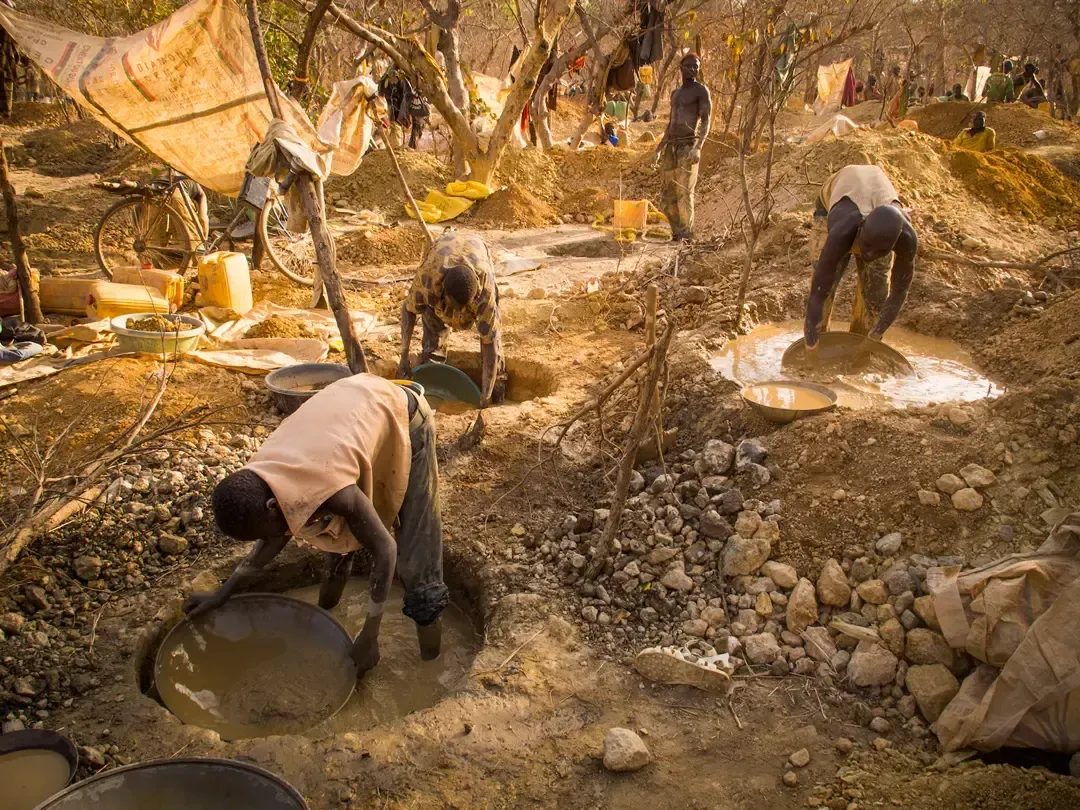
The reaction from the West? Predictably alarmed. Quiet diplomatic pressure, closed-door meetings, and ominous murmurings about "investor confidence" have surfaced in response — but the government is unmoved.
The Gold Lockdown
In an equally dramatic step, Burkina Faso suspended all export permits for small-scale gold producers, citing the need to clean up the sector. Traoré’s administration claims the move was necessary to halt rampant gold smuggling and to dismantle what he called a "shadow economy" that benefits foreign handlers more than Burkinabè citizens.
The Ibrahim Traoré gold policy includes rerouting artisanal gold to state-monitored channels and preparing it for in-country processing. And that brings us to the next explosive piece of the puzzle: the gold refinery Burkina Faso is building.
Capable of refining up to 400 kilograms of gold per day, this refinery will mark the first time the country retains the full value chain of its most profitable resource. Until now, most of Burkina Faso’s gold was exported raw to Europe and the Gulf, where it was refined and sold at global premiums. That’s no longer acceptable under the country’s rising economic nationalism.
A Challenge to the Global Order
The deeper story, though, lies in the West Africa gold politics currently underway. Traoré’s Burkina Faso is not acting in isolation. Together with Mali and Niger — under the collective AES alliance — it is pushing a regional model of Africa gold sovereignty.
These states are crafting a new doctrine: resource-rich, militarily assertive, and openly skeptical of Western prescriptions. In practice, this translates to things like: rejecting IMF strings, bypassing French institutions, and inviting partnerships with non-Western allies like Russia and China.
The AES bloc's rejection of Western norms has alarmed financial institutions and geopolitical analysts alike. Economic retaliation may already be underway, including funding cuts, travel restrictions, and trade disruptions.
But inside Ouagadougou, the feeling is different — triumphant, even prophetic. "We are not anti-West," a Traoré aide said in a recent televised address, "we are pro-Burkina Faso."
Why the West Is Nervous
This isn't just about Burkina Faso gold. It’s about precedent. If one of the world’s poorest nations can successfully kick out foreign miners, reroute value internally, and survive the fallout — then why not others?
Countries like Guinea, the DRC, and even Tanzania are watching. The fear in Western capitals isn’t the loss of a single mine; it’s the possibility of a domino effect where Western influence in Africa is permanently diluted by homegrown economic populism.
This is where ideology meets commodity.
The Traoré government has essentially declared that Burkina Faso is no longer a passive participant in global trade. It wants equity, not exploitation. That terrifies the extractive economies that have profited from Africa's silence for decades.
Risks on the Horizon
Of course, critics warn of potential blowback. Cutting out international investors may dry up technological support, reduce infrastructure development, and expose the mining sector to political patronage. Some worry the new refinery will suffer from inefficiencies or corruption.
But even these concerns come with a trade-off. For Traoré and his supporters, the risks of dependency are far greater than the risks of autonomy.
In the eyes of many young Burkinabè, gold isn’t just a commodity anymore — it’s a symbol of struggle, sacrifice, and finally, self-determination.
Related Reads:
Claire Dubois and the Spy Games Burkina Faso Won’t Talk About
Conclusion: Burkina Faso as a Tipping Point
With the world now watching, Burkina Faso mining is no longer a niche economic topic — it's a geopolitical bellwether.
The decisions made in Ouagadougou this year will ripple through Africa and beyond. Whether Traoré’s administration can weather the storms ahead remains uncertain. But one thing is not: the age of quiet extraction is over.
This is the age of sovereign assertion — and Burkina Faso, long underestimated, is leading the charge.






0 comments