
Your Read is on the Way
Every Story Matters
Every Story Matters
The Hydropower Boom in Africa: A Green Energy Revolution Africa is tapping into its immense hydropower potential, ushering in an era of renewable energy. With monumental projects like Ethiopia’s Grand Ethiopian Renaissance Dam (GERD) and the Inga Dams in the Democratic Republic of Congo, the continent is gearing up to address its energy demands sustainably while driving economic growth.
Northern Kenya is a region rich in resources, cultural diversity, and strategic trade potential, yet it remains underutilized in the national development agenda.

Can AI Help cure HIV AIDS in 2025

Why Ruiru is Almost Dominating Thika in 2025

Mathare Exposed! Discover Mathare-Nairobi through an immersive ground and aerial Tour- HD

Bullet Bras Evolution || Where did Bullet Bras go to?
In the ever-shifting tides of Kenyan politics, Edwin Sifuna has emerged not just as a vocal critic but as a central figure in the resistance against President William Ruto’s administration. As the Secretary General of the Orange Democratic Movement (ODM) and Senator for Nairobi, Sifuna wields both political influence and a sharp tongue.
His rhetoric has moved beyond the predictable opposition soundbites—he’s strategically challenging the very architecture of Ruto’s “inclusive” government agenda. Sifuna’s voice represents a growing discontent among Kenyans who feel that the so-called national unity deals are little more than elite pacts that sacrifice accountability for political convenience. For Sifuna, coalition politics without genuine change is simply window dressing.
Sifuna has issued what could easily be considered the most audacious political challenge of the season: he wants President Ruto to prove the sincerity of his "broad-based" government by not seeking reelection in 2027. Instead, he suggests, Ruto should step aside and back ODM leader Raila Odinga as a consensus candidate. This call is more than symbolic; it’s a deliberate disruption of the status quo.
It places the burden of proof on Ruto to demonstrate that his coalition-building efforts are not just strategies to disarm the opposition, but actual commitments to shared leadership. Sifuna knows that Ruto’s political base may bristle at the suggestion, but that seems to be the point—he’s raising the stakes and forcing a national conversation about succession, sincerity, and power-sharing.
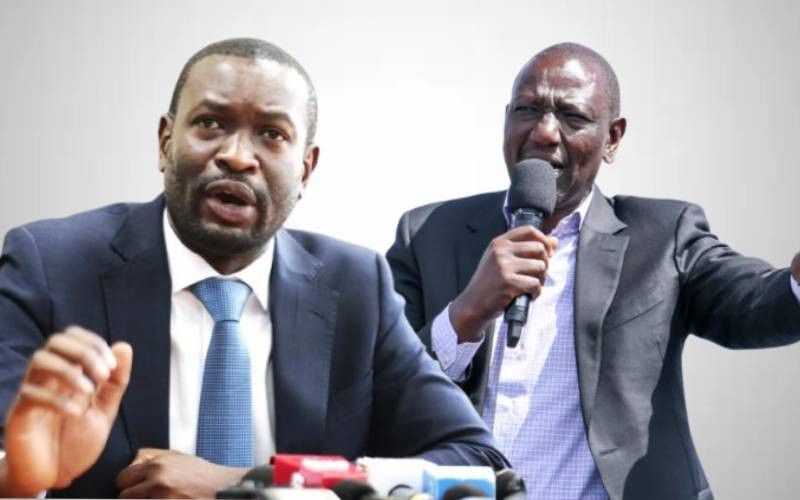
Central to Sifuna’s offensive is his claim that President Ruto is actively undermining the 2010 Constitution, which was designed to foster democratic governance, institutional independence, and regional equity. Sifuna argues that under Ruto’s watch, key institutions such as the judiciary, police oversight bodies, and commissions tasked with regulating elections and governance have become politicized and ineffective.
He paints a picture of a creeping authoritarianism masked by populist charm and legislative manipulation. According to Sifuna, the government’s frequent use of executive orders, the growing influence of the presidency over parliament, and the targeting of civil society organizations are all red flags signaling a retreat from constitutionalism. In his words, Kenya is on a dangerous path where the spirit of the Constitution is being hollowed out from within.
Among the 2010 Constitution’s most celebrated achievements was the establishment of devolution—a system designed to decentralize power and ensure resources reached counties equitably. Sifuna contends that Ruto’s administration has not only neglected devolution but is actively sabotaging it. He cites repeated delays in disbursing county funds, increasing bureaucratic interference from Nairobi, and a general lack of political will to empower governors and county assemblies.
These obstacles, Sifuna says, have left regional governments crippled and communities underserved. His message resonates in places where the promise of devolution has yet to be fulfilled. For Sifuna, defending devolution isn’t just a policy position; it’s a constitutional obligation and a moral crusade. He warns that allowing centralization to continue unchecked will widen inequality and undermine the very foundation of post-2010 governance.
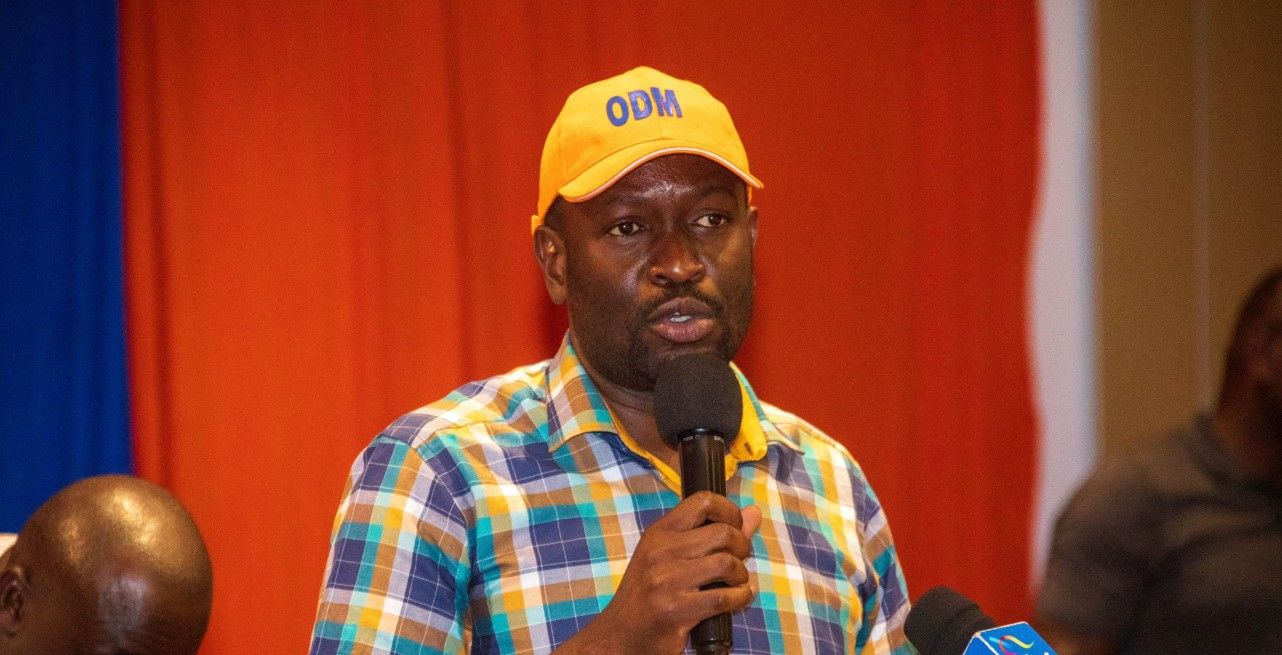
Sifuna’s internal ODM messaging has been equally uncompromising. Amid reports that some ODM legislators have grown cozy with the ruling party, he has laid down a clear directive: those who align themselves with Ruto’s government should resign from ODM. This isn’t just about party unity—it’s about ideological consistency and political integrity. Sifuna believes that politicians cannot serve two masters.
By entertaining overtures from Ruto’s camp while claiming ODM allegiance, such members dilute the party’s mission and confuse the electorate. His warning underscores the growing tension within ODM over how to engage with a ruling coalition that seems eager to blur political boundaries. Sifuna’s stance is designed to firm up party ranks ahead of the 2027 elections and re-establish ODM as the principal opposition force, not a political accessory to the regime it should be confronting.
As Kenya lurches toward the 2027 general elections, Edwin Sifuna’s challenge to the Ruto administration is sending ripples across the political spectrum. His message may polarize, but it cannot be ignored. In fact, Sifuna seems to thrive on confrontation, believing that strong opposition is essential for a healthy democracy. Whether his call for Ruto to step down gains traction or is dismissed as political theater, it has already shifted the national dialogue.
More importantly, it has exposed cracks within both the opposition and ruling alliances. In an era when many leaders are choosing compromise over confrontation, Sifuna is doing the opposite—planting his flag firmly in the ground and daring others to pick a side. The coming months will determine whether his approach galvanizes a movement or alienates moderates. Either way, Kenya’s road to 2027 just got more turbulent—and a lot more interesting.






0 comments