
Your Read is on the Way
Every Story Matters
Every Story Matters
The Hydropower Boom in Africa: A Green Energy Revolution Africa is tapping into its immense hydropower potential, ushering in an era of renewable energy. With monumental projects like Ethiopia’s Grand Ethiopian Renaissance Dam (GERD) and the Inga Dams in the Democratic Republic of Congo, the continent is gearing up to address its energy demands sustainably while driving economic growth.
Northern Kenya is a region rich in resources, cultural diversity, and strategic trade potential, yet it remains underutilized in the national development agenda.

Can AI Help cure HIV AIDS in 2025

Why Ruiru is Almost Dominating Thika in 2025

Mathare Exposed! Discover Mathare-Nairobi through an immersive ground and aerial Tour- HD

Bullet Bras Evolution || Where did Bullet Bras go to?
What was supposed to be Rigathi Gachagua’s political reawakening instead became a scene of chaos and brutality. On what should’ve been a pivotal Thursday, Nairobi’s Lavington neighborhood turned into a battleground. As Gachagua prepared to unveil the Democracy for Citizens Party (DCP), a violent gang of unidentified youths stormed the venue, provoking a brutal response from his security team. Shots were fired in the air, stones rained down, and what was billed as a peaceful political milestone devolved into disorder.
The spectacle unfolded live. Gachagua’s team, in a stunning overreach, turned their weapons on members of the press. Three journalists were injured, and their equipment seized. Footage that could have shed light on the instigators was allegedly wiped by Gachagua’s own guards. By day's end, the story wasn’t about a new political party—it was about whether Kenya’s political violence has returned to the mainstream.
In a blistering statement on social media, Gachagua didn’t mince words. He accused unnamed political opponents—clearly alluding to figures within President Ruto’s inner circle—of orchestrating the ambush. According to him, Thursday’s violence was merely the latest in a long line of targeted attacks, including a funeral in Limuru, assaults on his wife and churchgoers, and even the use of teargas on his prayer meeting in Nyandarua. To Gachagua, these aren’t isolated incidents; they’re part of a larger, coordinated effort to exile him politically and silence a rising opposition movement.
But the former deputy president’s most damning allegation was directed at law enforcement. He claimed the police not only failed to protect the DCP gathering but were actively escorting the very goons who disrupted it. According to him, political strings are being pulled behind the scenes to shield the culprits from prosecution. He painted the police as compromised, neutered by partisan interference, and complicit in a quiet war being waged against dissent.
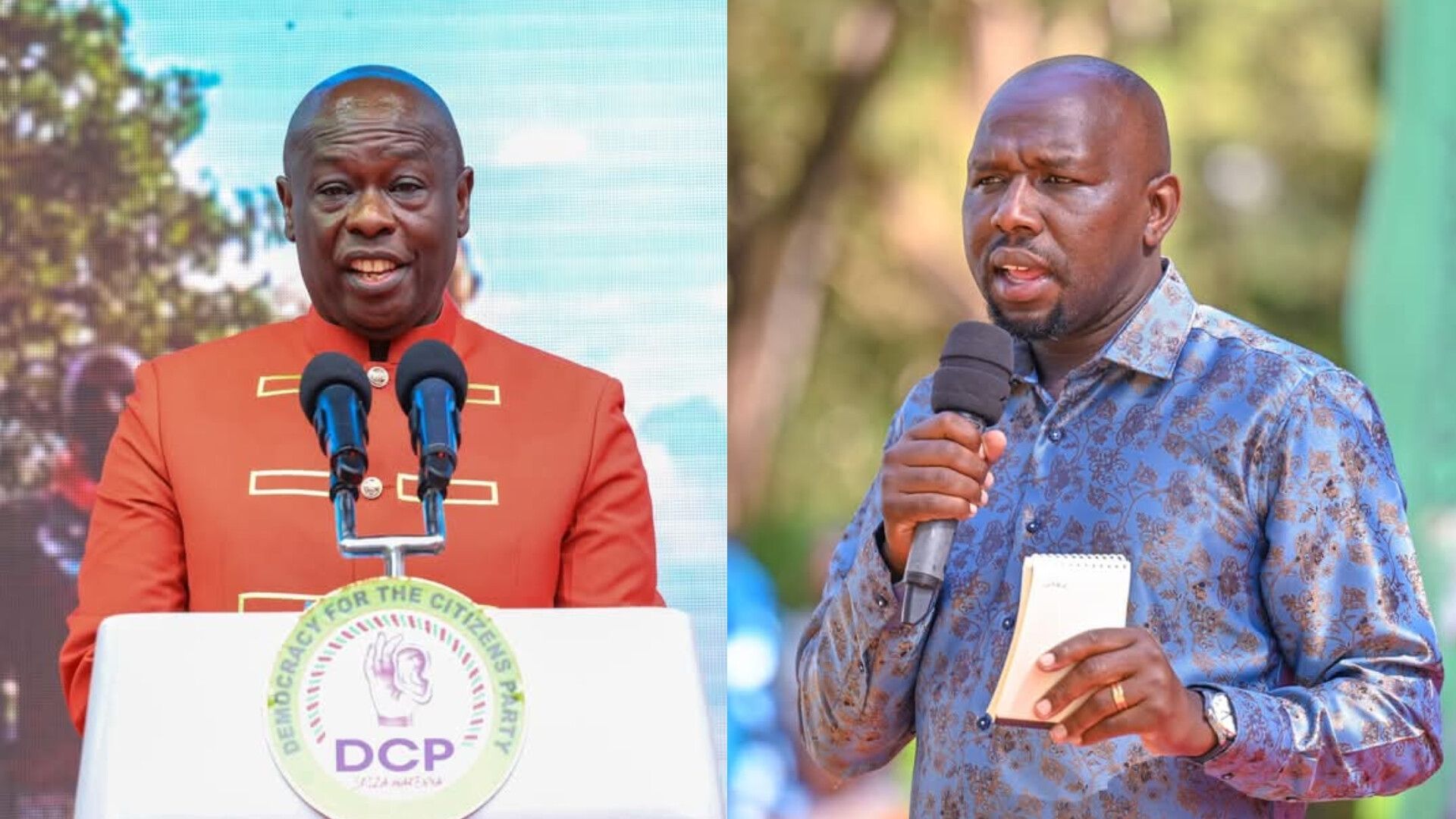
Interior Cabinet Secretary Kipchumba Murkomen fired a salvo of his own, casting blame squarely on Gachagua’s team. He said that the police were not informed about the event, a procedural lapse that made security deployment impossible. But Murkomen went further, suggesting that many of the rowdy youths were actually DCP supporters who turned violent after allegedly being denied payment.
The implication was sharp: Gachagua wasn’t attacked by outside forces; he was undone by poor planning, internal sabotage, or even manufactured drama for sympathy. That line of reasoning feeds a growing narrative among Gachagua’s critics—that his political theatre often invites the very chaos he then weaponizes as proof of persecution.
Despite the violence, Gachagua remains defiant. “Just accept that you lost the support of the people and move on,” he snapped in his statement, directly addressing his opponents. But while he speaks the language of resilience, the deeper message is clear: Gachagua sees himself as a lone rebel, hunted by a government he once served, now seeking to regain his stature by turning public outrage into political fuel.
The DCP’s foundation may be laid in Nairobi, but its battle lines stretch across the country. What started as a party launch has now become a test of Kenya’s democratic resilience—and its tolerance for dissent.
As Kenya braces for another election cycle, the real question isn’t just who’s running—it’s who’s willing to silence their rivals to win.






0 comments