
Your Read is on the Way
Every Story Matters
Every Story Matters
The Hydropower Boom in Africa: A Green Energy Revolution Africa is tapping into its immense hydropower potential, ushering in an era of renewable energy. With monumental projects like Ethiopia’s Grand Ethiopian Renaissance Dam (GERD) and the Inga Dams in the Democratic Republic of Congo, the continent is gearing up to address its energy demands sustainably while driving economic growth.
Northern Kenya is a region rich in resources, cultural diversity, and strategic trade potential, yet it remains underutilized in the national development agenda.

Can AI Help cure HIV AIDS in 2025

Why Ruiru is Almost Dominating Thika in 2025

Mathare Exposed! Discover Mathare-Nairobi through an immersive ground and aerial Tour- HD

Bullet Bras Evolution || Where did Bullet Bras go to?
What was expected to be a quiet and respectful funeral for the late Baringo Senator William Cheptumo turned into an electrifying political moment that could reshape Kenya’s political future. As dignitaries gathered and locals mourned their leader, an unanticipated confrontation awaited Nairobi Senator Edwin Sifuna. But it wasn’t a protest. Nor was it the usual grievances aimed at visiting politicians. Instead, a determined group of young people from Baringo seized the moment to deliver a powerful, unapologetic message for former Prime Minister Raila Odinga. One that carried the weight of frustration, betrayal, and urgency.
Their message was not simply a rejection of the rumors swirling around a potential alliance between Raila and President William Ruto. It was bigger than that. They demanded a total refusal to play the same political games that have led to broken promises and deepening inequality. In their eyes, Kenya no longer needs compromise. It needs confrontation. And they want Raila to be the one to lead it.
“We are not interested in alliances. We want a revolution,” one youth leader boldly told Sifuna as others nodded in fierce agreement. Their concerns go far beyond the usual cycles of elections and handshakes. To them, the country is spiraling deeper into an economic and social crisis, with the current administration accelerating its downfall through oppressive taxation, rampant corruption, and hollow promises that have left millions disillusioned.
To these youths, Ruto's government represents the very system that has failed them, their families, and their futures. But what pains them more is the thought of leaders like Raila, once the face of resistance, softening under the weight of political survival. The thought that Raila could align himself with the very forces they hold responsible for Kenya's suffering is, to them, not just disappointing. It is unforgivable.
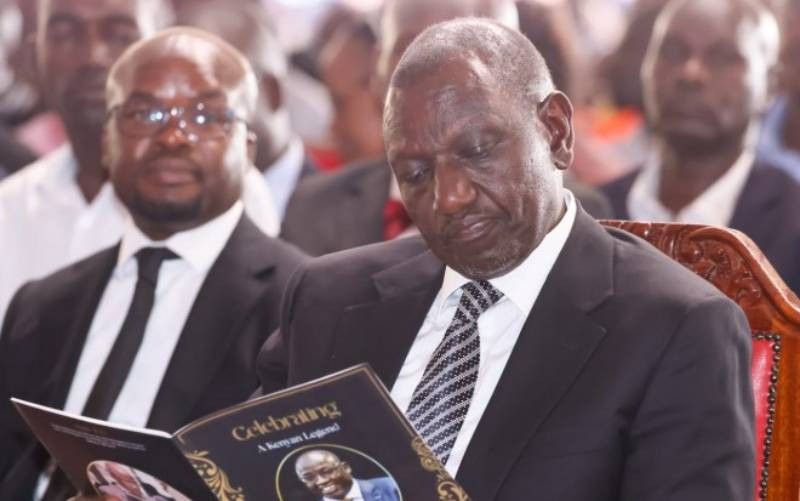
What they crave is not another handshake. They are calling for Raila to reclaim his place as the leader of the downtrodden, the voice of the betrayed, and the champion of a new Kenya built from the ground up. Not brokered in boardrooms, but demanded in the streets.
Caught between ceremonial duties and this unexpected appeal, Senator Edwin Sifuna found himself tasked with more than just representing Nairobi at the funeral. He was now the designated messenger of a grassroots demand that could reignite Kenya's opposition politics.
When Sifuna asked the youths what they wanted him to tell Raila, their answer was clear, sharp, and unanimous. Tell him not to dare align with Ruto. Tell him to stand with the people.
Their words were delivered not in whispers, but with the weight of generations tired of recycled leadership and superficial change. In their eyes, Sifuna, Raila, and any leader willing to listen must understand that the time for political balancing acts has ended. They want clarity. They want action. And they want it now.
For Raila Odinga, these calls from Baringo come at a pivotal time. Following his defeat in the African Union Commission chairmanship race, Raila returned to a country simmering with unrest. His next move is under a national microscope. Will he cement his legacy by making peace with the establishment? Or will he return to his roots as the firebrand leader willing to challenge the very structures suffocating the nation?
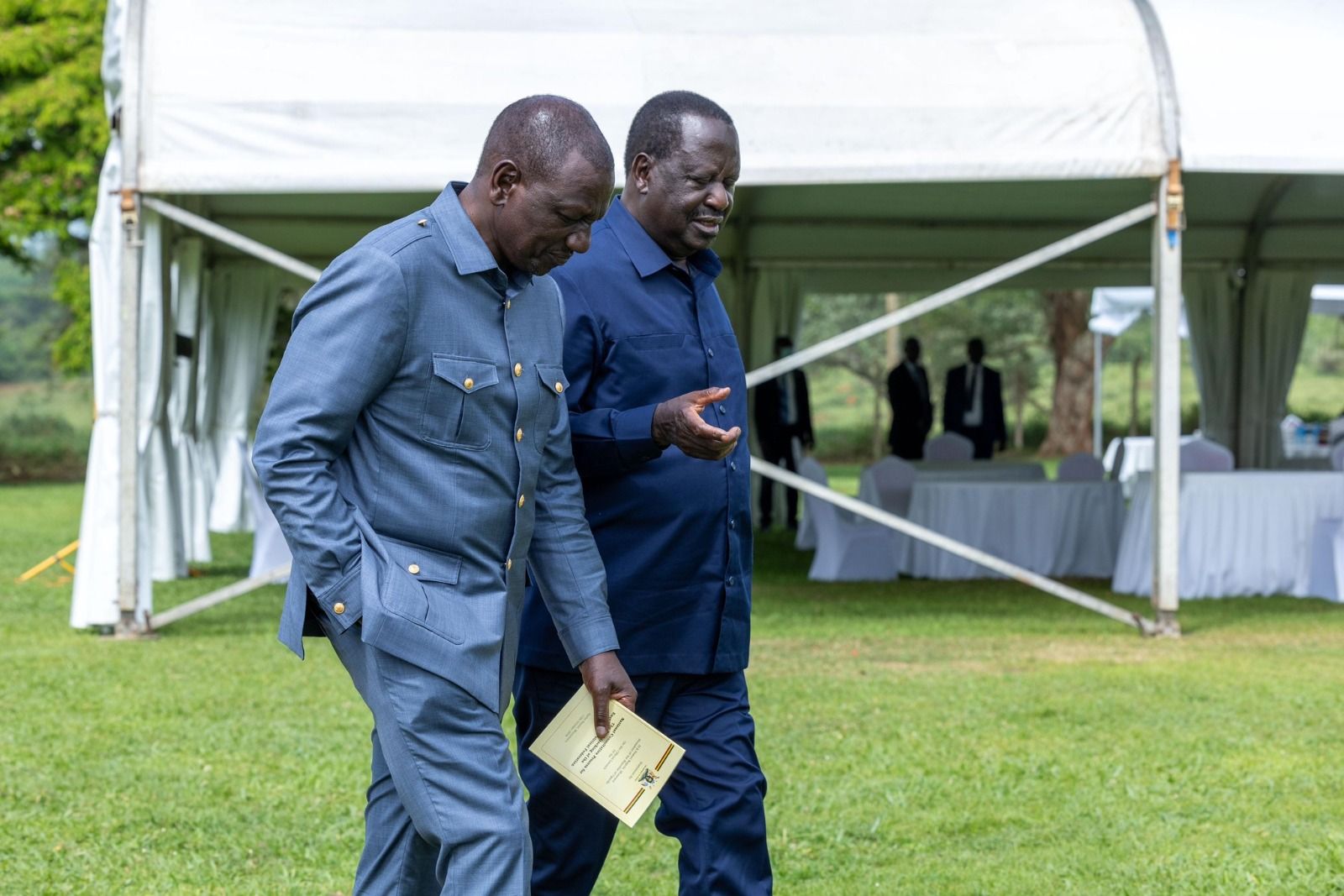
Recent meetings between Raila and Ruto at State House Mombasa have fueled fears of a political realignment aimed at stabilizing the government's shaky public support ahead of the 2027 elections. But this has only deepened suspicion among his base, especially in regions like Baringo, where people feel abandoned by both the government and opposition.
The choice facing Raila is now larger than his own career. The Baringo youths made it clear. Kenya doesn't need another politician maneuvering for power. Kenya needs a leader willing to risk everything to tear down a system that has betrayed its people time and time again.
As the countdown to the 2027 elections begins, the country's political temperature is rising fast. Alliances are shifting. Deals are being whispered in corridors. But outside of those halls, in counties like Baringo, the people are stirring. They are no longer waiting for saviors. They are demanding leaders who are prepared to fight with them, side by side, against economic collapse, inequality, and the erosion of democracy.
Raila Odinga, once the embodiment of that fight, now stands at a defining crossroads. Will he answer Baringo’s call and ignite a new era of defiance? Or will he settle into the comfort of compromise, leaving the next generation to fight alone?
The Baringo youths have cast the first stone. Now the nation watches to see if Raila will pick it up and lead, or walk away, leaving history to close the chapter on one of Kenya's most powerful political legacies.






0 comments