
Your Read is on the Way
Every Story Matters
Every Story Matters
The Hydropower Boom in Africa: A Green Energy Revolution Africa is tapping into its immense hydropower potential, ushering in an era of renewable energy. With monumental projects like Ethiopia’s Grand Ethiopian Renaissance Dam (GERD) and the Inga Dams in the Democratic Republic of Congo, the continent is gearing up to address its energy demands sustainably while driving economic growth.
Northern Kenya is a region rich in resources, cultural diversity, and strategic trade potential, yet it remains underutilized in the national development agenda.

Can AI Help cure HIV AIDS in 2025

Why Ruiru is Almost Dominating Thika in 2025

Mathare Exposed! Discover Mathare-Nairobi through an immersive ground and aerial Tour- HD

Bullet Bras Evolution || Where did Bullet Bras go to?
In the escalating tensions within Kenya’s political sphere, Deputy President Rigathi Gachagua has firmly denied accusations made by President William Ruto, alleging that Gachagua had requested a sum of Ksh10 billion. This accusation has thrown the political establishment into turmoil, as Gachagua not only denied the claim but also lashed out at President Ruto, accusing him of lying to the public. The political rift between the two leaders is reaching new heights, adding to a long-running history of financial disputes and confrontational exchanges.
The controversy began when President Ruto, during a high-profile event at the Sagana State Lodge, publicly accused Gachagua of trying to extort Ksh10 billion. According to Ruto, Gachagua allegedly threatened that unless the money was handed over, Ruto’s chances of securing a second term in office would be severely jeopardized. The allegations painted a picture of a deputy president more concerned with his own financial gain than the well-being of the country.
These accusations were swiftly dismissed by Gachagua, who took to social media to set the record straight. He called Ruto's claims a fabrication, asserting that no such request had ever been made. Gachagua expressed his disappointment at the growing trend of falsehoods within the political leadership of the nation. The deputy president emphasized that his focus had always been on fulfilling his constitutional duties rather than engaging in underhanded financial schemes.
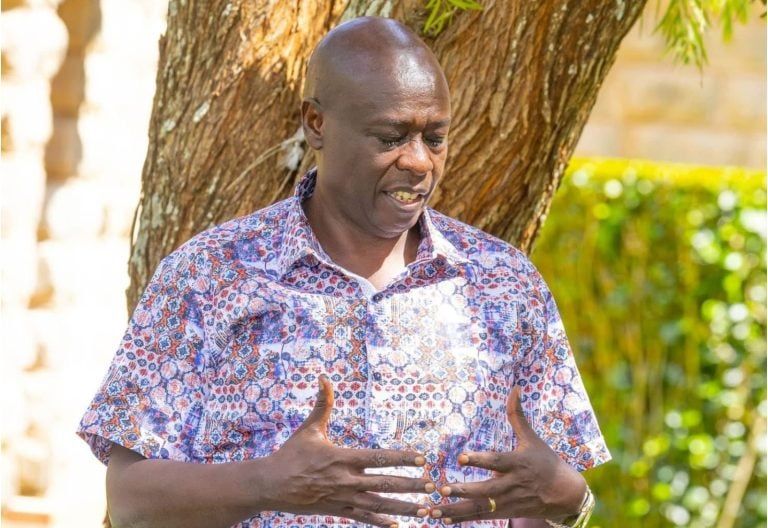
Gachagua’s public rejection of the allegations is not merely a defense of his reputation but a deeper challenge to the integrity of the current administration. His response indicates a rift that goes beyond a simple dispute—this is a battle for the moral and political high ground in Kenya’s political landscape.
This recent clash over the Ksh10 billion request is far from the first financial controversy involving Gachagua. Just a year earlier, in March 2023, he found himself embroiled in a similar situation when rumors surfaced about him demanding additional funds for his office.
It was reported that Gachagua sought Ksh1.5 billion to run the office of the Deputy President, which was met with widespread skepticism. Gachagua quickly debunked these claims, clarifying that the funds in question were merely a restoration of previously frozen allocations. These funds, he explained, had been suspended under the previous administration, and their reinstatement was a matter of ensuring that the Deputy President’s office functioned effectively.
Despite this clarification, the financial controversies surrounding Gachagua did not dissipate. His detractors argued that the timing and manner of these financial requests raised serious questions about his priorities and his leadership style. While Gachagua maintained that he was simply working within the frameworks of government procedures, the public perception of his actions continued to be clouded by the shadow of these disputes.
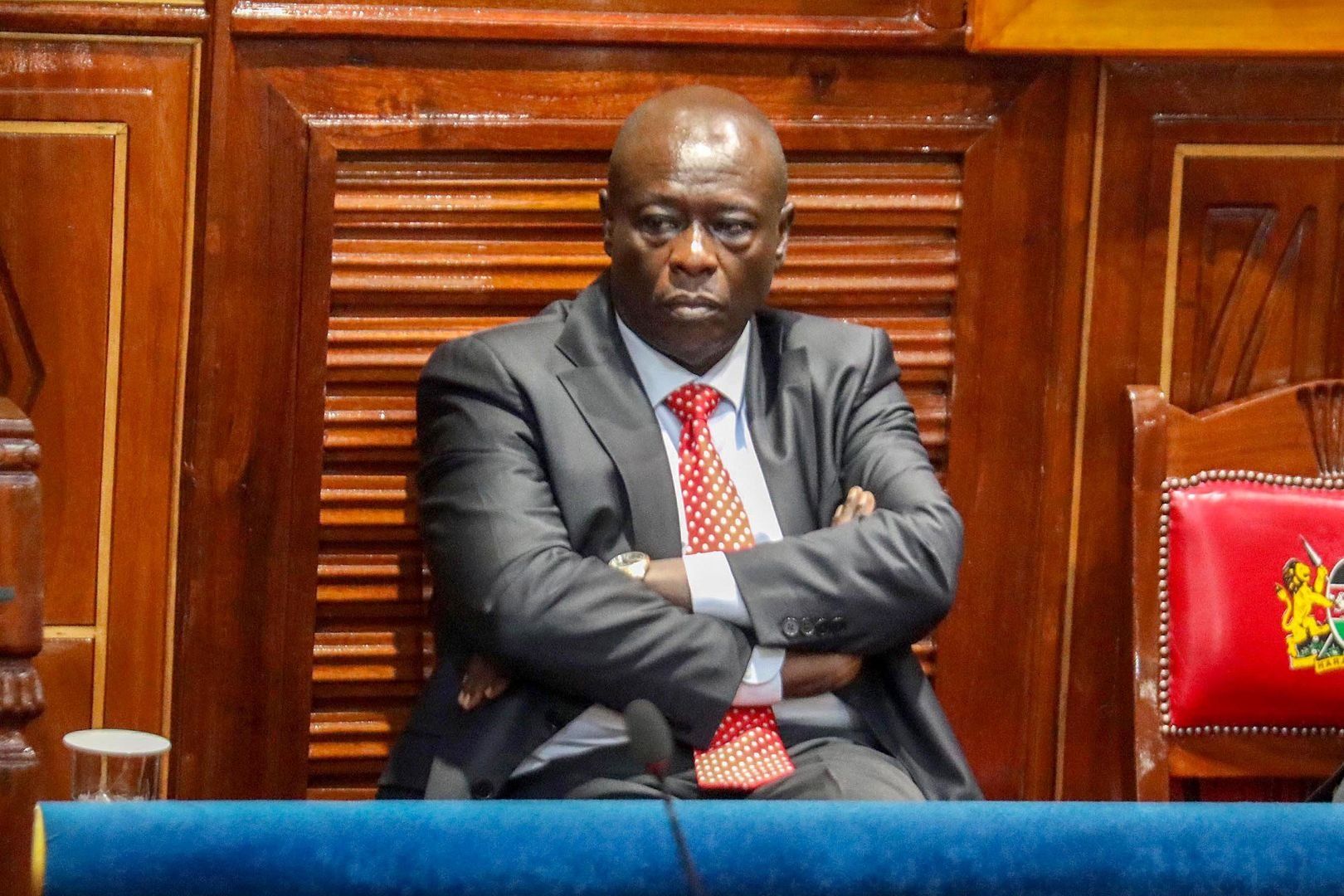
As the tensions between Gachagua and Ruto intensified, a more significant political event occurred in October 2024—Gachagua’s impeachment. He faced charges of abuse of office, corruption, and fostering tribalism. This impeachment served as a dramatic turning point in his political career, one that further soured his relationship with Ruto and other political elites within the ruling party. The accusations of corruption, in particular, painted Gachagua as a leader willing to manipulate the system for personal and political advantage.
While Gachagua contested the charges, the impeachment itself added fuel to an already volatile political situation. Many saw it as a power struggle between the Deputy President and the President, with both men maneuvering for dominance within the country's political hierarchy. Gachagua’s public statements after the impeachment were defiant. He vehemently denied all allegations of corruption and mismanagement, portraying himself as a victim of a political vendetta rather than a perpetrator of any wrongdoing.
This event further solidified Gachagua’s position as a figure of resistance against what he views as a corrupt political system, even as his political allies began to distance themselves from him. It also highlighted the deep fractures within Kenya’s ruling party, which had once seemed united in its efforts to reshape the country’s future but now appeared to be divided over issues of trust and power.
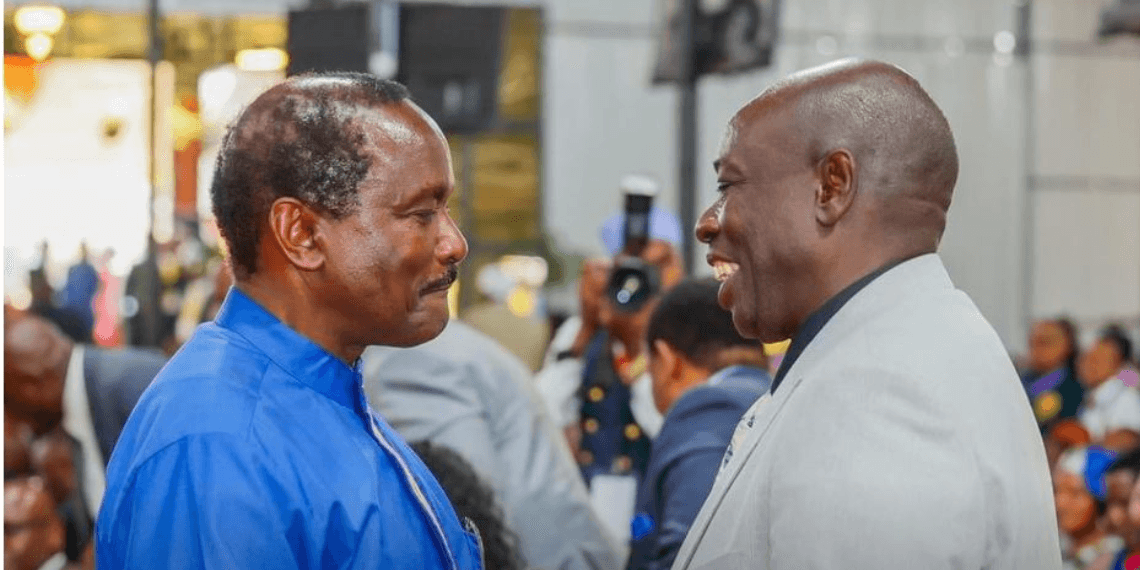
In the wake of the impeachment and continuing tensions with Ruto, Gachagua found himself aligning with other political figures who were also disillusioned with the current administration. Among these figures were former Interior Cabinet Secretary Fred Matiang'i and Wiper leader Kalonzo Musyoka. Together, they sought to form a new political coalition that could challenge Ruto’s leadership in the upcoming 2027 elections.
This new alliance could prove to be a formidable force, with Gachagua positioning himself as a leader of a populist movement aimed at unseating Ruto’s government. His public declarations suggest that he is preparing for a long-term political struggle that may involve significant shifts in the country’s political dynamics. While it is too early to predict the outcome of these alliances, they represent a strategic maneuver by Gachagua to consolidate support from various political factions and present a united front against Ruto’s presidency.
At the heart of this ongoing drama is the question of public perception. Gachagua’s denial of the Ksh10 billion accusation and his efforts to align with former political rivals suggest a calculated political strategy aimed at positioning himself as the anti-establishment candidate in the 2027 elections. His aggressive stance against the current administration might resonate with voters disillusioned by the status quo, although it remains to be seen whether this strategy will be effective.
For now, Gachagua’s actions continue to stoke political controversy, while Ruto’s leadership remains under scrutiny. The unfolding events are likely to shape the future of Kenya’s political landscape, as both leaders vie for influence and control in the lead-up to the next general election.
The political feud between Rigathi Gachagua and President William Ruto has reached a new chapter with the latest accusations and denials surrounding a Ksh10 billion request. Gachagua’s swift rejection of these claims, coupled with his impeachment and efforts to form new political alliances, paints a picture of a leader determined to challenge the status quo. As the 2027 elections approach, the outcome of this bitter conflict will have lasting implications for the future direction of Kenya’s government.
This ongoing saga serves as a stark reminder of the volatile nature of Kenyan politics, where power struggles, financial disputes, and personal vendettas often take center stage. Whether Gachagua will emerge victorious in his quest to challenge Ruto or whether the President will consolidate his power remains to be seen. What is clear, however, is that the stakes in this political drama are higher than ever.






0 comments