
Your Read is on the Way
Every Story Matters
Every Story Matters
The Hydropower Boom in Africa: A Green Energy Revolution Africa is tapping into its immense hydropower potential, ushering in an era of renewable energy. With monumental projects like Ethiopia’s Grand Ethiopian Renaissance Dam (GERD) and the Inga Dams in the Democratic Republic of Congo, the continent is gearing up to address its energy demands sustainably while driving economic growth.
Northern Kenya is a region rich in resources, cultural diversity, and strategic trade potential, yet it remains underutilized in the national development agenda.

Can AI Help cure HIV AIDS in 2025

Why Ruiru is Almost Dominating Thika in 2025

Mathare Exposed! Discover Mathare-Nairobi through an immersive ground and aerial Tour- HD

Bullet Bras Evolution || Where did Bullet Bras go to?
In an unexpected legal twist, Bryson Mangla, a resident of Kajiado West, has filed a constitutional petition demanding that Kenya hold its next general elections on Tuesday, August 11, 2026. His argument? That’s the real, lawful date. Anything later, especially 2027, would be a betrayal of Kenya’s 2010 Constitution and the democratic trust it stands for.
He’s taken the matter to the Milimani High Court, insisting that several articles of the Constitution are at risk of violation if the government sticks with the 2027 timetable. According to him, Kenya’s current leadership may be benefiting from an illegal extension of their term by default.
Bryson's case hinges on a major claim: that the 2010 Constitution reset Kenya’s electoral timeline. In his interpretation, the nation moved away from the old five-year political cycle and adopted a four-year term structure instead. He says this adjustment hasn’t been properly enforced or acknowledged.
By allowing another general election in 2027 instead of 2026, the government and the electoral commission are effectively delaying a constitutional mandate. Bryson believes this delay is not just a misstep but a deliberate move that breaches voter rights and undermines democratic order.
In what’s likely to be the most controversial section of his petition, Bryson labels the 2027 election plan an “act of treason.” He doesn’t mince words. He warns that public officers who facilitate an election date beyond August 2026 could face prosecution and, in extreme cases, even capital punishment under Kenya’s Penal Code.
That part of his petition has already sparked debates in legal circles. Some call it extreme; others say it brings attention to how seriously election timelines should be treated under the law.
Bryson wants the High Court to do more than just issue a symbolic ruling. He’s asking for a detailed series of orders. First, he wants a declaration that the 2026 date is the only lawful date for the next general election. This includes all positions — President, Governors, Members of Parliament, and County Assemblies.
Next, he’s pushing for the Independent Electoral and Boundaries Commission (IEBC) to be ordered to begin preparations for the 2026 elections immediately. No delays. No excuses.
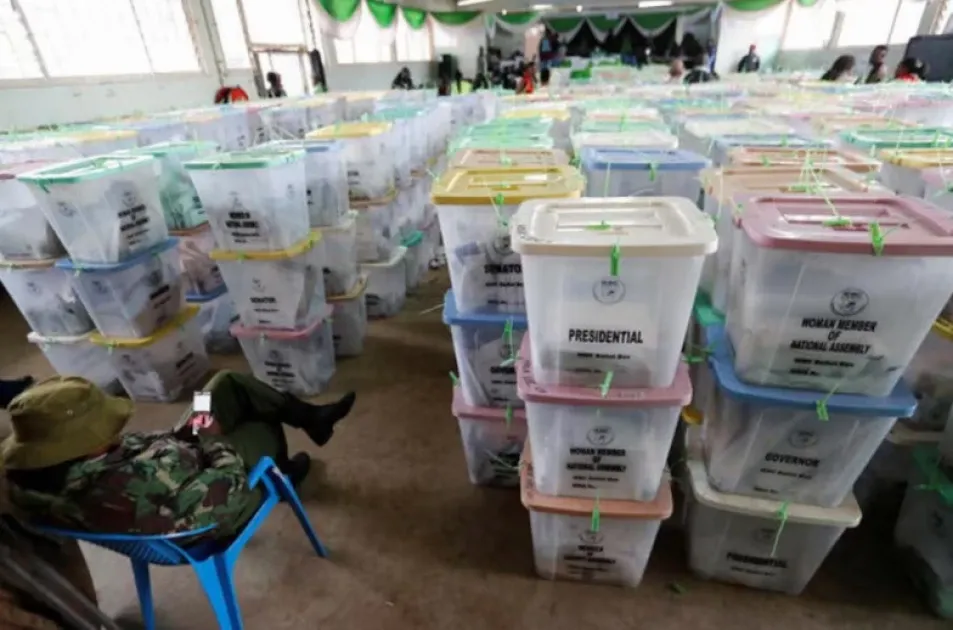
He’s also demanding that the Cabinet Secretary for the National Treasury allocate enough funds in both the current and next financial years. The money, he says, is critical to prevent last-minute scrambling and to ensure smooth, lawful execution of the polls.
Bryson says he didn’t rush to court without trying other avenues first. On April 30, 2025, he submitted a memorandum to several government agencies. In it, he warned of the risks of ignoring the Constitution’s electoral terms. He received no replies.
To him, the silence wasn’t just bureaucratic inefficiency. It was complicity. A red flag that the system was content with sleepwalking into an illegal election timeline.
Should the court agree with Bryson, Kenya could be forced into a national reconfiguration of its political schedule. Campaigns would have to kick off early. Budget priorities would shift. And the IEBC would face massive pressure to prepare for elections just over a year away.
If the court dismisses the petition, it would affirm the prevailing understanding of Kenya’s five-year electoral rhythm. That could put an end to this type of challenge — at least for now.
Either way, the court’s decision is going to set the tone for future electoral planning. And it will send a message about how strictly constitutional timelines should be interpreted and enforced.
Conclusion
Bryson Mangla has thrown a sharp curve into Kenya’s political arena. While most eyes were on 2027, he has pulled the curtain back to question whether the system itself is standing on shaky legal ground. Whether the courts agree or not, the question he’s raised is fundamental: does the Constitution mean what it says, or do we treat it like a guideline?
What comes next could reset not just a date on the calendar but the integrity of Kenya’s democratic processes.






0 comments