
Your Read is on the Way
Every Story Matters
Every Story Matters
The Hydropower Boom in Africa: A Green Energy Revolution Africa is tapping into its immense hydropower potential, ushering in an era of renewable energy. With monumental projects like Ethiopia’s Grand Ethiopian Renaissance Dam (GERD) and the Inga Dams in the Democratic Republic of Congo, the continent is gearing up to address its energy demands sustainably while driving economic growth.
Northern Kenya is a region rich in resources, cultural diversity, and strategic trade potential, yet it remains underutilized in the national development agenda.
Can AI Help cure HIV AIDS in 2025
Why Ruiru is Almost Dominating Thika in 2025
Mathare Exposed! Discover Mathare-Nairobi through an immersive ground and aerial Tour- HD

Bullet Bras Evolution || Where did Bullet Bras go to?
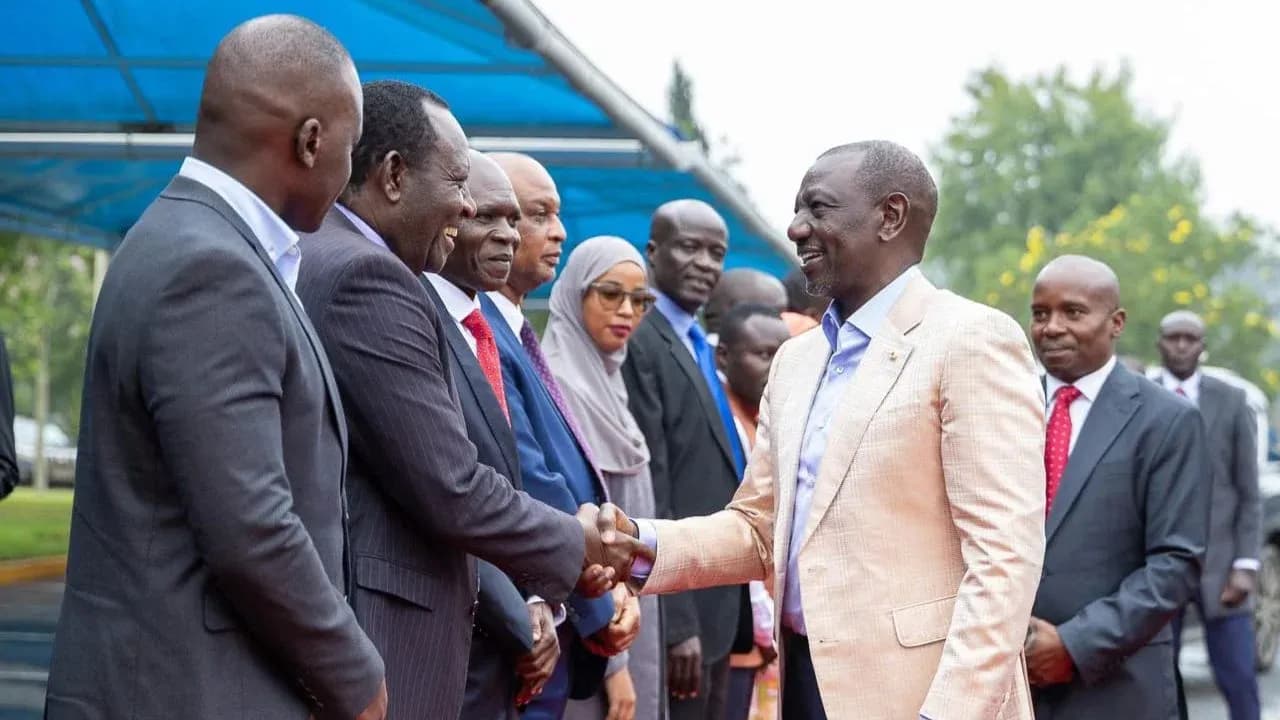
On Monday, August 18, President William Ruto and ODM leader Raila Odinga convened their first joint Parliamentary Group (PG) meeting in Karen, Nairobi. The session brought together MPs and senators allied to both Kenya Kwanza and ODM, marking a significant moment in Kenya’s evolving bipartisan political landscape.
This was the first such gathering since the signing of the Memorandum of Understanding (MoU) between the two leaders, underscoring their determination to consolidate support in Parliament and set the stage for cooperation ahead of the 2027 General Election.
The meeting was a show of unity between two of Kenya’s most influential political figures, who were once fierce rivals. By bringing lawmakers from both sides together, the leaders sought to cement their political working relationship and demonstrate that bipartisan collaboration is now central to the country’s governance. According to insiders, the session was as much about strengthening political trust as it was about addressing national issues.
There was a 10-point programme led by a committee chaired by former nominated senator Agnes Zani. The agenda covered a wide range of national concerns including economic recovery, job creation, lowering the cost of living, youth and women empowerment, electoral reforms, strengthening devolution, and the fight against corruption. The leaders also emphasized the importance of reconciliation, discussing measures for healing and compensation of families affected by past political protests.
The meeting reaffirmed the recommendations of the National Dialogue Committee (NADCO) report, which provides a framework for bipartisan reforms in Parliament. These include electoral justice, sustainable funding for political parties, and a shared approach to budget-making. By backing the NADCO report, both Ruto and Raila signaled their commitment to addressing long-standing issues that have often been at the center of Kenya’s political instability.
Speaking after the session, President William Ruto described the meeting as a turning point for Kenya’s leadership, stressing that bipartisan unity would accelerate the country’s transformation agenda. “That is the power of decisive, visionary leadership: turning potential into progress.
This is the spirit we must now summon across every sector of our economy. Together, across party lines, through bipartisan unity, and with unshakable resolve, we are accelerating our national transformation. Kenya is rising. The race to glory is on. We are unstoppable,” Ruto declared.
The joint PG meeting is seen as a strategic move to solidify the Ruto-Raila alliance ahead of the 2027 polls. Analysts argue that by uniting two of the largest political factions, the leaders are positioning themselves to control both houses of Parliament and streamline their reform agenda.
While questions remain about the long-term durability of the partnership, the Karen meeting highlighted a shift toward pragmatic politics where unity and cooperation may define Kenya’s next phase of governance.




0 comments