
Your Read is on the Way
Every Story Matters
Every Story Matters
The Hydropower Boom in Africa: A Green Energy Revolution Africa is tapping into its immense hydropower potential, ushering in an era of renewable energy. With monumental projects like Ethiopia’s Grand Ethiopian Renaissance Dam (GERD) and the Inga Dams in the Democratic Republic of Congo, the continent is gearing up to address its energy demands sustainably while driving economic growth.
Northern Kenya is a region rich in resources, cultural diversity, and strategic trade potential, yet it remains underutilized in the national development agenda.

Can AI Help cure HIV AIDS in 2025

Why Ruiru is Almost Dominating Thika in 2025

Mathare Exposed! Discover Mathare-Nairobi through an immersive ground and aerial Tour- HD

Bullet Bras Evolution || Where did Bullet Bras go to?
St. Peter’s Basilica stood draped in solemnity, its ancient stones witnessing the passing of a spiritual titan. Leaders from every corner of the globe, dignitaries draped in black, filed into the Vatican for the funeral of Pope Francis. Yet beneath the layers of incense and prayer, a different kind of drama was taking shape — a collision of political ambitions and unresolved wars. In an atmosphere thick with history and grief, former U.S. President Donald Trump and Ukrainian President Volodymyr Zelenskyy found themselves thrust together in an encounter that no diplomatic schedule had dared predict. What unfolded between them was less an official summit and more a sharp, fleeting negotiation — the kind that could tilt the balance of global conflict.
Away from the sweeping arches and the murmur of prayers, Trump and Zelenskyy engaged in an impromptu meeting that lasted a mere fifteen minutes but carried decades of consequence. Secluded behind the basilica's grand columns, the conversation was a mixture of cordiality, veiled tension, and unmistakable urgency. For Trump, this was a chance to reassert his presence as a master negotiator, the man who could cut deals others dared not attempt. For Zelenskyy, it was an unavoidable clash with a former leader whose views on the Ukraine conflict had been both a source of hope and consternation. Though brief, their dialogue bristled with strategic subtext — each word chosen carefully, every gesture loaded with meaning.
Central to their exchange was the ongoing war ravaging Ukraine. Trump, true to form, pushed a strategy of rapid de-escalation, suggesting that the path to peace could be expedited if Ukraine were willing to accept Crimea’s status as part of Russia — a move he framed as a painful but necessary compromise. Zelenskyy’s response was swift and unequivocal: no amount of pressure or promises could justify the ceding of Ukrainian land. Sovereignty was not a bargaining chip, he insisted, but the very soul of his nation’s struggle. The two men stood on opposite sides of a philosophical chasm — Trump advocating a pragmatic, transactional resolution, Zelenskyy defending a moral and nationalistic cause he deemed sacred.
Although the conversation ended with polite handshakes and diplomatic smiles, the underlying reality was far more fractured. Trump’s approach, rooted in transactional diplomacy, clashed headlong with Zelenskyy’s existential resistance. For Trump, territorial concessions were mere chips on the negotiating table; for Zelenskyy, they represented the blood, sacrifice, and survival of a people fighting to define their own destiny. Neither man left the encounter visibly moved from his position, but the very existence of the meeting suggested that fault lines were deepening — not just between Ukraine and Russia, but within the Western alliances trying to support Kyiv without triggering wider chaos.
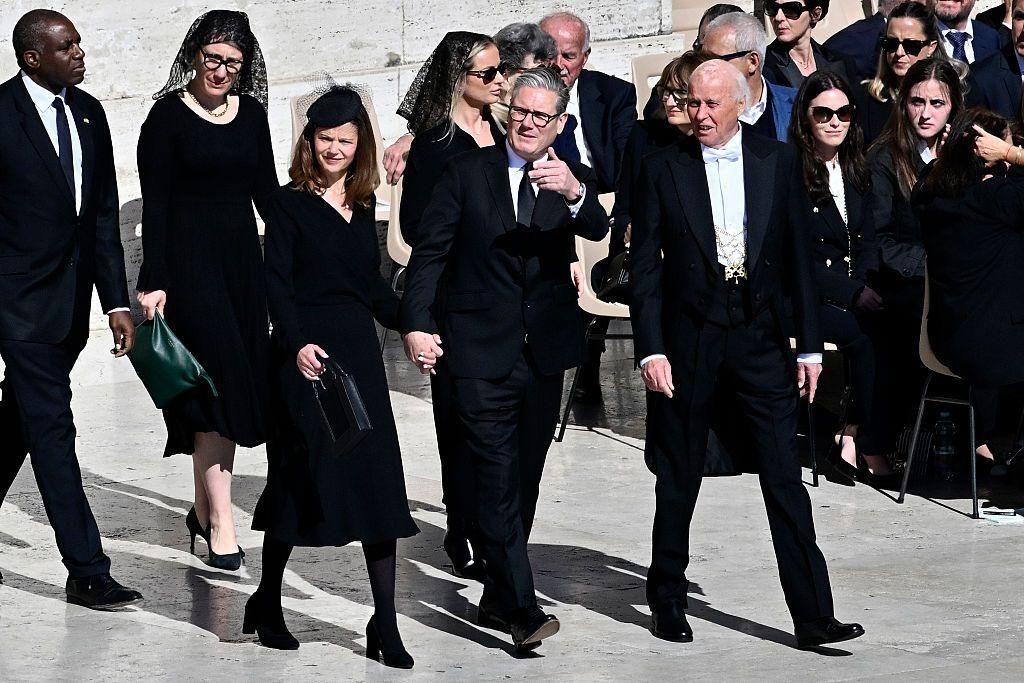
Beyond the Trump-Zelenskyy drama, the funeral itself became an arena for diplomatic maneuvering. French President Emmanuel Macron, British Prime Minister Keir Starmer, and other key players sought their own quiet audiences with Zelenskyy, offering reassurances, proposals, and in some cases, subtle nudges toward compromise. In the shadow of mourning, alliances were tested, promises were whispered, and the battle over Ukraine’s future continued not just on the frozen battlefields of Donetsk and Kherson, but in the echoing corridors of the Vatican. Every conversation, every handshake, every brief glance exchanged over the casket of the fallen pope carried layers of hidden meaning.
There was something almost Shakespearean about it all — world leaders cloaked in black, speaking in hushed tones beneath soaring stained glass windows, the weight of mortality pressing down on mortal politics. For Trump, the optics were clear: to be seen once again as a world figure capable of brokering grand bargains. For Zelenskyy, the funeral setting offered both a shield and a stage — a solemn space where he could assert Ukraine’s righteous struggle without the overt theater of a formal summit. The sacredness of the moment lent gravity to their exchange but could not disguise the brutal calculus of power, land, and survival at its core.
No official statements followed their meeting, no grand accords were announced. Yet the impact of that fifteen-minute conversation may echo longer than the funeral bells ringing across the Vatican that day. Trump’s hints at territorial compromise suggest a vision for U.S. foreign policy that would prioritize stability over idealism, deal-making over drawn-out conflict. Zelenskyy’s firm rebuttal signals that Ukraine will continue to resist any peace built on sacrifice and surrender. As each man departed Rome, the world was left to ponder whether their clash marked merely another chapter in the ongoing crisis — or the beginning of a much bigger geopolitical realignment.






0 comments