
Your Read is on the Way
Every Story Matters
Every Story Matters
The Hydropower Boom in Africa: A Green Energy Revolution Africa is tapping into its immense hydropower potential, ushering in an era of renewable energy. With monumental projects like Ethiopia’s Grand Ethiopian Renaissance Dam (GERD) and the Inga Dams in the Democratic Republic of Congo, the continent is gearing up to address its energy demands sustainably while driving economic growth.
Northern Kenya is a region rich in resources, cultural diversity, and strategic trade potential, yet it remains underutilized in the national development agenda.

Can AI Help cure HIV AIDS in 2025
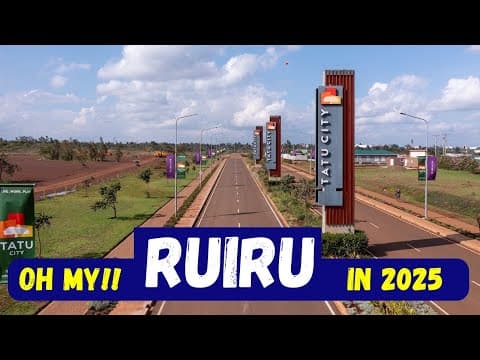
Why Ruiru is Almost Dominating Thika in 2025

Mathare Exposed! Discover Mathare-Nairobi through an immersive ground and aerial Tour- HD

Bullet Bras Evolution || Where did Bullet Bras go to?
The Rironi–Mau Summit highway expansion, pegged to begin this July, is being celebrated as a transformative infrastructure project. At face value, it's a 170-kilometre upgrade meant to boost road safety, trade flow, and regional connectivity. However, beneath the surface lies a far more calculated initiative.
The massive dual carriageway, funded through a public-private partnership (PPP) worth Ksh.90 billion, is rapidly shaping up to be a power infrastructure—one that not only links towns and cities but also ties together strategic regions of political importance to the current administration. This isn’t just roadwork. It’s groundwork for something much larger: a legacy and a strategy to cement political capital far beyond the asphalt.
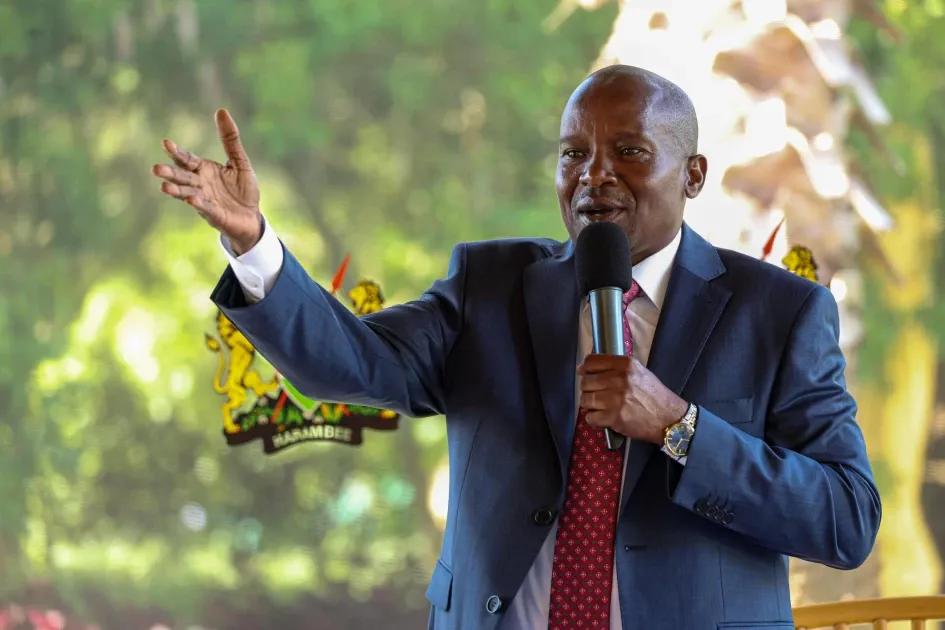
The announcement, made by Deputy President Kithure Kindiki during a burial service in Molo, seemed innocuous—an act of statesmanship during a time of mourning. But the optics of this setting, paired with the urgency of President William Ruto’s directive to commence work by July 1, suggests the project is being tightly choreographed for political resonance. At the core of this rollout is the Rift Valley, a hotbed of electoral influence, and the heartland of President Ruto’s political power base. Investing heavily in this corridor sends a clear message: loyalty will be rewarded, and development will follow the trail of influence.
Public-private partnerships are often lauded as innovative financing models that bridge the gap between public need and private efficiency. But when the sums stretch into the billions and the timelines conveniently align with political cycles, skepticism is warranted. The Ksh.90 billion earmarked for the Rironi-Mau Summit upgrade opens the door to a complex web of stakeholders—some of whom may be more interested in contracts than connectivity.
While the government pledges local employment and development, the details around contractor selection, community involvement, and long-term economic redistribution remain guarded. There’s a growing concern that the PPP model, in this instance, serves less as a vehicle for transparency and more as a smokescreen for backdoor deals, project monopolies, and quiet campaign fundraising.
Locals are being told that thousands of jobs will be created, particularly for Nakuru County residents. Yet the mechanics of job allocation and the oversight structures governing the recruitment process are largely undefined. Infrastructure in Kenya has a long history of promises made and opportunities missed. Unless watchdogs intervene early, it’s likely that this project will feed into existing networks of patronage, empowering the already powerful rather than uplifting marginalized communities.
Geographically, the Rift Valley stands as Kenya’s spine. Politically, it’s the pressure point where elections are won, lost, or violently contested. The decision to channel a massive highway project through this region is not just smart development—it’s strategic positioning. As Kenya moves toward another electoral cycle, infrastructure has become a substitute for direct campaign messaging. By laying down roads, the Ruto administration is laying down roots. The dual carriageway will, quite literally, pave the way for a stronger political presence in areas that have oscillated between opposition and support.
It’s no coincidence that Kindiki also used his Molo platform to demand redesigns of accident-prone roads like the Elburgon-Njoro stretch, where 12 lives were lost last week. These symbolic acts of empathy double as demonstrations of responsiveness—highlighting a government that appears both action-oriented and emotionally in touch. But this also serves a dual purpose. It redirects public grief into gratitude, positioning the state as a compassionate force rather than a complicit bystander in Kenya’s recurring road safety failures.
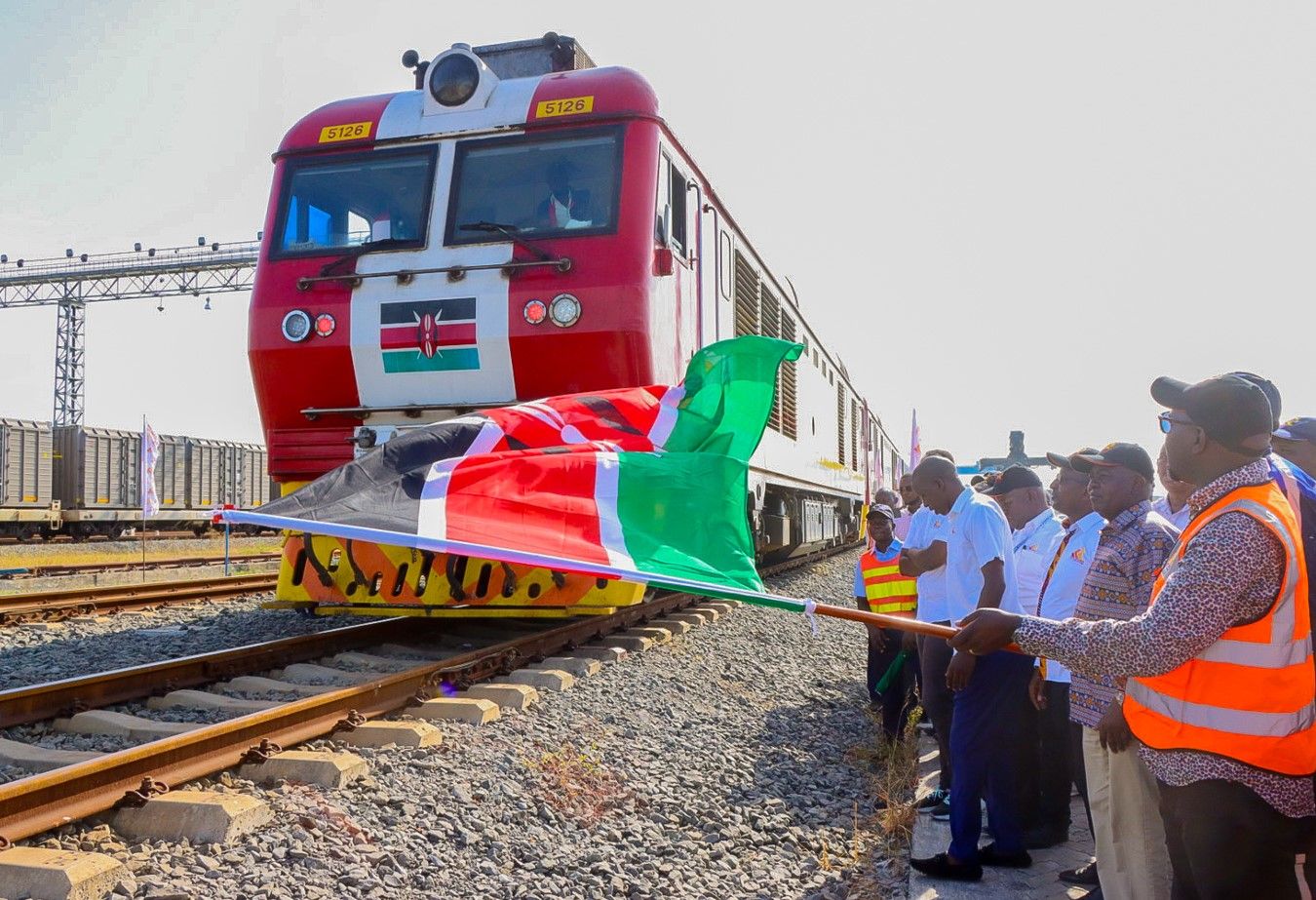
The narrative doesn’t end at the edge of the highway. As Kindiki briefly noted, plans are already in place to resume the halted Standard Gauge Railway (SGR) extension from Naivasha to the Ugandan border. Known as phases 2B and 2C, these projects are being framed as the next frontier in transforming Kenya into East Africa’s dominant logistics hub. And while that vision may be technically sound, it is politically loaded. By controlling the key arteries of land transport, the Kenyan state increases its leverage over neighboring economies, regional trade flows, and foreign investment streams. In essence, it is not just about transporting goods—it's about transporting influence.
This dual vision of roads and rails converging isn’t accidental. It forms the backbone of a much larger economic corridor, one that promises to bind East Africa’s fate tightly with Nairobi’s ambitions. It also enables the Ruto administration to shape Kenya’s global image as a rising infrastructural power—conveniently timed with upcoming global investor summits and diplomatic engagements that seek to position Kenya as Africa’s gateway.
Kindiki ended his address with a call for unity and the abandonment of divisive politics. He labeled violence and inflammatory rhetoric as outdated relics, championing a peaceful, diverse, and respectful Kenya. But beneath this appeal lies a paradox: the very infrastructure meant to unite is also being used to consolidate. By concentrating development in key loyalist regions, the government risks deepening the perception that national unity is a slogan, not a practice. In the process, the opposition is left either to align or be bypassed—politically and literally.
The Rironi–Mau Summit road, therefore, isn’t just concrete and contracts. It is a line drawn through the heart of Kenya—part map, part manifesto. The real question is not how smooth the surface will be, but whose future it is designed to smooth over.






0 comments