
Your Read is on the Way
Every Story Matters
Every Story Matters
The Hydropower Boom in Africa: A Green Energy Revolution Africa is tapping into its immense hydropower potential, ushering in an era of renewable energy. With monumental projects like Ethiopia’s Grand Ethiopian Renaissance Dam (GERD) and the Inga Dams in the Democratic Republic of Congo, the continent is gearing up to address its energy demands sustainably while driving economic growth.
Northern Kenya is a region rich in resources, cultural diversity, and strategic trade potential, yet it remains underutilized in the national development agenda.

Can AI Help cure HIV AIDS in 2025

Why Ruiru is Almost Dominating Thika in 2025

Mathare Exposed! Discover Mathare-Nairobi through an immersive ground and aerial Tour- HD

Bullet Bras Evolution || Where did Bullet Bras go to?
The four-wheeled car has become a nearly universal standard in vehicle manufacturing, and for good reason. While motorcycles run on two wheels and some heavy-duty trucks or experimental vehicles operate with more than four, the vast majority of everyday cars rely on a four-wheel layout.
This configuration didn't happen by accident—it is the result of more than a century of engineering evolution, combining mechanical efficiency, safety considerations, road performance, and practicality. Understanding why cars have four wheels requires a look into the core principles of physics, vehicle dynamics, and manufacturing priorities.
One of the most fundamental reasons cars have four wheels is stability. With four points of contact on the ground, arranged in a rectangular or square pattern, a vehicle is far less likely to tip or roll compared to those with fewer wheels. This layout gives a broad and stable base that distributes forces evenly, which is particularly crucial when the car is turning, braking, or accelerating.
For example, three-wheeled vehicles—especially those with a single wheel in the front—are known to be less stable at higher speeds or during sharp turns. Four wheels reduce this risk dramatically, creating a balance between the vehicle’s center of gravity and its outer edges. This ensures that the car remains upright and controllable in a variety of road conditions, enhancing driver safety and passenger comfort.

Weight distribution is another critical factor in vehicle design. With four wheels, a car can more evenly spread its weight, including the chassis, engine, passengers, cargo, and other components. This balance is crucial for preventing overloading of individual wheels or axles, which could lead to premature wear, poor suspension performance, and unpredictable handling.
Even distribution also helps preserve tire life and fuel efficiency, as the vehicle can travel more smoothly over different terrains. In modern cars, careful attention is paid to balancing the load between front and rear axles, especially in all-wheel-drive and four-wheel-drive systems, which depend on symmetrical power delivery for optimal performance.
The four-wheel configuration supports the division of roles between the front and rear wheels. Typically, the front wheels are responsible for steering and sometimes propulsion, while the rear wheels help provide either support or additional traction in various drivetrain layouts. This division improves overall control of the vehicle, allowing better traction during acceleration, more precise steering during cornering, and safer braking.
For example, front-wheel-drive vehicles use the front wheels to pull the car forward, offering better traction on slippery surfaces. Rear-wheel-drive vehicles, on the other hand, allow for better weight transfer during acceleration, which improves performance in sports and utility vehicles. In both cases, having four wheels ensures that no one set of wheels is overly burdened, and the vehicle remains responsive and predictable under different driving conditions.
From an engineering standpoint, a four-wheel design is also the most mechanically practical for general consumer vehicles. The symmetrical layout simplifies the design of key mechanical systems like axles, differentials, suspension systems, and steering mechanisms. A four-wheel system allows for even load-bearing across both the front and rear of the vehicle, which not only makes engineering more straightforward but also reduces stress on individual parts.
Additionally, it streamlines the manufacturing process, making vehicles more cost-effective to produce and easier to maintain. A balance between complexity and performance is key—four wheels provide sufficient functionality without introducing the unnecessary complications that can come with six or more wheels in non-commercial use.
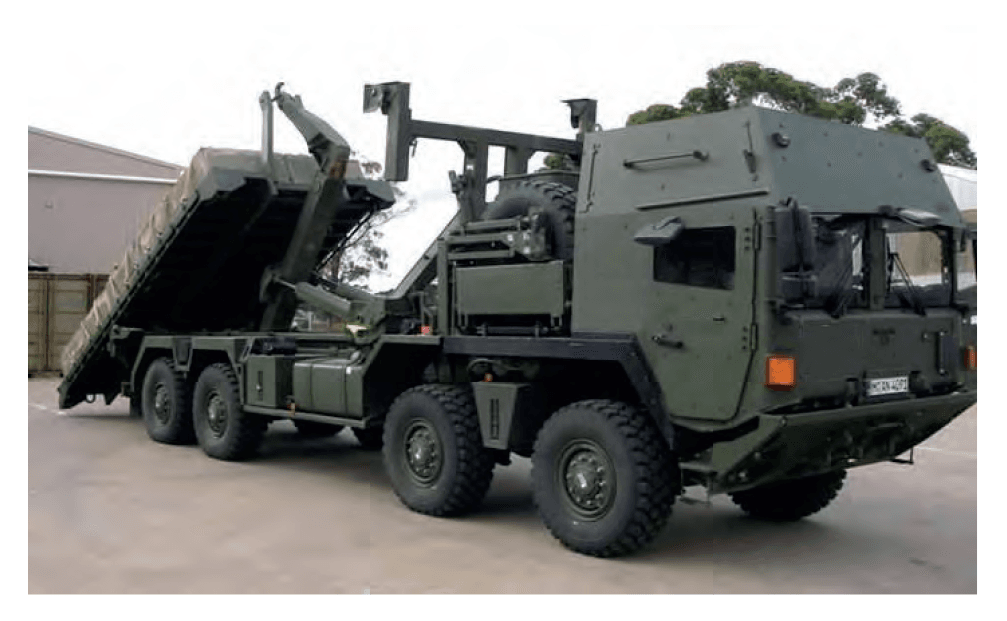
Cost plays a significant role in automobile design. Vehicles with fewer than four wheels might be cheaper to build, but they sacrifice too much in terms of safety, balance, and functionality. Meanwhile, vehicles with more than four wheels, such as 6x6 trucks or multi-axle military vehicles, are highly specialized and significantly more expensive to build and maintain.
For everyday use—commuting, family travel, logistics, and more—four wheels strike the perfect balance between affordability and performance. The infrastructure (like roads, parking spaces, and garages) is also designed with four-wheel vehicles in mind, further reinforcing this configuration as the most practical standard.
History has shown the four-wheel model to be reliable and adaptable across multiple vehicle generations. Since the invention of the modern car in the late 1800s, countless designs have been tested, but the four-wheel system has stood the test of time.
Over decades of innovation, improvements have been made in suspension, power distribution, and electronic stability systems—all built around the four-wheel standard. It offers a tried-and-tested platform that accommodates advancements in safety, fuel efficiency, automation, and electric vehicle technology without needing fundamental changes to the vehicle's footprint.
In conclusion, the reason cars have four wheels lies in a combination of physics, safety, efficiency, and practicality. Four wheels provide the stability necessary to ensure safe operation, distribute weight evenly, offer better control, and keep production efficient and affordable.
While other configurations exist for specific purposes, the four-wheel design remains the optimal and most reliable choice for mainstream automotive transportation. It’s a solution that continues to support the evolving demands of modern driving—balancing tradition with innovation on every road.






0 comments