
Your Read is on the Way
Every Story Matters
Every Story Matters
The Hydropower Boom in Africa: A Green Energy Revolution Africa is tapping into its immense hydropower potential, ushering in an era of renewable energy. With monumental projects like Ethiopia’s Grand Ethiopian Renaissance Dam (GERD) and the Inga Dams in the Democratic Republic of Congo, the continent is gearing up to address its energy demands sustainably while driving economic growth.
Northern Kenya is a region rich in resources, cultural diversity, and strategic trade potential, yet it remains underutilized in the national development agenda.

Can AI Help cure HIV AIDS in 2025

Why Ruiru is Almost Dominating Thika in 2025

Mathare Exposed! Discover Mathare-Nairobi through an immersive ground and aerial Tour- HD

Bullet Bras Evolution || Where did Bullet Bras go to?
Picture a toddler, spoon halfway to their mouth, utterly motionless, eyes glued to a screen where a dog is singing about brushing teeth. To an adult, it might seem like harmless entertainment — or worse, lazy parenting. But beneath the surface, something more complex is happening. For children, watching cartoons is more than screen time; it's a deeply engaging and emotionally nourishing experience. It's their first encounter with stories, characters, and the very fabric of narrative imagination. These animations provide more than just laughs and lessons; they shape how young minds interpret the world, build empathy, and process emotions. In many ways, watching cartoons is a child’s introduction to the wider universe — albeit one that’s filtered through bright colors and musical jingles.
Children are sensory-driven beings. Their world is still new, raw, and largely unfiltered, which means that anything that catches the eye, tickles the ear, or dances with rhythm becomes instantly magnetic. Cartoons excel at this. Their bold colors, exaggerated facial expressions, simple lines, and exaggerated movements are not random design choices; they are meticulously crafted to resonate with the perceptual preferences of young viewers. Likewise, the audio landscape of cartoons — high-pitched voices, sound effects, sing-song dialogue — is intentionally tuned to engage the developing brain. These audio-visual elements combine to create a world that feels alive, approachable, and perfectly digestible for a child’s limited cognitive bandwidth.
Simplicity is another cornerstone. Unlike real-life visuals or complex plots, cartoons rely on clear emotional cues. When a character's face turns red and steam comes out of their ears, even a 3-year-old understands they’re angry. This exaggerated emotional expressiveness is a learning tool. Kids don’t need to interpret subtle adult facial cues or decipher sarcasm — everything is spelled out in vibrant clarity. Over time, this consistent visual-emotional link helps children begin to label and understand their own emotions and those of others.
The emotional world of a child is a chaotic place. They're learning how to navigate anger, sadness, excitement, jealousy — often all within the same day. Cartoons offer a safe and forgiving sandbox in which to experience, explore, and process these overwhelming feelings. In the animated world, a character might face disappointment, rejection, or fear, but the consequences are typically softened by humor, fantasy, or a quick return to normalcy. These scenarios mirror real-life challenges while providing a buffer that protects children from distress.
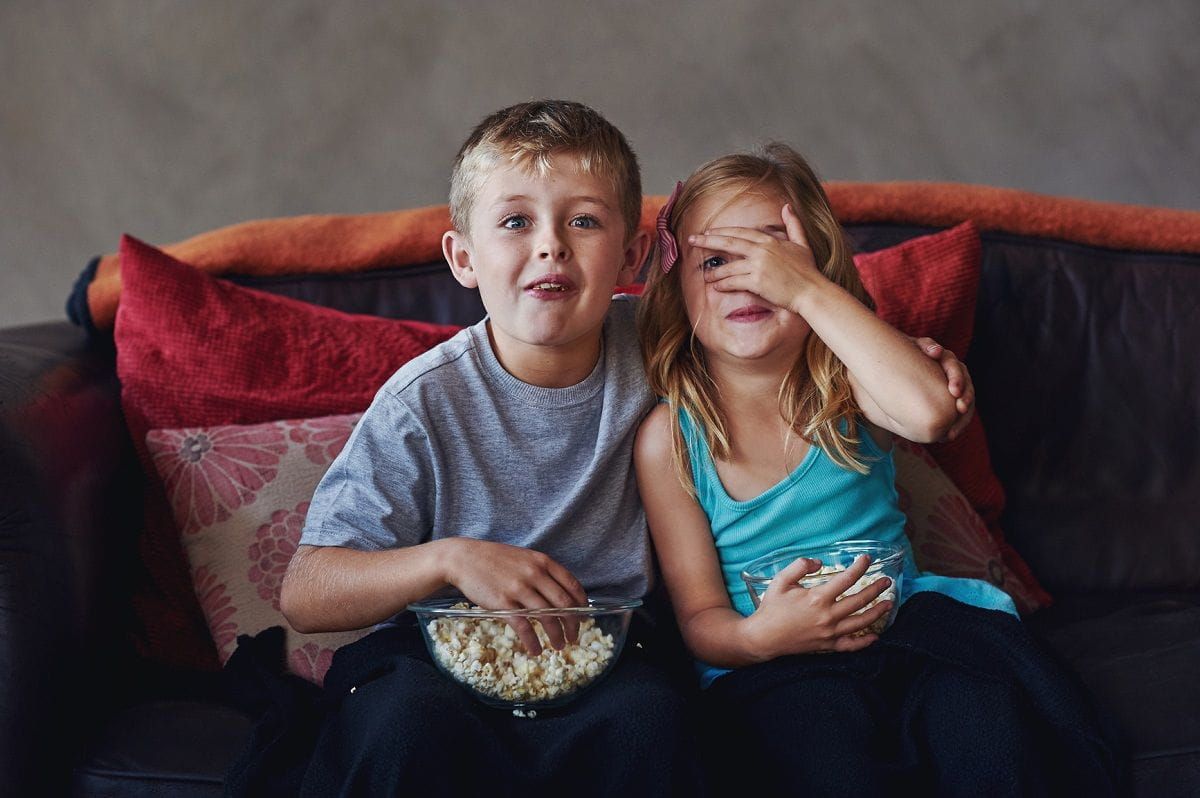
When a favorite character gets scared of the dark, feels left out at a party, or fights with a sibling, children find comfort in the familiarity of those situations. They see that their own fears and mistakes aren’t unique — and more importantly, that things can get better. These emotional journeys are not just stories; they are cognitive rehearsal. A child watching a cartoon about resolving conflict learns, subconsciously, that relationships can be mended, problems can be solved, and emotions can be expressed — all within the safety net of fiction.
Cartoons excel at creating characters that are instantly relatable to children. Whether it's a courageous puppy, a shy robot, or a mischievous girl with a magical backpack, these characters often think, feel, and behave like kids. They’re curious, impulsive, clumsy, hopeful, and eager to learn. This alignment in behavior creates an emotional bond that goes beyond passive viewing — children see reflections of themselves on screen. That level of connection is powerful. It validates their inner world and shows them that their challenges and quirks are part of a bigger human story.
What’s more, many cartoons empower children by placing them at the center of the action. Characters their age — or even younger — are shown solving mysteries, saving the day, or teaching valuable lessons to adults. This shift in power dynamics is incredibly appealing to young viewers who often feel small and controlled in real life. Cartoons grant them imagined autonomy. They see that even someone little can make a big difference. This inspires confidence, creativity, and a strong sense of agency, all of which are crucial for emotional and intellectual development.
While real life can feel like an unpredictable maze of adult commands, changing routines, and social complexities, cartoons offer an alternative universe where the rules are straightforward, the logic is consistent, and the outcomes are satisfying. There's a beginning, a middle, and an end. Conflicts arise, lessons are learned, and everything is neatly wrapped up by the time the credits roll. For children, this sense of structure is incredibly soothing. It offers a degree of predictability and emotional safety that the real world often lacks.
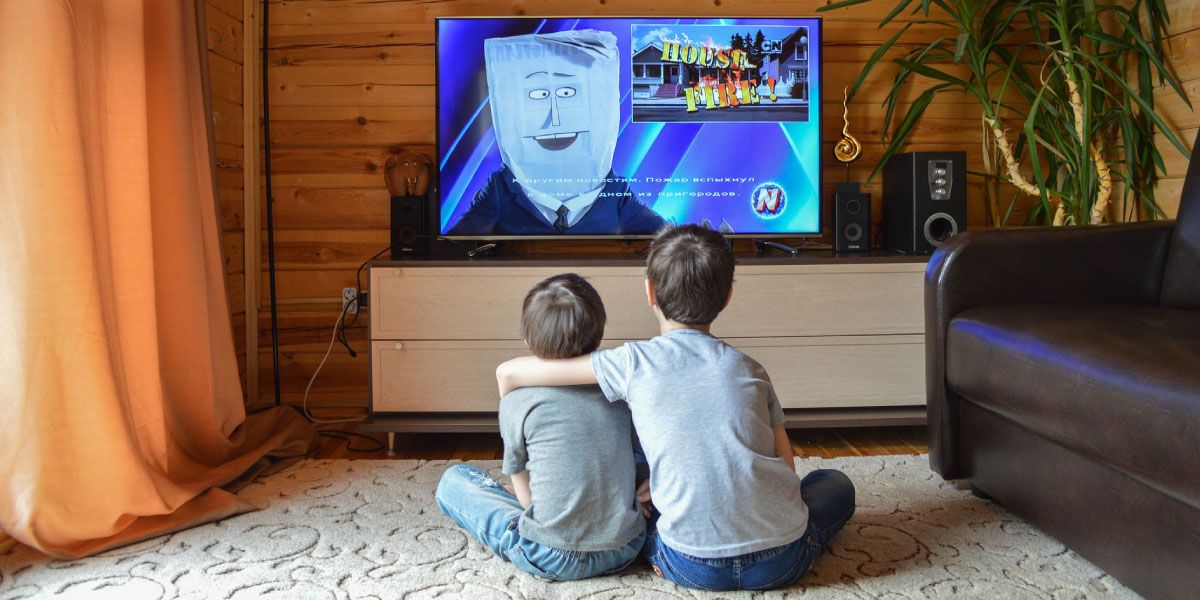
Cartoons also allow children to engage in escapism — but it’s a kind of escapism that doesn’t overwhelm. Unlike some forms of adult fantasy, the cartoon world is built on rules that are exaggerated but comprehensible. A character may fly or talk to animals, but these powers follow internally consistent logic. That allows children to suspend disbelief without confusion. Within this imaginative order, they explore themes of friendship, loss, courage, and forgiveness — all while being entertained. The fantasy gives them distance from real-world problems, but the stories still gently reflect their lived experiences.
If there’s one thing children possess in abundance, it’s imagination. Their brains are wired to think in terms of "what if" rather than "what is." Cartoons mirror this beautifully. They invite viewers into worlds where clouds can talk, animals have jobs, and inanimate objects fall in love. For an adult, such premises might require effort to suspend disbelief. For a child, these ideas feel natural — even expected. Cartoons speak the same imaginative language that children use to make sense of their environment, play games, or invent friends.
This imaginative synchronicity creates not just enjoyment, but resonance. A talking dog isn't just silly — it’s validation. It tells children that their imaginative worlds are legitimate and worthy of exploration. Through cartoons, kids learn that ideas don’t have to be rational to be meaningful. This freedom nurtures creativity and open-mindedness, qualities that are increasingly rare — and desperately needed — in a world that often prioritizes logic over wonder.
For those on the outside looking in, cartoons might appear to be a colorful waste of time — a convenient babysitter in digital form. But to a child, that 15-minute episode holds layers of meaning, emotion, and cognitive development. It’s a primer on relationships, an experiment in empathy, a rehearsal for real-life conflict, and a gateway to infinite imagination. Cartoons are not just entertainment. They’re tools — powerful ones — that help shape emotional intelligence, social skills, and creativity.
So the next time you see a child mesmerized by a dancing panda or a time-traveling mouse, don’t dismiss it as just another screen addiction. Recognize it as a moment of connection — between fantasy and reality, between story and self. Because in that moment, a child isn’t just watching a cartoon. They’re exploring what it means to feel, think, and be.






0 comments