
Your Read is on the Way
Every Story Matters
Every Story Matters
The Hydropower Boom in Africa: A Green Energy Revolution Africa is tapping into its immense hydropower potential, ushering in an era of renewable energy. With monumental projects like Ethiopia’s Grand Ethiopian Renaissance Dam (GERD) and the Inga Dams in the Democratic Republic of Congo, the continent is gearing up to address its energy demands sustainably while driving economic growth.
Northern Kenya is a region rich in resources, cultural diversity, and strategic trade potential, yet it remains underutilized in the national development agenda.

Can AI Help cure HIV AIDS in 2025

Why Ruiru is Almost Dominating Thika in 2025

Mathare Exposed! Discover Mathare-Nairobi through an immersive ground and aerial Tour- HD

Bullet Bras Evolution || Where did Bullet Bras go to?
When you turn on your stove and place a pot on it, you're triggering a controlled energy exchange. The pot doesn’t just sit there—it actively manages how your food cooks, using principles of physics, thermodynamics, and material science. Whether you’re boiling rice or searing meat, the pot is doing the heavy lifting beneath the surface.
At the heart of it all is conduction—the process of heat transfer through a solid. The heat from your burner (gas, electric, or induction) moves into the pot’s base and walls. That metal then transfers heat directly into the food or liquid inside.
The pot’s bottom surace is key—it absorbs and redistributes energy. A wider, flatter bottom gives more consistent results. Uneven bottoms cause hot spots, where some food burns while the rest stays raw.
Different pots handle heat differently depending on what they're made of:
-Aluminum: Heats fast and evenly but doesn’t hold heat well.
-Stainless Steel: Tough and durable but not the best at heat conduction—often paired with copper or aluminum cores.
-Cast Iron: Heats slowly but retains heat incredibly well, ideal for slow cooking and searing.
-Copper: Excellent heat conductor, but expensive and reactive with some foods.
Nonstick Coatings: Don't impact heat transfer much but reduce friction, so food releases easily.
Every choice you make—from pan to pot—impacts how the heat interacts with your food.
The lid of a pot isn’t just there to prevent splatter—it’s a pressure and moisture control tool. When you cover a pot, you trap steam (vaporized water), which increases the internal pressure slightly and keeps temperatures consistent.
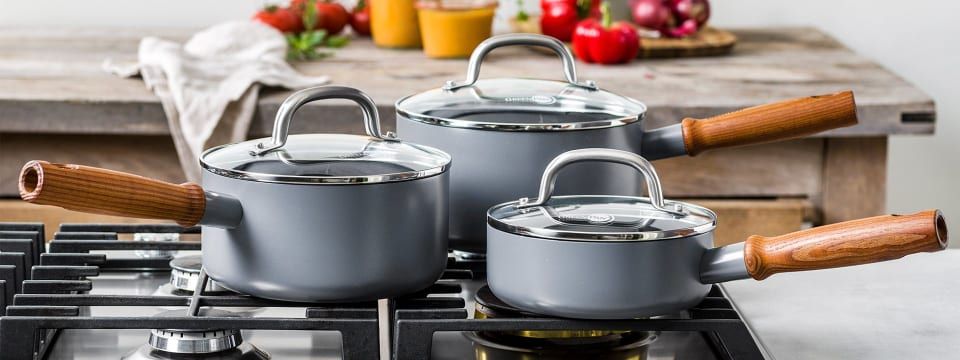
That steam helps:
-Cook food evenly, especially rice, stews, and legumes
-Prevent drying out
-Enhance flavor melding
In pressure cookers, this process is intensified. Sealing the lid fully allows steam to build dramatically, raising boiling points and cooking food faster and deeper.
Flat surfaces mean better searing. Rounded pots (like Dutch ovens) are better for slow, even cooking of liquids. Shallow pans give ingredients more contact with heat for quicker browning. Deep pots contain more moisture, ideal for boiling and stewing.
Cooking is really just the art of controlling heat. And your pot? It’s the channel.
Here’s the full chain:
Heat source ➝ Pot base ➝ Pot walls ➝ Cooking liquid ➝ Food
The pot keeps it all stable, maintains consistent temperatures, and creates an environment where flavors are born, proteins break down, starches swell, and tough ingredients soften.
Whether you're making soup, sauce, or a full Sunday roast, the cooking pot is orchestrating the science of transformation—quietly, steadily, and powerfully.






0 comments