
Your Read is on the Way
Every Story Matters
Every Story Matters
The Hydropower Boom in Africa: A Green Energy Revolution Africa is tapping into its immense hydropower potential, ushering in an era of renewable energy. With monumental projects like Ethiopia’s Grand Ethiopian Renaissance Dam (GERD) and the Inga Dams in the Democratic Republic of Congo, the continent is gearing up to address its energy demands sustainably while driving economic growth.
Northern Kenya is a region rich in resources, cultural diversity, and strategic trade potential, yet it remains underutilized in the national development agenda.

Can AI Help cure HIV AIDS in 2025

Why Ruiru is Almost Dominating Thika in 2025

Mathare Exposed! Discover Mathare-Nairobi through an immersive ground and aerial Tour- HD

Bullet Bras Evolution || Where did Bullet Bras go to?
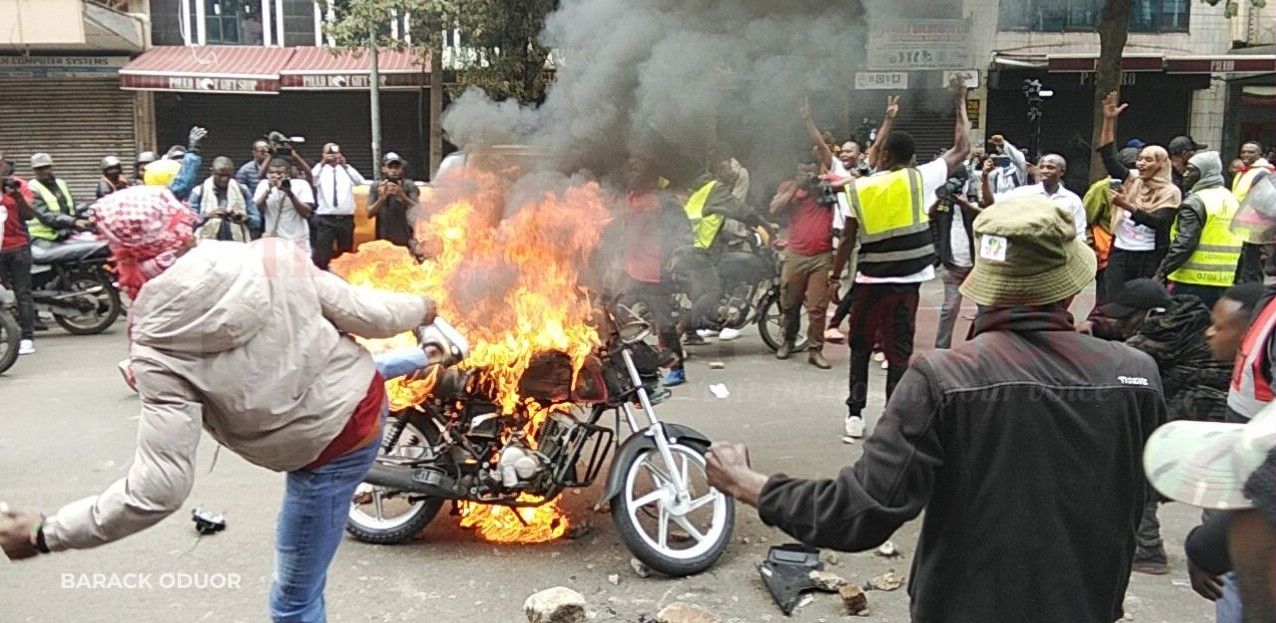
In the midst of mounting tension across Kenya regarding allegations of police brutality, few statements have captured the national mood as poignantly as the quiet yet unmistakable message from Samuel Muchoki, popularly known as Samidoh. Known for his deeply emotional Mugithi ballads and charismatic stage presence, Samidoh is also a serving member of the National Police Service—a position that often demands silence on controversial matters.
But the recent wave of violent protests and reports of excessive force appear to have stirred something deeper within him. Rather than staying on the sidelines, he shared a subtle yet powerfully loaded post: a photo of himself holding a framed image of George Floyd, accompanied by a quote attributed to Abraham Lincoln about freedom and justice.
In doing so, Samidoh may not have uttered a word of condemnation, but his choice of symbolism was enough to ignite a fierce debate on complicity, conscience, and change.
The image itself was not dramatic, but its context made it explosive. George Floyd’s death under the knee of a police officer in the United States became a symbol of unchecked police brutality and the global fight against systemic abuse. By invoking that moment, Samidoh was indirectly calling attention to the perceived parallels in Kenya—particularly following the death of blogger Albert Ojwang, whose family claims he was tortured to death in police custody.
With this subtle nod to a globally recognized tragedy, Samidoh invited Kenyans to reflect on their own reality, without naming names or pointing fingers. Yet, in many ways, this silence was far louder than any direct critique could have been. It left interpretation to the public, many of whom saw it as a rare act of courage from someone operating within a system often accused of shielding its own.
For an active-duty officer to signal disapproval of state conduct is an exceptional occurrence in Kenya, where institutional loyalty often trumps personal conviction. Samidoh’s gesture, therefore, did not come without risk. He did not elaborate on his post, nor has he responded to media speculation or social media debates. However, the public’s response was swift and divided.
Supporters hailed him as a patriot unafraid to challenge wrongdoing from within. Detractors questioned his motive and timing, with some warning of possible repercussions for stepping out of line. Regardless of where one falls on the spectrum of interpretation, the underlying truth remains clear—Samidoh’s action pierced a national silence and brought the conversation back to the uncomfortable but necessary topic of accountability within law enforcement.
In the hours and days following his post, Samidoh became both a symbol of resistance and a lightning rod for controversy. For many Kenyans disillusioned by the growing number of deaths linked to security operations, his message was a source of validation. Here was a man in uniform acknowledging the pain of victims, using his celebrity not for self-promotion, but to provoke thought. Others, however, saw it differently.
Some viewed it as an opportunistic move, potentially aimed at shaping a political future or bolstering his public persona. But even amid such skepticism, the discussion he sparked was far more significant than the debates over his motives. It reignited public discourse around the role of artists, public servants, and influencers in holding power to account, even when doing so carries personal cost.
What makes Samidoh’s subtle protest particularly significant is not only his position within the police force but his cultural influence. Music and art in Kenya have long served as instruments of resistance, from the freedom songs of independence to the politically charged anthems of modern-day protest artists. Samidoh, however, straddles two worlds—the enforcer and the artist.
His symbolic act signals a potential turning point, where those embedded within the system begin to question its practices openly, even cautiously. It sets a new precedent that one does not need to shout to be heard; sometimes, the quietest gestures carry the heaviest weight. Whether or not others in uniform follow suit remains to be seen, but Samidoh has cracked the door open.
Kenya stands at a precarious moment in its democratic journey. As calls for justice grow louder, and allegations of state brutality multiply, the voices that rise from within the system will be crucial. Samidoh may not have declared war on the status quo, but his silence was far from neutral.
By invoking George Floyd and echoing the words of Lincoln, he delivered a layered critique dressed in respectability—one that leaves little doubt about where his conscience lies. And in doing so, he reminded a wounded nation that sometimes, justice begins with the willingness to speak—even if only in pictures
.






0 comments