
Your Read is on the Way
Every Story Matters
Every Story Matters
The Hydropower Boom in Africa: A Green Energy Revolution Africa is tapping into its immense hydropower potential, ushering in an era of renewable energy. With monumental projects like Ethiopia’s Grand Ethiopian Renaissance Dam (GERD) and the Inga Dams in the Democratic Republic of Congo, the continent is gearing up to address its energy demands sustainably while driving economic growth.
Northern Kenya is a region rich in resources, cultural diversity, and strategic trade potential, yet it remains underutilized in the national development agenda.

Can AI Help cure HIV AIDS in 2025

Why Ruiru is Almost Dominating Thika in 2025

Mathare Exposed! Discover Mathare-Nairobi through an immersive ground and aerial Tour- HD

Bullet Bras Evolution || Where did Bullet Bras go to?
Kenya’s political landscape is never short of surprises, and the latest development surrounding Justin Muturi’s exit from the Cabinet has left many wondering about the power plays at work. What seemed like a routine transition of office quickly turned into a dramatic spectacle when Muturi claimed he was blindsided by a letter instructing him to hand over his position.
Muturi, who had been serving as the Cabinet Secretary for Public Service, was suddenly replaced, with Prime Cabinet Secretary Musalia Mudavadi stepping in as the interim officeholder. The abrupt nature of this move immediately fueled speculation about the hidden motives and internal political realignments shaping President William Ruto’s administration.
Following the circulation of a letter that allegedly confirmed his resignation, Muturi swiftly dismissed the document as fraudulent. Taking to social media, he sought to set the record straight, insisting that he had not voluntarily stepped down. His statement was aimed at dispelling misinformation and reinforcing his commitment to public service, even as the transition unfolded around him.
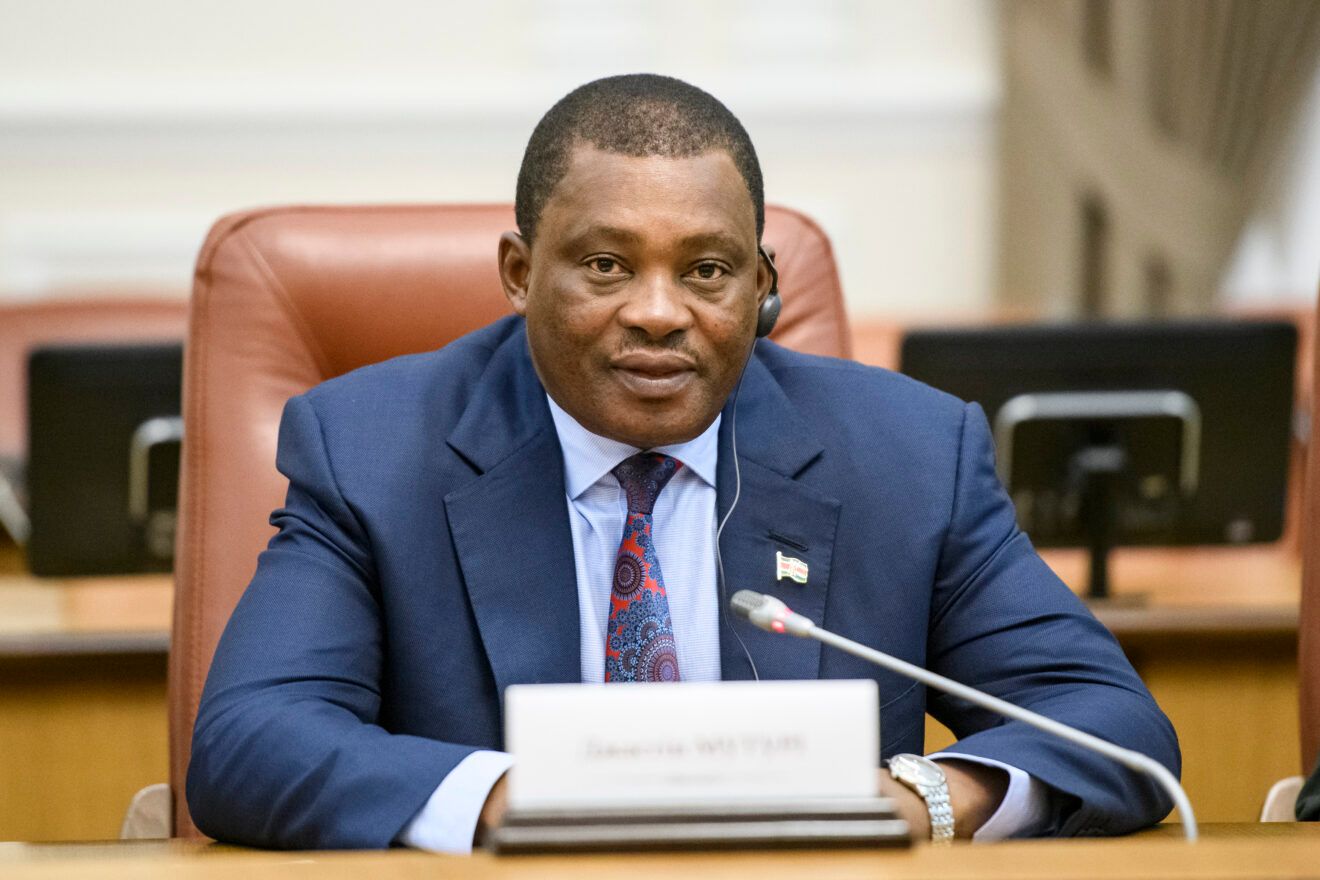
His response was not merely a rebuttal but an assertion that the entire process had caught him off guard. If the decision to replace him had been in motion for a while, Muturi was not privy to the details. His reaction highlighted a deeper issue within the government—the lack of transparent communication when it comes to high-level reshuffles.
Meanwhile, Musalia Mudavadi officially assumed the role of acting Cabinet Secretary for Public Service in a carefully orchestrated handover ceremony. In his address, Mudavadi emphasized the importance of continuity in government operations, ensuring that essential public service functions would not be disrupted by the transition.
More importantly, he spoke of the need for a structured, legal framework to govern such transitions, preventing confusion or administrative gaps in future handovers. This statement hinted at a broader reform agenda, possibly indicating that the administration is keen on solidifying power structures to avoid political uncertainty.
The sudden replacement of Muturi raises key questions about the motivation behind the decision. Was this a strategic political move designed to realign forces within the government, or was it a necessary reshuffle to improve efficiency in public service?
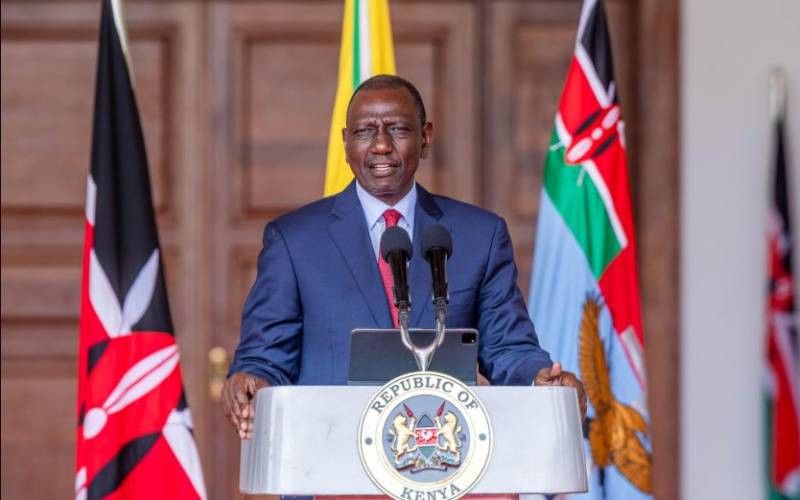
Critics argue that such abrupt changes often signal power struggles within the ruling administration, where political loyalty can sometimes outweigh competency. Others see it as a practical measure to ensure that government operations are in the hands of those who align perfectly with the leadership’s broader vision.
For Muturi, this was more than just a job loss—it was a political statement. His departure marked a shift in influence, and how he responds in the coming months could determine his future in Kenya’s political arena.
Despite his sudden exit, Muturi did not leave without accomplishments. During his tenure, he played a crucial role in pushing for public service reforms. Among his notable efforts was the drive to streamline the workforce, ensuring efficiency while reducing the wage bill to sustainable levels.
His exit may have been unceremonious, but his contributions to the ministry will remain a part of the broader transformation efforts within the government. Whether his work will be carried forward or reversed under Mudavadi’s leadership remains to be seen.

Kenya’s political scene is dynamic, with alliances forming and breaking at a rapid pace. This transition is more than just a personnel change—it signals a possible reconfiguration of power within the government. If Muturi was removed due to political calculations, it suggests that those at the helm are making deliberate moves to strengthen their control.
For Mudavadi, this appointment could be an opportunity to solidify his influence within the administration. As someone who has played a careful balancing act in Kenyan politics, his new role, even if temporary, could set the stage for future ambitions.
With Mudavadi at the helm of the Public Service Ministry, attention now shifts to what changes, if any, he will implement. Will he continue on the path set by Muturi, or will he introduce a different approach aligned with the government’s evolving priorities?
On the other hand, Muturi’s next steps will be closely watched. Will he retreat into the background, or will he use this episode as a platform to reposition himself politically? If there’s one certainty in Kenyan politics, it’s that no one remains out of the game for too long.
As the dust settles, one thing remains clear—this transition is more than just an administrative reshuffle. It is a reflection of the complex and ever-shifting nature of political power in Kenya, with far-reaching implications that will continue to unfold in the weeks and months ahead.






0 comments