
Your Read is on the Way
Every Story Matters
Every Story Matters
The Hydropower Boom in Africa: A Green Energy Revolution Africa is tapping into its immense hydropower potential, ushering in an era of renewable energy. With monumental projects like Ethiopia’s Grand Ethiopian Renaissance Dam (GERD) and the Inga Dams in the Democratic Republic of Congo, the continent is gearing up to address its energy demands sustainably while driving economic growth.
Northern Kenya is a region rich in resources, cultural diversity, and strategic trade potential, yet it remains underutilized in the national development agenda.

Can AI Help cure HIV AIDS in 2025

Why Ruiru is Almost Dominating Thika in 2025

Mathare Exposed! Discover Mathare-Nairobi through an immersive ground and aerial Tour- HD

Bullet Bras Evolution || Where did Bullet Bras go to?
The latest storm from Kenyan politics didn’t begin with a coup or a scandal—it started with a tweet. Farah Maalim, former Deputy Speaker and longtime political firebrand, launched into a tirade accusing activist Boniface Mwangi and his ilk of being foot soldiers for Western empires cloaked in social justice.
His words weren’t polite. They weren’t subtle. And they weren’t ignored.
In a time when African politics is increasingly defined by a tug-of-war between nationalism and internationalism, Maalim’s commentary threw accelerant on already-burning questions. Who gets to speak for Africa? Who gets to disrupt? And more crucially—who decides who the real enemies are?
The essence of Maalim’s outburst boiled down to this: African activism, especially of the confrontational sort, is no longer pure. In his eyes, Mwangi and others are well-financed pawns, not patriots. Their advocacy, he claimed, invites chaos, encouraging the breakdown of fragile systems—just as happened in Libya and Somalia.
To Maalim, it's all orchestrated: a sophisticated destabilization campaign, complete with NGO funding and curated outrage, dressed up as progressive change.
But critics argue this isn't about sovereignty—it's about silencing dissent. And the public wasn’t having it.
Within hours, Maalim’s words were met with a deluge of rejection. From senators to street activists, the condemnation was fierce and emotional. Senator Mong’are Okong’o didn’t mince words, branding Maalim’s support for authoritarian actions as disgraceful and cynical.
Social media added fuel. Kenyans across the spectrum questioned how a seasoned politician could attack Mwangi—a man who has, at great personal cost, stood against police brutality, land grabs, and government rot. They called it cowardice disguised as Pan-Africanism, hypocrisy wrapped in a flag.
“Pan-Africanism doesn’t mean blind loyalty to the state,” wrote one user. “It means standing with your people, even when the state fails them.”
Hussein Khalid, another activist targeted by implication, reminded Maalim that activism didn’t begin with the West—and certainly wouldn’t end there. He pointed to work in Palestine, Kenya, Sudan, and Tanzania, where activists stood in harm’s way with no donors in sight.
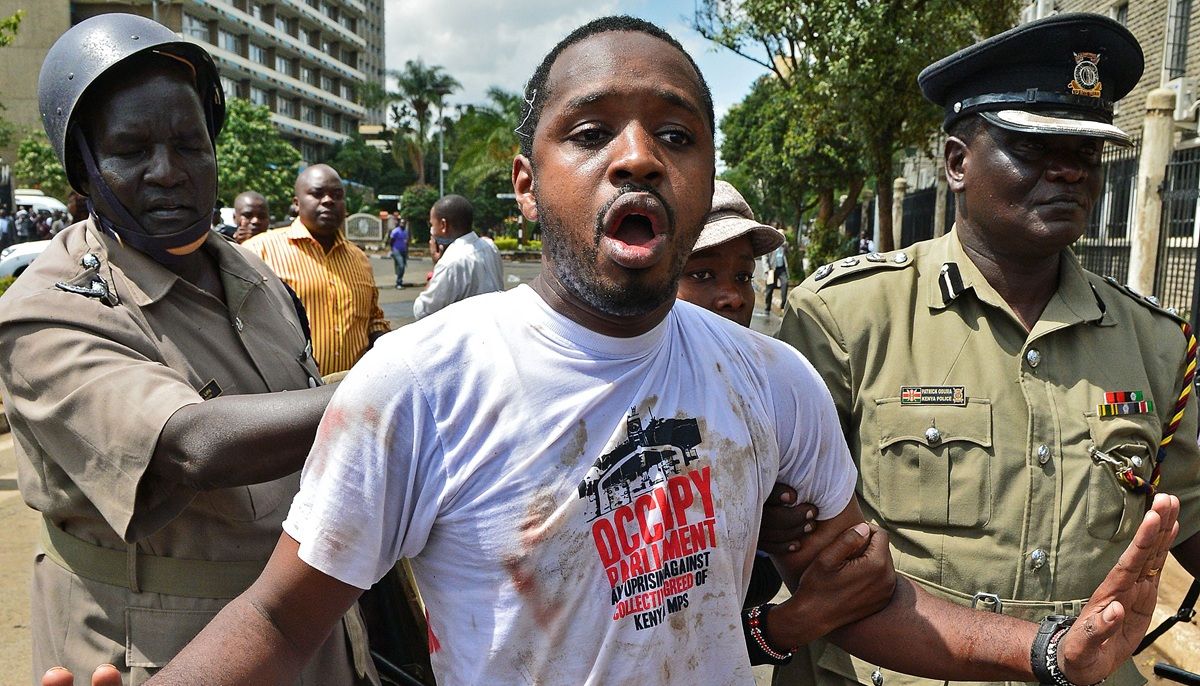
Their argument: if you want to talk Pan-Africanism, look beyond the rhetoric. Show up when Congolese miners are dying, when Sudanese children are caught in crossfire, when corrupt deals sell out entire generations. Activism, they said, is not imported. It's inherited.
And in a bold counter-question to Maalim: “Where were you when injustice called?”
At its core, this firestorm is about more than tweets or deportations. It’s about who controls the African story.
Maalim suggests African governments are under siege from foreign-funded civil unrest. His critics believe the opposite—that governments are using sovereignty as a shield to brutalize their own citizens, then labeling anyone who resists as a traitor.
Both sides claim to fight for Africa. Both claim legitimacy. But only one side is bleeding in the streets.
There’s also a generational undertone. While older political figures invoke Pan-African ideals from a Cold War lens, younger voices are calling for a more complex conversation. They understand geopolitics but refuse to stay silent about local tyranny. To them, true independence means not only being free from the West—but also free from internal rot.
So where does this leave us?
If you believe Maalim, activism is now weaponized by foreign interests. If you believe the activists, the real danger is not foreign funding—it’s domestic failure.
What’s becoming clear is that Africa is fighting a new civil war—one of ideas, narratives, and symbols. It's no longer enough to wave a flag or chant “sovereignty.” Leaders are being asked to show receipts: Where were you when the people cried out? Where was your patriotism when justice cost something?
For now, the fallout continues. But something has shifted. Africans are no longer accepting monologues from power. They’re asking uncomfortable questions, and they’re doing it publicly; loudly, and often.






0 comments