
Your Read is on the Way
Every Story Matters
Every Story Matters
The Hydropower Boom in Africa: A Green Energy Revolution Africa is tapping into its immense hydropower potential, ushering in an era of renewable energy. With monumental projects like Ethiopia’s Grand Ethiopian Renaissance Dam (GERD) and the Inga Dams in the Democratic Republic of Congo, the continent is gearing up to address its energy demands sustainably while driving economic growth.
Northern Kenya is a region rich in resources, cultural diversity, and strategic trade potential, yet it remains underutilized in the national development agenda.

Can AI Help cure HIV AIDS in 2025
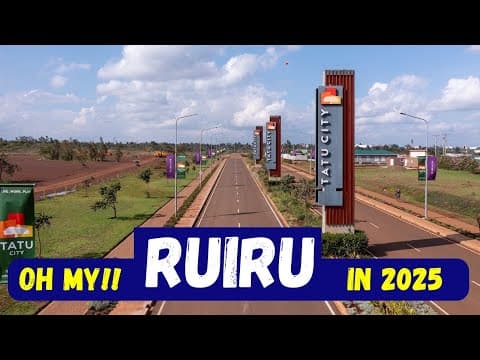
Why Ruiru is Almost Dominating Thika in 2025

Mathare Exposed! Discover Mathare-Nairobi through an immersive ground and aerial Tour- HD

Bullet Bras Evolution || Where did Bullet Bras go to?
In the early hours of Sunday, May 18, 2025, residents of Nairobi's bustling Gikomba area woke to familiar chaos: fire, screams, and helplessness. For the third time in under 90 days, a blaze tore through East Africa’s largest informal market, swallowing stalls and livelihoods before dawn.
The fire reportedly began around 3:00 a.m. in the footwear and textile section near Lamu Road, quickly spreading through wooden structures and flammable materials. Eyewitnesses say they heard popping noises—likely from pressurized cans or melting plastic—before noticing the rising smoke columns.
As firefighters scrambled through the maze of tight alleys, traders watched helplessly as years of hard work turned to ashes in under an hour.
For the traders, this isn’t just about property. It’s survival.
Some had just restocked their stalls days before. Others relied on informal loans and daily sales to feed families. Several reported losing goods worth Ksh.500,000 to Ksh.4 million, with no insurance, no state compensation, and no safety nets.
“I have nothing left. Everything I worked for is gone,” said one middle-aged vendor, cradling half-burned shoes in disbelief. “Who will feed my children now?”
As early as 6 a.m., videos of grieving traders circulated on social media, stirring public outrage and solidarity. Within hours, hashtags like #SaveGikomba and #StopTheFires began trending across Kenya.
Gikomba’s fires have long stopped being accidental. Whether due to faulty wiring, arson, or negligence, the outcome is always the same — destruction, displacement, and finger-pointing.
March 1, 2025 – A fire erupted in the 'Kwa Mbao' section, wiping out dozens of stalls.
April 1, 2025 – Another early morning blaze targeted the timber zone, destroying businesses.
May 18, 2025 – The latest inferno, likely electrical or deliberately set, according to early speculation.
Many traders no longer believe these are coincidences. Some allege that fires are deliberately orchestrated to displace low-income vendors and make way for private developments. Whether that’s true or not, the silence and inaction from authorities only fuel these suspicions.
Though firefighters did respond, navigating Gikomba’s cramped, chaotic layout proved difficult. Trucks couldn’t access interior lanes, and water points were either dry or too distant.
Volunteers and boda boda riders were the first responders. Human chains were formed, buckets passed, and prayers offered. Still, the fire moved faster than any hands could keep up with.
This repeated inadequacy raises questions about preparedness and prioritization. Why isn’t Gikomba equipped with fire hydrants, better zoning, or firebreaks after over 20 similar fires in the last decade?
As the smoke cleared, traders gathered in what remained of their stalls — not to sell, but to protest.
Chants rose:
“No more fires! No more lies!”
“Where are our leaders when we burn?”
They want answers, but more importantly, they want systems:
1. Fire-resistant stalls and zoning
2. CCTV surveillance
3. 24/7 fire watch patrols
3. Compensation schemes for verified losses
5. Transparent investigation outcomes
Even Nairobi Governor Johnson Sakaja, previously vocal about market safety, is now facing criticism for empty promises. Local MPs like Yusuf Hassan called the situation “unacceptable” and vowed to push for a comprehensive rebuilding strategy.
The tragedy of Gikomba is not just about fire. It’s about neglect, urban inequality, and lack of political will.
Each time the flames erupt, promises are made, but they vanish as quickly as the smoke. What burns in Gikomba isn’t just goods — it’s public trust.
Until decisive structural changes are implemented, it’s only a matter of time before we hear again:
"Gikomba is on fire."






1 comment
guest
9mo ago
The language is beautiful