
Your Read is on the Way
Every Story Matters
Every Story Matters
The Hydropower Boom in Africa: A Green Energy Revolution Africa is tapping into its immense hydropower potential, ushering in an era of renewable energy. With monumental projects like Ethiopia’s Grand Ethiopian Renaissance Dam (GERD) and the Inga Dams in the Democratic Republic of Congo, the continent is gearing up to address its energy demands sustainably while driving economic growth.
Northern Kenya is a region rich in resources, cultural diversity, and strategic trade potential, yet it remains underutilized in the national development agenda.

Can AI Help cure HIV AIDS in 2025

Why Ruiru is Almost Dominating Thika in 2025

Mathare Exposed! Discover Mathare-Nairobi through an immersive ground and aerial Tour- HD

Bullet Bras Evolution || Where did Bullet Bras go to?
Kenya is about to face a climate surprise. What was expected to be a calm, dry weekend in June has now turned into a full-blown weather alert as the Kenya Meteorological Department tracks a low-pressure system dragging moisture-heavy clouds across the central and northern parts of the country.
This rare atmospheric disturbance will bring erratic rains, gusty winds, and a dramatic shift in temperatures from Friday, June 6, to Monday, June 9.
The surprise lies not just in the intensity, but in the timing. June is typically the season when the rains retreat, allowing for harvesting and holiday travel. But this year, the skies seem to have a different agenda.
What makes this system especially significant is its effect on Kenya’s typically arid territories. Regions like Turkana, Garissa, Mandera, and Wajir—accustomed to scorching dry spells and dust-choked winds—are projected to experience rainfall and unusual dips in night temperatures.
Meteorologists say Turkana could witness isolated evening showers with highs dropping from 38°C to 33°C in some areas, and night temperatures falling below 10°C. Garissa and Wajir, often the hottest points on Kenya’s climate map, may see overcast skies, light rain, and unusually humid conditions that could stretch through Monday morning.
These shifts threaten to disrupt local economic activities, especially pastoralism and informal trade dependent on dry-road transport and livestock mobility.
Meanwhile, the central and western highlands are expected to receive heavier and more sustained rainfall. Regions including Nyeri, Murang’a, Kiambu, and Nairobi will wake up to foggy mornings, giving way to stormy afternoons with localized flooding potential.
Daytime temperatures in these areas will remain around 25°C to 27°C, but the rainfall intensity could overwhelm drainage systems in peri-urban areas. Flash floods are especially possible in parts of Nakuru, Kericho, and Bungoma, where the topography creates natural water channels prone to overflow.
Nairobi’s transport infrastructure, already strained under normal rainfall, is expected to come under pressure, with traffic disruptions likely on roads such as Mombasa Road, Thika Superhighway, and Lang’ata Road.
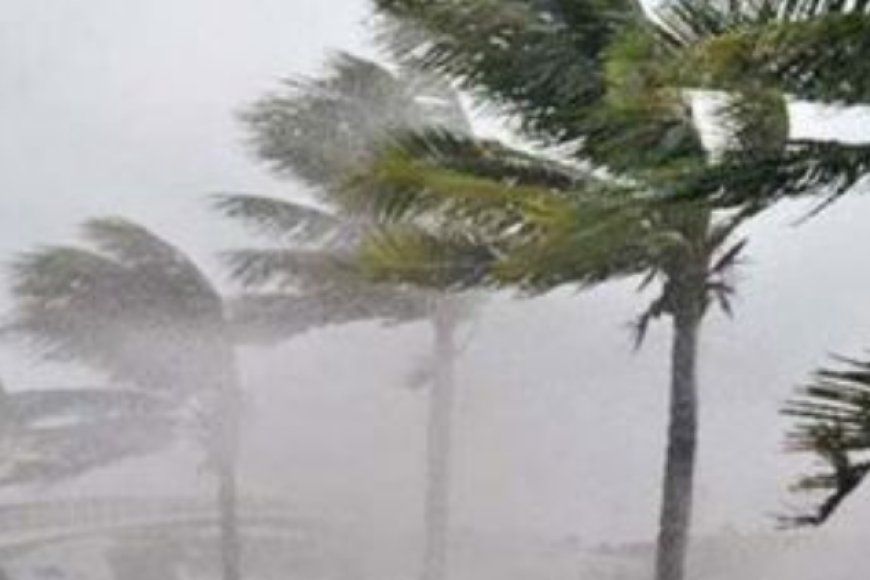
Along the coast, the danger comes not just from the rains, but the winds. Mombasa, Kwale, Kilifi, and Lamu are forecasted to face strong southerly winds exceeding 25 knots (46 km/h). This means rough sea conditions that could hinder fishing, ferry services, and small-scale commercial boating.
High tides and wave surges are expected along the shoreline, with beach erosion risks increasing—particularly around Bamburi, Nyali, and parts of Diani. Residents living near low-lying coastal zones have been advised to move valuables inland and avoid unnecessary sea travel.
These winds are also expected to carry inland, affecting the South-eastern lowlands like Machakos, Kitui, and Makueni. Light structures, especially informal housing, may be at risk of damage.
The Kenya Meteorological Department has issued an urgent advisory to travelers, farmers, and business owners to monitor weather updates and adapt operations accordingly. Road users are warned to avoid driving through flooded paths and to delay non-essential trips during peak storm hours—especially in the afternoons and evenings.
Small-scale farmers have also been advised to delay harvesting perishable crops or protect storage areas from flash flooding. With the risk of power outages due to storm impact on transmission lines, households are encouraged to have emergency lighting, store clean drinking water, and unplug non-essential electronics.
While this weekend’s weather event is being treated as an isolated anomaly, climate watchers are interpreting it as part of a broader, more erratic pattern. Kenya, like many nations in the region, is beginning to experience less predictable seasonal cycles—driven in part by global climate change and local land-use disruptions.
What was once a well-defined wet-dry rhythm is becoming blurred. As June opens with storm alerts and climate reversals, the public is being reminded that preparedness is no longer seasonal—it’s now a year-round necessity.






0 comments