
Your Read is on the Way
Every Story Matters
Every Story Matters
The Hydropower Boom in Africa: A Green Energy Revolution Africa is tapping into its immense hydropower potential, ushering in an era of renewable energy. With monumental projects like Ethiopia’s Grand Ethiopian Renaissance Dam (GERD) and the Inga Dams in the Democratic Republic of Congo, the continent is gearing up to address its energy demands sustainably while driving economic growth.
Northern Kenya is a region rich in resources, cultural diversity, and strategic trade potential, yet it remains underutilized in the national development agenda.

Can AI Help cure HIV AIDS in 2025

Why Ruiru is Almost Dominating Thika in 2025

Mathare Exposed! Discover Mathare-Nairobi through an immersive ground and aerial Tour- HD

Bullet Bras Evolution || Where did Bullet Bras go to?
Geoffrey Mosiria, Nairobi County’s Chief Environment Officer, has emerged as a no-nonsense enforcer of the city’s rapidly evolving environmental standards. While many public officers focus on policy statements and workshops, Mosiria has taken his boots to the streets, leading an aggressive crackdown on behaviors that contribute to Nairobi's long-standing sanitation woes. His mission isn’t simply about trash—it’s about reclaiming public space from apathy and disorder.
Whether dealing with individuals urinating in alleyways or business owners dumping waste in backstreets, Mosiria is determined to bring Nairobi’s chaotic environmental landscape under firm control. For him, cleanliness is not just an aesthetic priority—it’s a battle for dignity and respect in a city that too often ignores its own filth.
In one of his more dramatic enforcement operations, Mosiria coordinated a county raid that resulted in the arrest of 30 individuals caught urinating in non-designated areas within the Central Business District. These weren't warnings or polite requests to do better—these were full-on legal arrests that led to real consequences.
The offenders were dragged before a municipal court and sentenced to community service, assigned specifically to clean the very same public spaces they had soiled. The move sent a loud and unmistakable message: the days of treating Nairobi’s streets like private toilets are over. Mosiria made it clear that the goal was not to shame, but to educate and reform through consequence. His office believes that once people physically clean up their mess, the habit of respect begins to form.
Illegal dumping has long plagued Nairobi, especially in underserved neighborhoods where waste disposal infrastructure is limited or poorly maintained. But Geoffrey Mosiria is not buying excuses anymore. His office has shifted its approach from tolerance to enforcement, focusing on both small offenders and larger corporate abusers.
According to Mosiria, it's no longer enough to plead ignorance or blame the city’s waste management system—each resident and business must play a role. His team has begun issuing steep fines to those caught illegally dumping, including a first-time penalty that can reach Ksh100,000. Repeat offenders face even harsher consequences, potentially coughing up as much as Ksh300,000 under the existing Solid and Waste Management regulations. The message is simple: if you dirty the city, you’ll pay for it—literally.
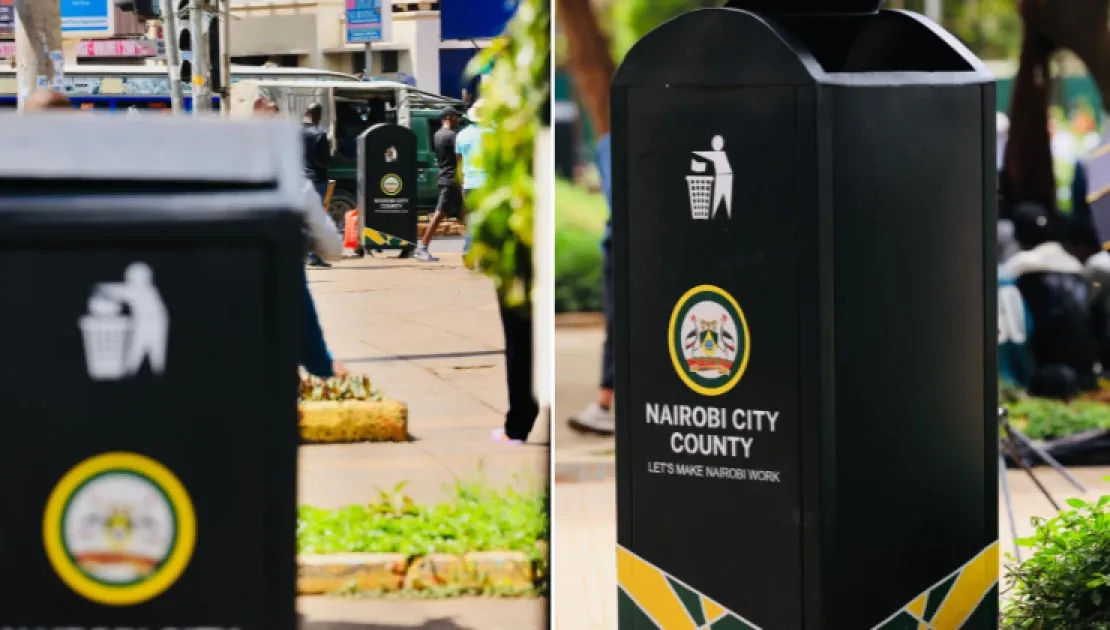
In a more bizarre yet revealing incident, Mosiria personally apprehended an individual attempting to steal newly installed dustbins meant for public use. The suspect, caught red-handed by the officer himself, had removed the bins from a designated area and was preparing to sell them as scrap. Instead of delegating the arrest to lower-level staff, Mosiria stepped in and ensured the thief was handed over to authorities.
Speaking afterward, he made it clear that this wasn’t just about property—it was about respect for public infrastructure and the broader mission of restoring civic responsibility. “He will face the full force of the law,” Mosiria said, reinforcing the seriousness of the crime. To some it may sound like an overreaction, but for Mosiria, a stolen dustbin represents something far larger: the casual theft of collective progress.
Despite his tough stance, Mosiria is not blind to the systemic problems that fuel Nairobi’s waste issues. He has consistently emphasized that the city’s clean-up effort cannot rest solely on punitive action—it requires a collective shift in mindset. He has repeatedly called on landlords, business owners, and everyday residents to take personal responsibility.
This means properly disposing of waste through certified handlers, installing adequate bins in commercial and residential areas, and ensuring the cleanliness of their immediate surroundings. Mosiria sees community involvement not as a favor to the government, but as a civic duty essential to the sustainability of Nairobi’s growth. He’s been known to walk door-to-door in some neighborhoods, educating residents and shop owners alike, not out of performative activism but from a genuine belief that transformation starts with accountability.
With an expanding population and rising urban density, Nairobi’s environmental future hangs in a precarious balance. Geoffrey Mosiria’s efforts mark a turning point in how the city approaches sanitation—not as a reactive task, but as a continuous public campaign driven by accountability, visibility, and civic pride.
His leadership has introduced a new tone in City Hall: one of firm resolve, quick enforcement, and long-term thinking. Whether it’s arresting public urinators, fining illegal dumpers, or chasing down dustbin thieves, Mosiria’s work is rooted in a simple but powerful idea: if you want a better city, you have to fight for it—and sometimes, you have to fight against those who abuse it.






0 comments