
Your Read is on the Way
Every Story Matters
Every Story Matters
The Hydropower Boom in Africa: A Green Energy Revolution Africa is tapping into its immense hydropower potential, ushering in an era of renewable energy. With monumental projects like Ethiopia’s Grand Ethiopian Renaissance Dam (GERD) and the Inga Dams in the Democratic Republic of Congo, the continent is gearing up to address its energy demands sustainably while driving economic growth.
Northern Kenya is a region rich in resources, cultural diversity, and strategic trade potential, yet it remains underutilized in the national development agenda.

Can AI Help cure HIV AIDS in 2025
Why Ruiru is Almost Dominating Thika in 2025

Mathare Exposed! Discover Mathare-Nairobi through an immersive ground and aerial Tour- HD

Bullet Bras Evolution || Where did Bullet Bras go to?
For decades, Mukuru in Nairobi was a living metaphor for survival. Drenched in inequality and drowning in neglect, the community wove itself around makeshift paths, open sewage, and improvised shelters. But today, a bold initiative called Mukuru Tuko Sawa is turning that page. It’s not just a housing project—it’s a movement rewriting what it means to live in dignity.
The transformation is stark. Once plagued by murky puddles and treacherous alleyways, Mukuru now boasts paved sidewalks, organized streets, and street lighting that brings security after sunset. "Our shoes stay clean now, and so do our hearts," a resident shared, a poetic reminder of the emotional and physical uplift.
Where there was once sewage dodging, kids now ride bicycles. Families no longer wake up to the chaos of uncollected garbage and unplanned constructions but to the hum of normalcy—fresh air, structured mornings, and the rhythm of a functioning neighborhood.
At its core, Mukuru Tuko Sawa is a reclamation of identity. It repositions people not as squatters or victims of neglect but as active participants in a new kind of urban future. Residents have transitioned from anonymity in sprawling informal settlements to names on deeds, addresses, and access to essential services.
“It’s not just buildings,” tweeted one observer, “it’s agency, it’s dignity.” And it shows: new neighborhoods are emerging where people feel proud to invite guests, raise children, and build futures.
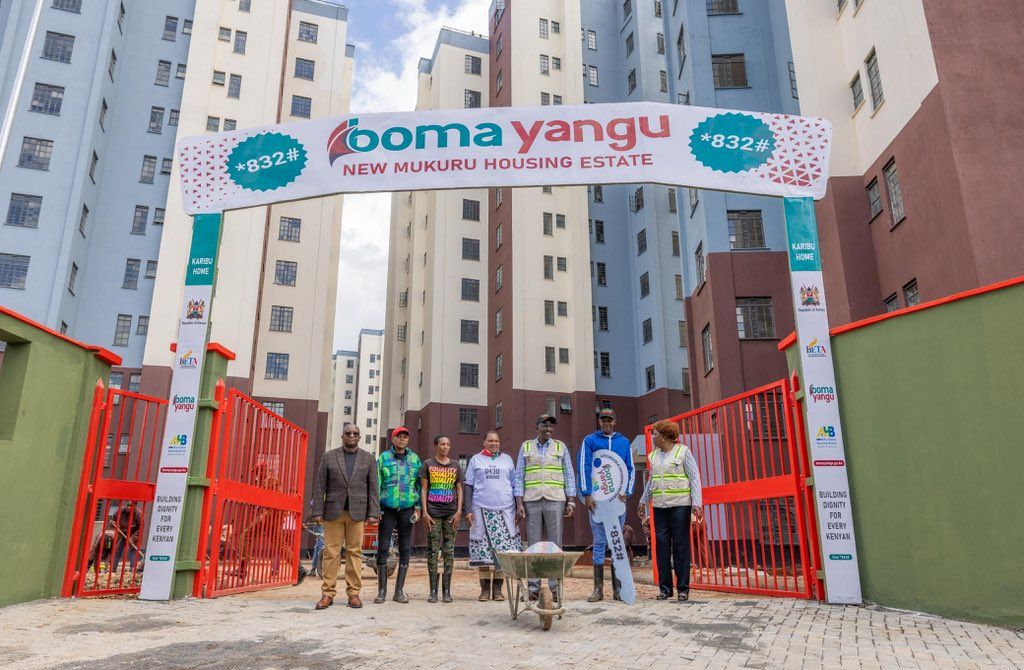
These aren’t your average concrete blocks. The new Mukuru homes reflect climate-conscious design and 21st-century sustainability. Prepaid gas meters reduce fire risks and energy waste. The architecture encourages natural ventilation, keeping homes cool without costly energy use. Water systems are integrated, waste is managed smartly, and green spaces dot the community, giving room to breathe, play, and reflect.
As one comment put it: “Climate-smart design! Prepaid gas, low fire risk, and energy-efficient homes. Mukuru delivers sustainability and safety in one.”
There’s a pulse in the new Mukuru—and it’s healthier. Clinics are now within walking distance, meaning sick children aren’t left to suffer in silence or wait in endless lines miles away. Schools are embedded into the layout, allowing education to become a daily norm, not a distant dream. The convenience and care brought by these institutions have already changed health outcomes and life expectancy in meaningful ways.
“Mukuro Tuko Sawa, hata zahanati iko karibu,” tweeted one parent joyfully. “Our kids used to fall sick often. Now healthcare is near. Our community is well.”
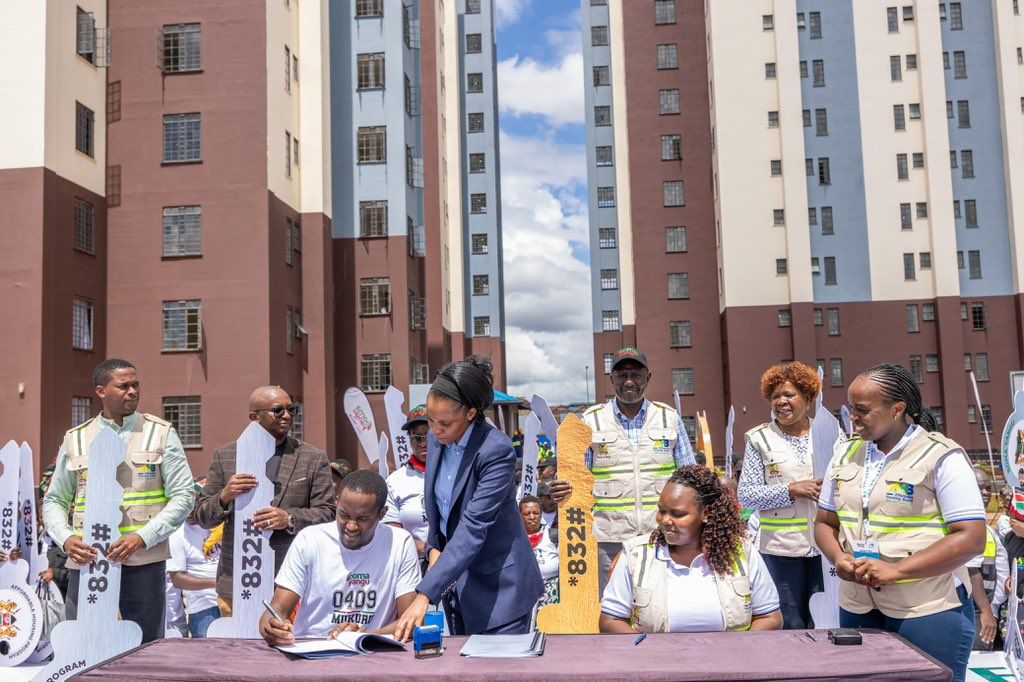
One can’t overstate the emotional dimension of this project. Slum upgrading often sounds like a sterile technical endeavor, but here, it’s deeply human. These new structures aren’t just built with cement—they’re built with care, compassion, and consultation. Former slum dwellers helped shape the blueprints, ensuring the homes reflected their lived realities, not just bureaucratic guesses.
One commentator summed it up perfectly: “When you build houses with heart, you build hope.”
With skyrocketing demand on platforms like Boma Yangu, the pressure is now on to scale. Many more Kenyans want in on this vision—proof that the hunger for dignified, sustainable living is growing fast. The model Mukuru provides is now a blueprint for transforming other informal settlements not just in Nairobi but across the continent.
This is where Kenya’s urban future could be headed: away from reactive crisis management and toward preemptive, human-centered planning.
Final Thoughts
Mukuru Tuko Sawa is more than a catchy hashtag. It’s a declaration of progress. It’s about shifting from being forgotten by planners to being prioritized by policy. From shacks built in desperation to neighborhoods crafted with intention. It’s a transition that began with concrete but ends with hope.
If urban renewal ever needed a North Star, Mukuru is blazing that trail—paved, lit, and full of dreams.






0 comments