
Your Read is on the Way
Every Story Matters
Every Story Matters
The Hydropower Boom in Africa: A Green Energy Revolution Africa is tapping into its immense hydropower potential, ushering in an era of renewable energy. With monumental projects like Ethiopia’s Grand Ethiopian Renaissance Dam (GERD) and the Inga Dams in the Democratic Republic of Congo, the continent is gearing up to address its energy demands sustainably while driving economic growth.
Northern Kenya is a region rich in resources, cultural diversity, and strategic trade potential, yet it remains underutilized in the national development agenda.
Can AI Help cure HIV AIDS in 2025
Why Ruiru is Almost Dominating Thika in 2025
Mathare Exposed! Discover Mathare-Nairobi through an immersive ground and aerial Tour- HD

Bullet Bras Evolution || Where did Bullet Bras go to?
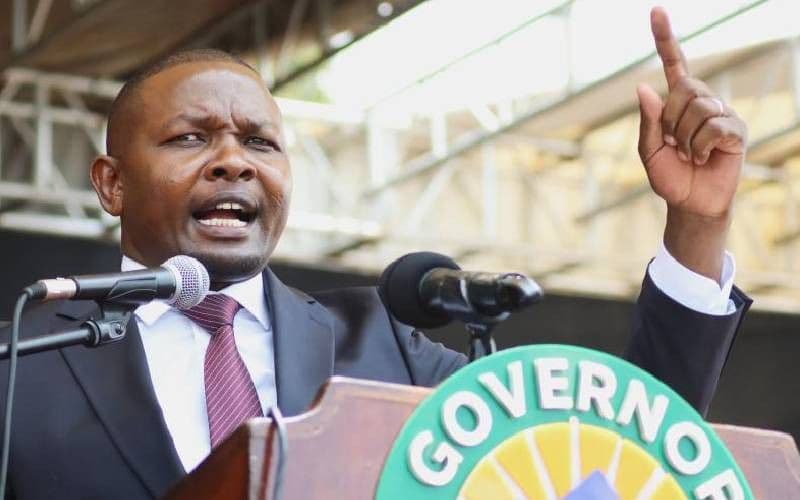
Meru Governor Isaac Mutuma surprised many when he asked President William Ruto to change Kenya’s wildlife laws. He wants locals living near parks to be allowed to milk elephants and giraffes and slaughter them for meat. He made this request at a public event in Meru on May 26, attended by top government officials.
The governor said that even though places like Meru National Park and Mount Kenya bring in money through tourism, the local people get little benefit. They live next to dangerous animals, suffer losses, and receive almost no help.
During his speech, Governor Mutuma explained that people keep cows, goats, and sheep because they give milk and meat. He asked why elephants, giraffes, zebras, and gazelles couldn’t do the same for the local communities.
“We’re asking you to give us permission to start milking elephants and giraffes,” he said. His words caused laughter and surprise, but the message was clear — people are frustrated.
Mutuma’s speech came at a time when many families near parks are suffering from human-wildlife conflict. In some areas, elephants have killed people, destroyed farms, and scared away livestock. A recent case involved a miraa farmer in Igembe North who was killed by an elephant in his field. Another man was trampled in Nyahururu just days later.
These tragic events have caused anger among locals. They feel abandoned by the government and ignored by conservation officials.
In reply, President Ruto did not talk about milking elephants. Instead, he explained how his government is working hard to help victims of wildlife attacks. He said over KSh 2.8 billion has been paid in compensation in just two years, which is more than the total amount paid from 2013 to 2022.
Ruto also said that the government had digitized the compensation system to speed up payments and end delays.
Governor Mutuma’s idea may sound extreme, but it brings up an important question: Should local communities benefit more directly from the wildlife around them? Right now, Kenya’s laws do not allow the killing or use of protected wild animals like elephants and giraffes.
But people living near these animals say they are paying the price for conservation. They risk their lives, lose their crops, and are rarely compensated on time.
It’s not likely that Kenya will allow people to start milking or killing elephants any time soon. Conservation groups are strongly against the idea, warning that it could lead to animal cruelty, poaching, and environmental damage.
However, Mutuma’s comments have opened up an important conversation. As Kenya works to protect its wildlife, it must also ask: What about the people?
The balance between protecting animals and helping struggling communities may be one of the biggest challenges facing the country’s wildlife policies today.





0 comments