
Your Read is on the Way
Every Story Matters
Every Story Matters
The Hydropower Boom in Africa: A Green Energy Revolution Africa is tapping into its immense hydropower potential, ushering in an era of renewable energy. With monumental projects like Ethiopia’s Grand Ethiopian Renaissance Dam (GERD) and the Inga Dams in the Democratic Republic of Congo, the continent is gearing up to address its energy demands sustainably while driving economic growth.
Northern Kenya is a region rich in resources, cultural diversity, and strategic trade potential, yet it remains underutilized in the national development agenda.

Can AI Help cure HIV AIDS in 2025

Why Ruiru is Almost Dominating Thika in 2025

Mathare Exposed! Discover Mathare-Nairobi through an immersive ground and aerial Tour- HD

Bullet Bras Evolution || Where did Bullet Bras go to?
Kenya is standing at a financial crossroads as its public debt reaches critical levels. The urgency is clear, and the countdown to prevent an economic breakdown has already begun. According to Margaret Nyakango, the Controller of Budget, Kenya must urgently adopt decisive strategies to bring its towering debt burden under control. She has called on the National Treasury to craft a robust, clear, and actionable plan aimed at lowering the country's dangerously high debt-to-GDP ratio to 55 percent by the year 2029. This plan must be ambitious but realistic, given that the latest figures reveal Kenya’s debt-to-GDP ratio, although reduced from a peak of 71.9 percent in 2022 to 65.7 percent by mid-2024, remains well above safe levels for developing economies.
The International Monetary Fund (IMF) recommends that countries like Kenya maintain debt-to-GDP ratios below 50 percent, meaning the country still faces a steep climb before it can breathe easy. Without a full-scale financial overhaul and a shift in how public finances are handled, Kenya risks being dragged into an endless spiral of debt and economic fragility.
To fully understand the gravity of Kenya’s debt crisis, it helps to look at the numbers, which paint a troubling picture. By December 2024, Kenya's total public debt had reached approximately $70 billion (Sh10.93 trillion). This staggering sum is nearly evenly split between external lenders, who are owed around $32.6 billion, and domestic creditors, who are owed about $37.8 billion. This balance between domestic and foreign debt exposes Kenya to a complex web of financial obligations that must be carefully managed to avoid default or economic stagnation.
Even more alarming is Kenya's debt service-to-revenue ratio, which now hovers near 65 percent. This means that almost two-thirds of every shilling collected in revenue by the government is used just to pay back existing debts. The remaining third is expected to cover salaries, public services, infrastructure development, healthcare, education, and countless other essential needs of the country. In just the first six months of the 2024/2025 financial year, Kenya spent Ksh 666.34 billion on debt repayments, which was a steep increase from Ksh 597.58 billion paid during the same period in 2023/2024. These payments are not just numbers on a ledger. They directly impact the government’s ability to fund programs that improve citizens' lives, limiting economic growth and social development.
One of the most challenging aspects of Kenya's debt crisis is its repayment schedule, which has placed the country in an unrelenting race against time. A significant share of Kenya's debts are short-term obligations, requiring repayment or refinancing within a few years. This compressed schedule puts immense strain on public finances and creates a recurring need to take on new debt just to cover the costs of old debt, often at higher and more punishing interest rates.
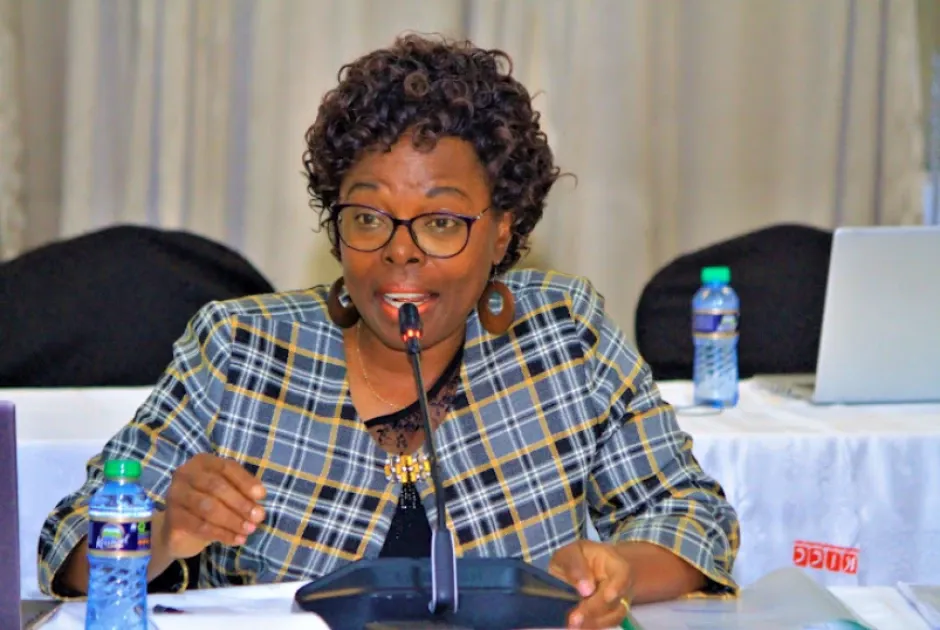
This cycle of borrowing to repay existing loans is not only unsustainable but also dangerous. It exposes Kenya to refinancing risks, where global market fluctuations or reduced investor confidence could make it difficult or prohibitively expensive to secure new funding. Margaret Nyakang'o has raised the red flag on this issue, warning that Kenya is edging closer to a point where even refinancing options may dry up, leaving the government scrambling to honor its obligations without the resources to do so. Avoiding this potential crisis will require deliberate, calculated, and proactive measures aimed at lengthening debt maturity periods and negotiating better loan terms with creditors.
Kenya’s strategy to manage its mounting public debt cannot afford to be superficial. It demands a bold, multidimensional approach that tackles the problem at its roots. Currently, the public debt management system is stretched thin and faces enormous challenges that will require structural changes, policy reforms, and strong political will to overcome.
First, Kenya must work to extend the maturity period of its debt, reducing reliance on short-term borrowing and replacing it with long-term financing arrangements that come with lower interest rates and more forgiving grace periods. This shift would give the government more breathing room and help prevent the repeated cycle of emergency refinancing that destabilizes public finances.
Second, there is an urgent need to strengthen revenue collection mechanisms. The Resource Mobilisation Department has been called upon to lead a comprehensive overhaul of the taxation system. This overhaul must address widespread tax evasion, broaden the tax base to include more contributors, and modernize collection processes through the adoption of technology and stricter enforcement. Increasing revenue is critical to meeting debt obligations without suffocating the economy.
Finally, Kenya must actively curb the growth of its debt stock by imposing strict discipline on new borrowing. This means prioritizing borrowing only for projects that guarantee high economic returns, eliminating wasteful expenditures, and adopting a transparent process to monitor public spending. Such measures will ensure that every borrowed shilling goes towards meaningful development and economic growth.
Kenya has been making aggressive strides in repaying its debt. Over the past few years, billions of dollars have already been paid back to both domestic and international lenders. However, this aggressive repayment strategy has come at a significant cost to the nation. Development projects have been delayed or canceled, essential public services have suffered budget cuts, and critical sectors such as healthcare and education are severely underfunded.
Despite these sacrifices, Kenya remains locked in a relentless cycle. For every dollar paid off, another loan is taken to cover shortfalls, creating a treadmill effect where the country seems to be running in place rather than making real progress. Without major structural changes to how debt is managed and how revenue is collected, Kenya risks falling into a permanent state of servicing debt interest without ever significantly reducing the principal amounts owed.
Beyond the figures and policies lies the real challenge: balancing economic growth with fiscal responsibility. This is not just a question of reducing debt. It is about ensuring that the Kenyan people do not pay the price through reduced services, lost opportunities, and worsening poverty. Every shilling spent on interest repayments is a shilling that does not go toward building hospitals, fixing roads, supporting schools, or creating jobs.
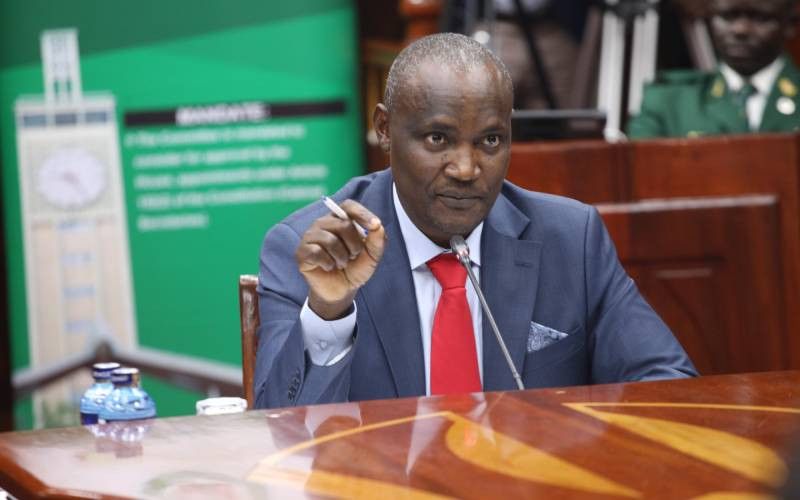
The National Treasury, led by Cabinet Secretary John Mbadi, faces an incredibly difficult task. They must find a way to reduce the debt burden while simultaneously keeping the economy growing and ensuring that essential public services remain operational. The government must carefully craft policies that are fair, effective, and sustainable. This involves not only cutting spending where necessary but also investing wisely in projects that generate revenue and create jobs.
With 2029 set as the target year, Kenya has a narrow window to act. If the country can implement deep and lasting reforms, it might just be able to pull back from the edge and build a more stable financial future. However, if these reforms are delayed or poorly executed, the consequences could be dire.
There are no simple solutions to Kenya's debt dilemma. Escaping the debt trap will require more than just paying off loans. It will demand a complete transformation of the country’s fiscal strategy. Waste must be eliminated. Revenue must grow. Borrowing must be strategic and restrained. Transparency must become the new standard.
With a clear plan, unwavering political will, and active public oversight, Kenya still has a chance to rewrite its story before time runs out. But the clock is ticking.






0 comments