
Your Read is on the Way
Every Story Matters
Every Story Matters
The Hydropower Boom in Africa: A Green Energy Revolution Africa is tapping into its immense hydropower potential, ushering in an era of renewable energy. With monumental projects like Ethiopia’s Grand Ethiopian Renaissance Dam (GERD) and the Inga Dams in the Democratic Republic of Congo, the continent is gearing up to address its energy demands sustainably while driving economic growth.
Northern Kenya is a region rich in resources, cultural diversity, and strategic trade potential, yet it remains underutilized in the national development agenda.

Can AI Help cure HIV AIDS in 2025

Why Ruiru is Almost Dominating Thika in 2025

Mathare Exposed! Discover Mathare-Nairobi through an immersive ground and aerial Tour- HD

Bullet Bras Evolution || Where did Bullet Bras go to?
President William Ruto has issued one of the most controversial security directives of his administration: police officers should shoot protesters who engage in violence—not to kill them, but to injure and neutralize them by aiming at the legs. This directive, delivered during a public address in Kilimani, has triggered an avalanche of criticism, with many interpreting it as a coded greenlight for excessive force and extrajudicial punishment.
According to Ruto, the protests—largely fueled by economic frustration and state failure—have been hijacked by criminals. He accuses these individuals of torching property, attacking citizens, and causing chaos under the guise of demonstrating. To contain the unrest, the President instructed law enforcement to respond with firm action, explicitly stating that police should shoot “one leg” of anyone caught engaging in violent behavior.
In the President’s own words, this shoot-to-incapacitate approach is meant to avoid fatalities while still stopping criminal behavior. He emphasized that the intention is not to kill, but to subdue violent actors long enough for them to be arrested and prosecuted in court. “Let them be shot in the leg, treated in hospital, and then taken to court to answer for their crimes,” Ruto remarked.
To his supporters, this is a bold and decisive move aimed at restoring law and order in the face of spiraling unrest. But to critics, it marks a serious erosion of civil liberties and due process.
Legal scholars, human rights defenders, opposition leaders, and religious groups have come out swinging against the directive. Former Prime Minister Raila Odinga called the order a dangerous path toward authoritarianism, saying it undermines the principle of presumption of innocence and ignores the proper channels of justice.
Kenya’s Constitution, they argue, does not provide for "conditional violence" by the state against its citizens—especially when such violence is subjective, based on whether an officer deems a protester “violent.” The line between protest and criminality, they warn, can be easily blurred under such circumstances.
Further, activists claim that such directives could embolden police officers who have historically been accused of operating with impunity. The fear is that officers will begin to act as judges, juries, and executioners in real-time—resulting in irreversible bodily harm and deaths.
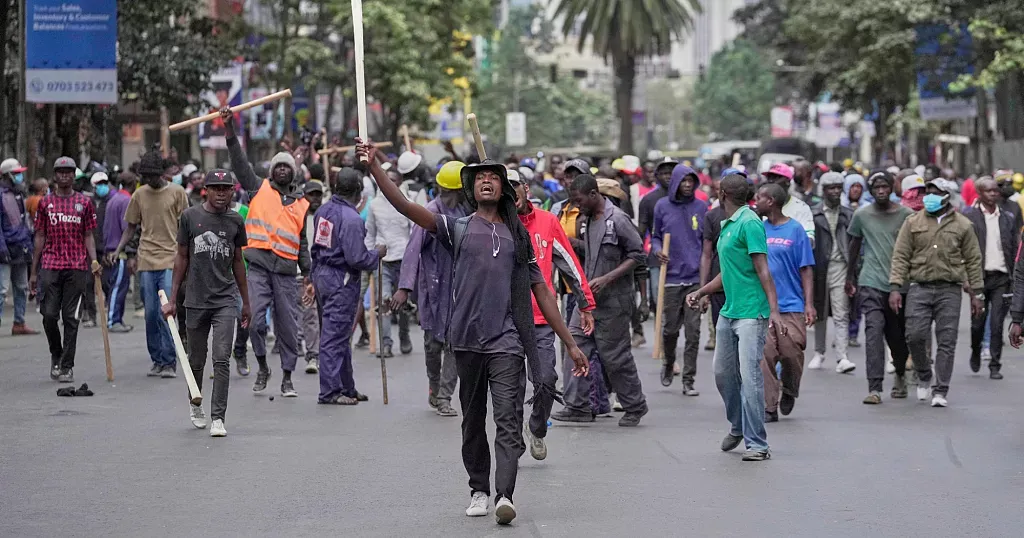
The timing of Ruto’s directive is particularly combustible. Kenya is currently engulfed in a wave of youth-led protests against high taxation, joblessness, and worsening living conditions. These demonstrations have already witnessed a heavy-handed response from the police, with reports of live bullets, teargas, abductions, and even deaths.
In this context, the President’s “shoot the leg” order is being read not as a strategy for de-escalation but as a direct escalation. It places street-level discretion in the hands of officers under pressure, in chaotic situations, where snap decisions could end in tragedy.
The ebate over the rule of law. Critics insist that no president has the legal authority to redefine police engagement protocols outside of established legislation. If protesters commit crimes, the due process must prevail—arrest, charge, and prosecute. But authorizing injury as a means of control bypasses the legal framework and replaces it with brute force.
It’s also unclear whether the order is legally binding or merely rhetorical. So far, no formal changes to police procedures have been published. However, rights groups warn that even informal directives from the Head of State can carry deadly consequences when interpreted literally on the ground.
Public sentiment is deeply polarized. Some Kenyans, fatigued by the destruction caused by protests, back the President’s tough stance, believing it will bring back stability. Others fear it will lead to an authoritarian state where the government responds to opposition not with dialogue, but with bullets.
A notable undercurrent in this debate is the youth perspective—many of whom are leading the protests. For them, the message is clear: the state views them not as citizens with grievances, but as threats to be contained, even physically crippled.
Ruto’s “shoot the leg” directive is not just a policing issue—it’s a test of Kenya’s democratic resilience. Does the country honor the rule of law in turbulent times? Or does it turn to muscle and might in the face of unrest?
The fallout from this command could have lasting effects—both on the physical bodies of those targeted and on the body politic. It raises serious questions about how far a government can go to control dissent before it crosses the line into tyranny.






0 comments