
Your Read is on the Way
Every Story Matters
Every Story Matters
The Hydropower Boom in Africa: A Green Energy Revolution Africa is tapping into its immense hydropower potential, ushering in an era of renewable energy. With monumental projects like Ethiopia’s Grand Ethiopian Renaissance Dam (GERD) and the Inga Dams in the Democratic Republic of Congo, the continent is gearing up to address its energy demands sustainably while driving economic growth.
Northern Kenya is a region rich in resources, cultural diversity, and strategic trade potential, yet it remains underutilized in the national development agenda.

Can AI Help cure HIV AIDS in 2025

Why Ruiru is Almost Dominating Thika in 2025

Mathare Exposed! Discover Mathare-Nairobi through an immersive ground and aerial Tour- HD

Bullet Bras Evolution || Where did Bullet Bras go to?
The death of Pope Francis reverberated far beyond the walls of the Vatican, striking a somber chord in hearts across the world. For many, his passing marked the end of an era defined by humility, reform, and an unwavering commitment to justice. But in Kenya, a parallel narrative began to unfold—one not of candle-lit vigils or quiet prayers, but of Photoshop and punchlines. In a startling twist, social media erupted with memes depicting former Prime Minister Raila Odinga as the new Pope. What was meant by some as satire quickly became a cultural flashpoint, drawing ire from various quarters and opening up a nationwide discussion about the collision between digital humor and human dignity. It was more than just an online trend—it became a national mirror reflecting deep generational, moral, and cultural tensions.
While Kenya has long been a fertile ground for politically charged humor, this latest turn seemed to cross an invisible line. Raila Odinga, a towering figure in Kenyan politics, has always been a magnet for both adoration and derision. His five failed attempts at the presidency have made him a frequent feature in the country's meme landscape. But this time, the humor landed differently. The Pope’s death—a moment of sincere grief for billions—was the backdrop to an internet spectacle that cast Raila in papal vestments, complete with captions that alternated between absurdity and mock prophecy. For some, it was a hilarious take on political persistence; for others, it was a vulgar gesture that cheapened both a religious tragedy and a statesman's dignity. The memes did not just mock Raila—they used a sacred moment as canvas, and that, to many, felt unforgivable.
Into this storm stepped Esther Passaris, Nairobi’s outspoken Woman Representative, who didn’t mince her words. In a sharply worded rebuke, she lashed out at what she described as “the blatant disrespect” shown by members of the younger generation. According to her, using the Pope’s death as meme fodder—especially before his burial—was not just distasteful but deeply offensive to the global Catholic community. “There’s a time for everything,” she emphasized, “and mocking the leader of two billion faithful before his soul has even been laid to rest is a moral failing.” Her message was clear: humor has limits, and those limits are often drawn around moments of collective mourning. In a digital culture that often thrives on provocation, her words sounded like a desperate plea for restraint, reminding young creators that not every moment is fair game for content.
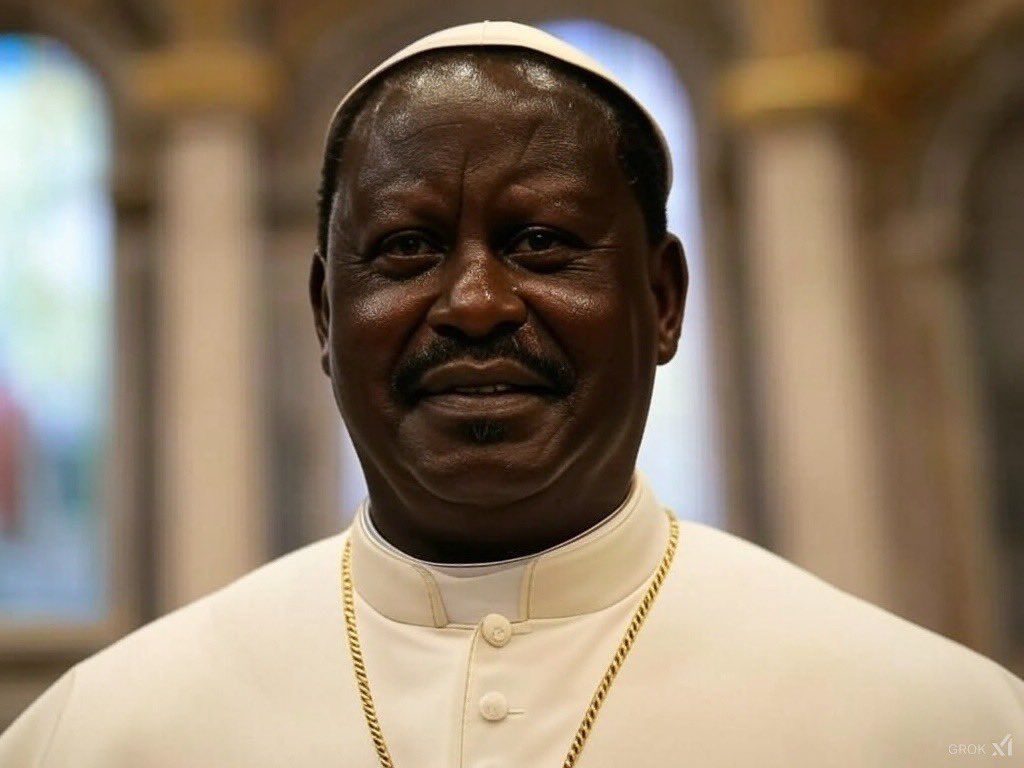
Raila Odinga’s political journey is one of resilience and reinvention, but in the realm of memes, he’s become something entirely different—a symbol of perennial defeat and eternal comebacks. This transformation from elder statesman to meme template speaks volumes about how the internet flattens complexity. A man who played a crucial role in Kenya’s democratic evolution has become shorthand for near-misses and broken dreams. While many argue that humor is a tool for coping with disappointment or critiquing power, others believe this latest episode represents a descent into cruelty masked as comedy. The appropriation of Raila’s image in religious attire, especially in a context that mocks a revered global leader’s death, illustrates how meme culture can sometimes drift into dangerous waters—where historical legacies are rewritten in pixels and punchlines.
At the heart of this unfolding drama lies Generation Z—a cohort born into the internet and fluent in the language of memes, hashtags, and viral trends. They are the architects of a new kind of cultural expression, one that’s fast, fluid, and fiercely irreverent. For Gen Z, creating a meme isn’t necessarily a political act or a disrespectful one; it’s a form of commentary, a way to process complex emotions through humor. Yet, this cultural fluency comes with responsibility. As Passaris pointed out, the line between satire and sacrilege isn’t always clear, but it must exist. Gen Z holds immense power in shaping narratives, setting trends, and influencing public opinion. But with that power comes the duty to pause and reflect—especially when engaging with events that carry deep spiritual or emotional weight for millions around the world.
Pope Francis’ tenure was marked by a rare blend of theological depth and worldly concern. He championed the poor, spoke boldly on climate change, and repeatedly called for inclusion and mercy over exclusion and judgment. His papacy stood as a moral beacon, especially in times of political cynicism and global unrest. Now, as the world grapples with his absence, his legacy is not just being memorialized in sermons and processions but also distorted in social media threads. The depiction of Raila Odinga as his successor—albeit mockingly—exemplifies a troubling phenomenon: even the most sacred moments can be cannibalized by internet culture. It forces us to ask hard questions: Are we trivializing the profound? And in our quest to be funny or viral, are we forgetting to be human?
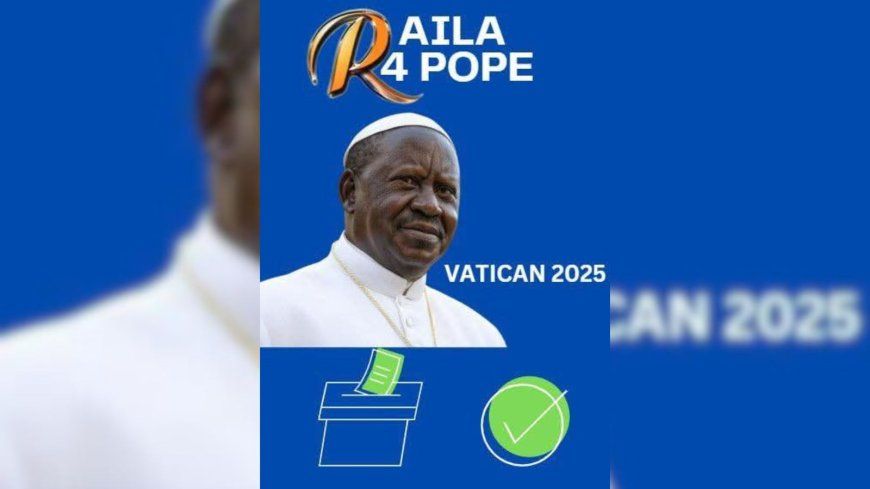
This incident is more than a fleeting controversy; it’s a cultural moment forcing Kenya to reckon with itself. The meme backlash has unearthed a growing rift between tradition and modernity, between reverence and irreverence. It reveals a society that is evolving rapidly in how it consumes, reacts to, and disseminates information. But evolution need not come at the expense of empathy. Kenya, like many nations navigating the digital age, must now confront a difficult but necessary question: How do we uphold our values in a world that rewards instant reactions over thoughtful reflection? Humor is a powerful tool—but it loses its value when it kicks the grieving or mocks the sacred.
As the Vatican prepares to select a new Pope through the time-honored tradition of the conclave, the Catholic world braces for a new chapter. Yet in Kenya, the discussion has already shifted—not about the future of the Church, but about the soul of the digital age. The country now finds itself at a crossroads. Will it lean into a culture of boundless expression, or will it begin to cultivate one that balances humor with humility? This moment offers an opportunity for introspection—not just for meme-makers, but for all who engage in public discourse. It's a chance to ask: What kind of society are we building, and who are we willing to mock in the process?
Conclusion:
The passing of Pope Francis, a man of profound influence and unwavering compassion, has prompted grief, remembrance, and reflection across the globe. But in Kenya, it also triggered a digital maelstrom that laid bare the evolving tensions between generations, values, and communication styles. While memes can be powerful vehicles for expression, they also come with moral weight—especially when they intersect with moments of global mourning. The online portrayal of Raila Odinga as Pope may have been born out of jest, but it sparked a national conversation that is anything but funny. In this digital age, the responsibility to balance expression with empathy rests with all of us, especially those with the loudest online voices.






0 comments