










A Dual Entrance That Spoke Volumes
Madaraka Day wasn’t just about speeches and ceremonies—it turned into a silent fashion battlefield between two of Kenya’s most visible women. As dignitaries poured into Raila Odinga Stadium, eyes weren’t only on the podium but also on the women walking beside the nation’s power players.
Dr. Joyce Kindiki, calm and composed, walked with quiet poise next to Interior CS Kithure Kindiki. Moments later, First Lady Rachel Ruto arrived, dressed to provoke pride, applause—or debate. It wasn’t just an entrance. It was a statement.
Dr. Joyce Kindiki: A Soft Power Dressed in Maroon
If grace could wear a dress, it would look like Dr. Joyce Kindiki’s Madaraka Day outfit. The maroon lace dress draped softly over her frame, a choice that felt neither showy nor timid—just dignified. The lacework offered texture without overcomplication, and the shade of maroon hinted at maturity, passion, and quiet strength.
Her blonde bob, sharply styled, framed her face like a deliberate frame around a portrait. Silver block heels grounded the look with a bit of modern practicality, and her single white necklace delivered just the right amount of contrast. Joyce’s fashion choice wasn’t just polished—it was political in its restraint. It suggested, “I don’t need to shout to be seen.”
Rachel Ruto: Bold, Bright, and Unapologetically Nationalistic
If Dr. Joyce whispered elegance, Rachel Ruto roared patriotism. The First Lady did not come to blend in—she came to embody the flag. Her ankle-length dress was a kinetic canvas of Kenya itself. The green swath across the base felt rooted and natural, the red diagonal bold and fierce, and the black shoulder strip screamed strength and heritage.
Delicate white trims softened the bold contrast, adding a hint of balance to an otherwise defiant design. It wasn’t just fashion—it was a full-body proclamation of national pride. Whether one admired or critiqued it, one thing was clear: Rachel Ruto did not wear that dress by accident.
Public Reactions: Split Between Applause and Side-Eyes
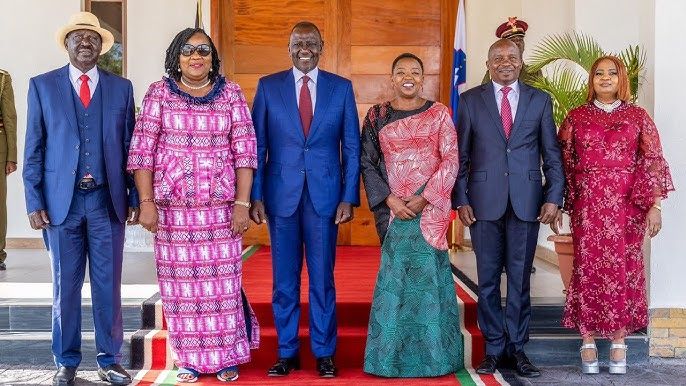
As photos swirled through social media, Kenyans reacted with expected passion. Joyce Kindiki earned praise for her evolution in public appearance—many marveled at how she quietly stole the scene through grace, not grandeur. Meanwhile, Rachel Ruto became the subject of both admiration and critique.
To some, her fashion was a triumphant celebration of heritage; to others, it flirted with theatrical overkill for a national event meant to evoke solemnity. This wasn’t just about fabric—it was about persona, presence, and perception. The country wasn’t just watching—it was weighing who wore the moment better.
Two Women, Two Messages, One National Stage
These fashion choices reflect more than personal taste—they represent different philosophies on public presence. Joyce Kindiki channels the academic, private partner of a high-ranking official—controlled, graceful, and measured. Rachel Ruto, by contrast, embraces the visible figurehead role with showmanship and symbolism, ready to be the visual ambassador of patriotism.
Their dresses on that day became extensions of their roles. In a country where political families are often judged as much by how they look as by what they do, Joyce and Rachel didn’t just attend Madaraka Day—they owned it in different ways.
What the Clothes Didn't Say—but Still Spoke Loudly
Beneath the elegance and the color schemes lies a deeper truth: fashion, especially in state functions, is power. The subtle tension between Rachel’s vibrant nationalism and Joyce’s poised minimalism revealed two paths to influence. One speaks through volume and visibility, the other through grace and control.
In a political climate that often places women on display without voice, both First Ladies flipped that dynamic—letting their style become an unspoken speech of its own.
0 comments