
Your Read is on the Way
Every Story Matters
Every Story Matters
The Hydropower Boom in Africa: A Green Energy Revolution Africa is tapping into its immense hydropower potential, ushering in an era of renewable energy. With monumental projects like Ethiopia’s Grand Ethiopian Renaissance Dam (GERD) and the Inga Dams in the Democratic Republic of Congo, the continent is gearing up to address its energy demands sustainably while driving economic growth.
Northern Kenya is a region rich in resources, cultural diversity, and strategic trade potential, yet it remains underutilized in the national development agenda.

Can AI Help cure HIV AIDS in 2025

Why Ruiru is Almost Dominating Thika in 2025

Mathare Exposed! Discover Mathare-Nairobi through an immersive ground and aerial Tour- HD

Bullet Bras Evolution || Where did Bullet Bras go to?
Butere Girls High School's production of "Echoes of War" was intended to be just another performance at Kenya's National Drama and Film Festival. But instead, it exploded into a nationwide controversy that captured attention far beyond the theatre. Written by Cleophas Malala, a former Senator, the play explored powerful themes of youth activism, state repression, and social injustice. Its raw depiction of political themes and unrest felt like a direct commentary on Kenya's current political climate, specifically the ongoing struggles between the state and its citizens, particularly the youth.
The play struck a chord with young people who felt alienated from the decisions of their leaders, but it also rattled political figures and those in positions of power. In its exploration of rebellion and the demand for accountability, it mirrored the challenges that many young Kenyans face when speaking out against perceived injustice. What started as a performance of youthful creativity soon spiraled into a conversation about the intersection of youth, politics, and freedom of expression.
Despite its compelling message, "Echoes of War" faced immediate pushback. Initially, the play was banned from the Kenya National Drama and Film Festival by the authorities who deemed it "too political." The reasoning behind the ban was clear: the content of the play hit too close to home, questioning the legitimacy of the government and the state’s treatment of its youth. The censorship drew fierce criticism from various quarters, with many arguing that it was a blatant violation of the students' right to free expression.
In an unexpected turn, the students of Butere Girls, along with their supporters, pursued legal action against the ban. The High Court eventually ruled in favor of the students, allowing the play to be performed. This landmark decision reinforced the importance of artistic freedom and sent a clear message that creativity should not be stifled by political agendas. However, the victory came at a cost. When the play was finally staged in Nakuru, police used tear gas to disperse the crowd, further escalating the situation and giving the performance an even more profound resonance. The intervention of the authorities only made the themes of the play — state repression and the fight for justice — feel more real and immediate.

The events surrounding "Echoes of War" were not isolated. They fit into a broader pattern of youth activism in Kenya, where young people are increasingly vocal about their dissatisfaction with political leadership and governance. Butere Girls, known for their bold performances addressing societal issues, became a powerful example of how youth can use art as a form of resistance. The play was more than just a story on stage — it was a vehicle for the students to express their frustrations, their hopes, and their dreams for a more just society.
Butere Girls High School has a long history of using drama to challenge societal norms. In 2013, their play "Shackles of Doom" was similarly banned for addressing issues of ethnic inequality and corruption in Kenya. That play, too, sparked public debate and reinforced the role of theatre as a platform for social commentary. The fact that "Echoes of War" followed in the same footsteps underscored the continuing struggle between artistic expression and state censorship.
While the debate over the play's content raged on, Cleophas Malala, the playwright, stood to gain financially from the performance. As a well-known political figure with a background in writing, Malala had already enjoyed success in the literary world. His work on "Echoes of War" was not just an artistic endeavor but also a commercial one. Experts speculate that had the play been allowed to run without interruption, Malala could have earned upwards of 1.5 million Kenyan Shillings from performance fees, royalties, and licensing deals. This estimate includes the financial potential from public performances and educational institutions seeking to incorporate the play into their curricula.
However, it’s important to note that the true impact of the play extends far beyond its financial worth. Malala’s involvement in the play reinforced his role as both a cultural and political influencer. His name, synonymous with controversy and courage, has become an essential part of the ongoing conversation about the power of art and the boundaries of free speech in Kenya. The financial success of the play, though significant, is secondary to its symbolic importance in challenging the status quo and igniting a national dialogue.
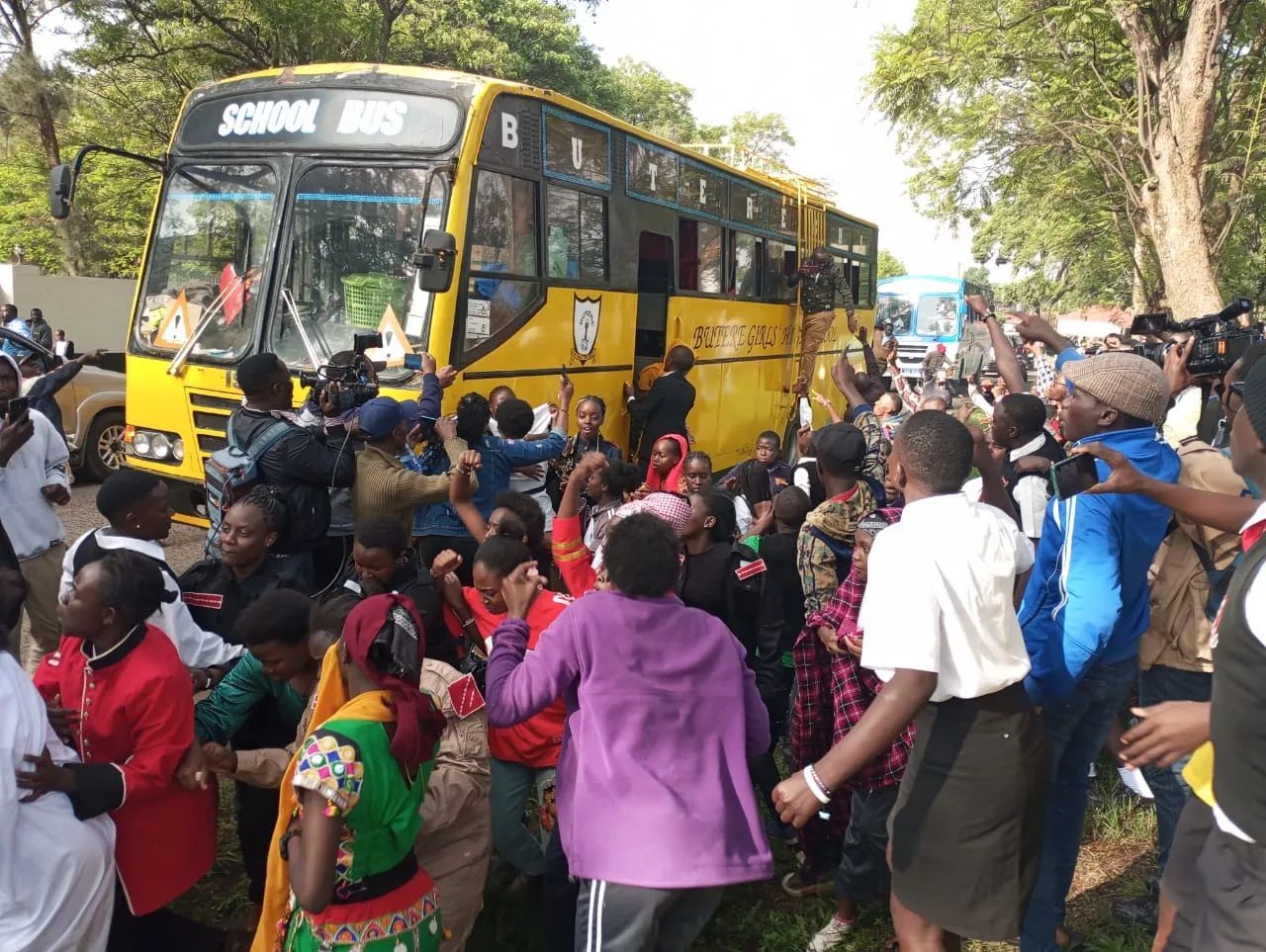
The real significance of "Echoes of War" lies not in its financial success or its legal battles, but in the courage of the students who brought it to life. Despite the threats, the disruptions, and the danger, the students of Butere Girls refused to let their voices be silenced. Their performance was a powerful reminder that the youth in Kenya — and around the world — are willing to fight for their right to speak, to create, and to challenge authority.
In many ways, the play became a metaphor for the fight for freedom of expression. The students of Butere Girls weren’t just performing; they were engaging in a form of activism, demanding that their voices be heard in a country where dissent is often met with hostility. Their bravery in standing up against the authorities, despite the cost, has inspired others to use their creativity as a means of resistance. "Echoes of War" is more than just a play; it’s a rallying cry for a generation that refuses to be silenced.
As "Echoes of War" continues to resonate across Kenya, the question of how to balance freedom of expression with state control remains at the forefront. The Butere Girls High School play serves as a stark reminder of the power of art in shaping public discourse and its ability to challenge systems of oppression. While the immediate aftermath of the performance raised questions about the role of the state in regulating artistic content, it also opened up a larger conversation about the boundaries of free speech in Kenya.
With Cleophas Malala’s earnings from the play only a part of its broader cultural impact, "Echoes of War" will undoubtedly be remembered as one of the most influential student performances in Kenya’s history. As the debate over censorship continues, the students of Butere Girls have already left an indelible mark on the country’s cultural and political landscape.






0 comments